


Ever wonder why some tires stick to the road even when it’s wet or icy? Today's tire makers mix natural minerals with flexible materials (these are substances that bend easily) to give you a better grip, last longer, and even save on fuel.
Imagine your favorite sneakers with extra grip on a slippery floor. That’s what these smart tire compounds do. They are built to help you save fuel and go the distance.
Modern tests show that these new ingredients make tires safer and more energy-efficient on every ride.
Cutting-Edge Materials Driving High-Performance Tire Construction

Modern tire making now uses smart science to boost performance. We mix in silica (a natural mineral that helps with grip) in the tire tread (the part that touches the road) so that you get a firmer hold and save up to 15% on fuel. You know how your favorite sneakers stick to a wet floor? It’s just like that.
We also add special polymers (flexible, long-chain molecules) that help tires last longer and adjust well to different road stresses. They’re made to stand up to heat, ensuring the tire stays strong even when it gets warm. New rubber mixes use natural, renewable sources like rice husk silica to keep a good grip when it rains and to cut down on energy loss. Every new mix brings us closer to tires that are safe, durable, and energy-friendly.
And we care about the planet too. By recycling carbon black from old tires, we reduce waste and our need for oil-based products. Manufacturers are also adding wear-resistant additives that keep the tires performing, even over a longer life. For instance, Michelin uses up to 40% sustainable materials in its high-performance tires and aims to go fully sustainable by 2050. This mix of innovative compounds and eco-friendly practices is paving the road for better performance and a greener future.
Advanced Elastomer Research in High-Performance Tire Construction

Scientists have been pushing tire design further than ever before. New mixes of elastomers with silica (a common mineral added to boost grip) help tires stick better to the road while wearing down slower. Imagine your tire gripping the road even when you're speeding down the highway, this blend makes that happen by lasting longer and fighting off early wear.
Then there are polymer additives, like those in advanced tire compound technology, that change how stiff a tire feels when you put pressure on it. The tire becomes firm when you need extra support yet stays soft enough to absorb bumps. This smart setup keeps your ride stable on the freeway and smooth on twisty or bumpy roads.
New formulas also boost the tire’s ability to fight against wear from constant road rubbing. In tests, these tweaks can extend a tire's life by up to 20%. The tire's surface stays strong against ongoing friction without losing its performance. Thanks to these advances in polymer engineering, you get tires that not only hold up longer but also keep you safe and comfortable at high speeds.
Nanocomposite Synthesis Techniques for High-Performance Tire Construction

Ever thought about how a tire's performance can be boosted by a sprinkle of science? One cool method uses ultrasonic dispersion. In simple terms, this means using sound waves to mix tiny particles into the compound. Lab tests show that tires made this way can cut rolling resistance by about 10% compared to the usual process. In tests, these tires rolled smoother and lost less energy, giving you a more efficient ride.
Another clever trick is in-situ polymerization. Essentially, this method embeds the nanoparticles directly into the tire’s polymer mix (the main material of the tire). This results in a more even structure throughout, which can extend the tread life by roughly 15%. Imagine a tire that simply lasts longer because its inner makeup is perfectly blended.
Then there’s template-assisted synthesis. This technique boosts the bonding between different parts of the tire material, helping to reduce heat buildup by about 8% when the tires are under heavy loads. Picture it like setting everything in perfect alignment so that even under tough conditions, your tires keep performing smoothly.
| Technique | Quantitative Benefit |
|---|---|
| Ultrasonic Dispersion | 10% reduction in rolling resistance |
| In-situ Polymerization | 15% longer tread life |
| Template-Assisted Synthesis | 8% reduced heat buildup |
Next-Generation Rubber Formulation in High-Performance Tire Construction

Engineers are now mixing plant-based oils with regular tire chemicals to make new rubber blends. They’re using soybean oil (which comes from soybeans) together with standard polymers to build stronger, more durable tires. This cool mix helps create a network inside the tire that stands up to wear and tear.
These new chemical blends help tires last much longer. The bio-oils work like softeners that keep the rubber flexible in cold weather. At the same time, they boost the rubber's internal strength when the tire is cured (hardened during production). Research shows these stronger bonds handle stress and temperature swings much better.
Recent lab tests are really promising. Even when loaded with heavy weight or tackled by extreme weather, these next-gen tires kept their grip and shape. One test on a wet track even showed that a tire maintained its hold throughout long use, all because of the improved chemical mix achieved during curing.
Intelligent Surface Grip Optimization in High-Performance Tire Construction
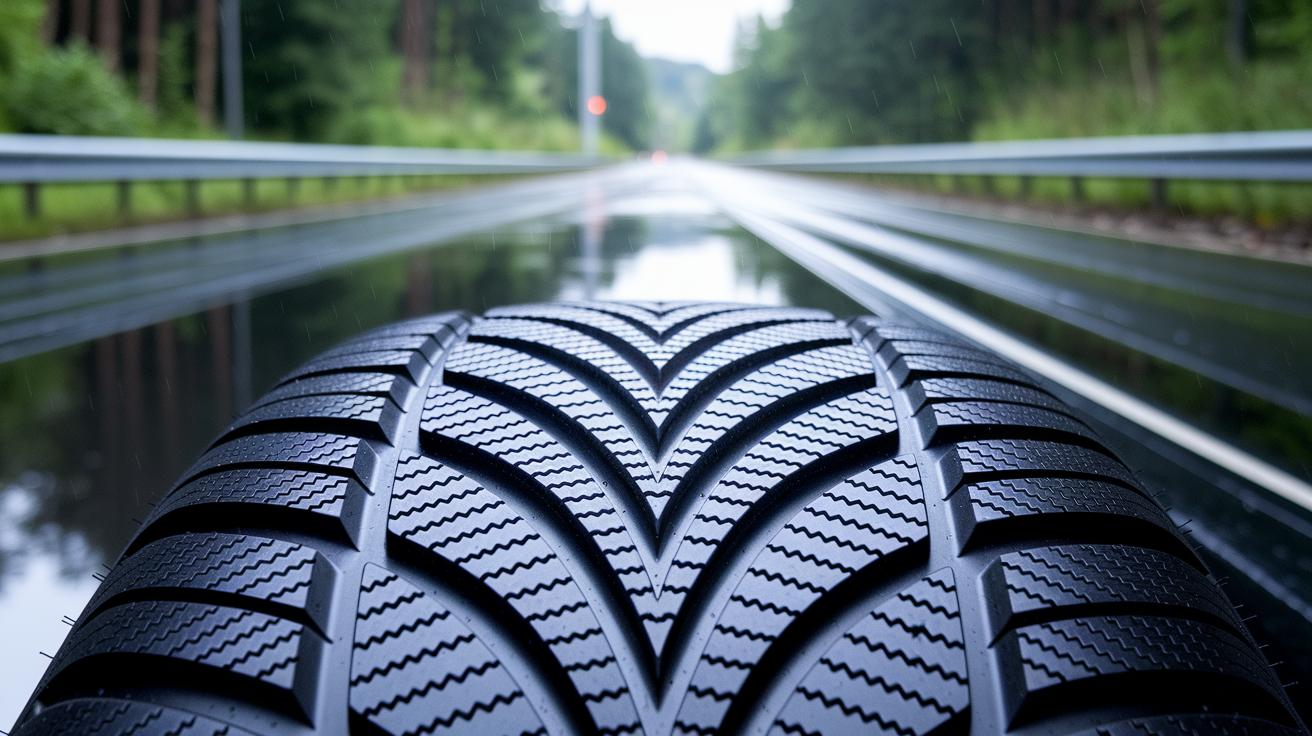
New tread designs really change how tires handle all kinds of roads. They use special features like 3D sipes (small cuts in the tire that help it grip) and variable-pitch patterns (treads with different spacing) to keep your car steady on wet, icy, and dry surfaces. Think of these features as little channels that lock onto the road, similar to how the grip on your sneakers keeps you from slipping on a wet floor. Ever notice how a car feels stable even when it's pouring? That’s thanks to grooves that push water away and help prevent hydroplaning (when water lifts the tire off the road).
Another trick is the mix of polymers and silica (a glass-like material) in the tread. This blend adjusts friction so the tire reacts quickly during sudden stops or sharp turns while keeping noise low. Picture the soft purr of a well-tuned engine, that’s the quiet comfort you get when these smart materials work together. Engineers have fine-tuned these compounds to make sure the tire stays in great contact with the road, whether you’re driving through city streets or on a slick highway during a rainstorm. The end result is a tire that offers safety, top performance, and a smoother, quieter ride without ever giving up its grip.
Eco-Smart Synthetic Solutions in High-Performance Tire Construction

These days, tire makers mix renewable silica from rice husk ash, a natural by-product of rice farming, with recycled carbon black from old tires to build better compounds. This clever blend gives tires improved grip, longer life, and a lighter impact on our environment. It’s a smart, eco-friendly approach that uses less energy during production and cuts down on waste, all while keeping up with strict performance standards.
Plus, top-notch ISO certifications back up this process by confirming that these recycled materials are put to work using advanced, efficient techniques. With as much as 40% sustainable materials in every tire, the method neatly ties innovation and eco-consciousness into one high-performance package.
Performance Testing and Durability Analysis in High-Performance Tire Construction

Engineers run tires through tests at speeds reaching 80 mph to see if they can handle hard acceleration and sudden braking. They simulate the forces you feel on the road, like when you speed up quickly or slam on the brakes (think of it as putting the tire through a mini adventure). This real-time checking shows whether the tire can stay strong and keep you safe even under tough driving conditions.
They also put tires under constant stress to see how quickly they wear out. Using special lab techniques that mimic years of use in just a short time, experts check how the tire deals with friction (the rubbing that wears it down). Each round of testing reveals little details about the tire's endurance, helping refine its durability so you can count on a safer ride.
Another key test is for run-flat performance. In these tests, engineers make sure that if a tire gets punctured, its reinforced belts (the strong layers inside that give it shape) can still hold the car up. This means that even with some damage, the tire can keep working long enough to drive safely to a repair shop. All of these practical tests prove that every high-performance tire can handle real-world challenges while giving you a smooth and reliable ride.
Final Words
In the action, this post touched on advanced elastomers, nanocomposites, renewable rubbers, and precise tread designs. We looked at how these elements work together to boost traction, lifespan, and eco-friendly performance. Each section gave a peek into the science behind safer tires. With innovative materials in high performance tire construction playing a key role, drivers can feel more secure on the road. A smoother, safer ride is right around the corner.
FAQ
What does a tyre technology PDF show?
The tyre technology PDF shows detailed insights into the modern materials and methods used in making tires, explaining how advanced compounds and testing improve tire performance.
How do airless tires work?
Airless tires work by using a strong, supportive structure instead of air pressure, which helps keep the tire in shape and reduces the chance of punctures.
How is a tire built?
Building a tire involves combining advanced rubber formulations, reinforcing materials like carbon black, and specially designed tread patterns, followed by rigorous high-speed testing to ensure safety and durability.
What can you learn in tyre technology courses?
Tyre technology courses teach the basics of how tires are made, the materials used, and the latest innovations in tire design, making them great for anyone interested in auto manufacturing.
What are the main tire components?
The main tire components include natural rubber, synthetic elastomers, and reinforcing elements like carbon black, which work together to provide traction, durability, and safety.
How long does it take to make a tire?
Making a tire usually takes just a few hours from mixing the compounds to the final curing process, thanks to advanced machinery and streamlined production methods.
What careers are available with the U.S. Tire Manufacturers Association?
Careers with the U.S. Tire Manufacturers Association include roles in engineering, manufacturing, quality control, and business support, offering dynamic work in tire innovation.
Who are the top U.S. tire manufacturers?
The top U.S. tire manufacturers include well-known companies like Michelin, Goodyear, and Bridgestone, which are frequently highlighted in industry guides and rankings.
What are the biggest innovations in tire technology?
The biggest innovations in tire technology involve next-generation rubber formulations, advanced elastomer blends, nanocomposite synthesis methods, and eco-smart synthetic solutions that improve traction and durability.
What is the new technology in tires?
The new technology in tires focuses on blending sustainable, renewable materials like rice husk silica with advanced polymer additives and specialized tread designs to boost performance and reduce environmental impact.
What are the three main materials used in tire construction?
The three main materials used in tire construction are natural rubber, synthetic polymers, and reinforcing additives such as carbon black, each playing a key role in performance and strength.
What are high performance tires made of?
High performance tires are made of carefully engineered polymer blends, specialized elastomer formulations, and innovative additives like silica, which work together to deliver enhanced grip and longer tread life.

