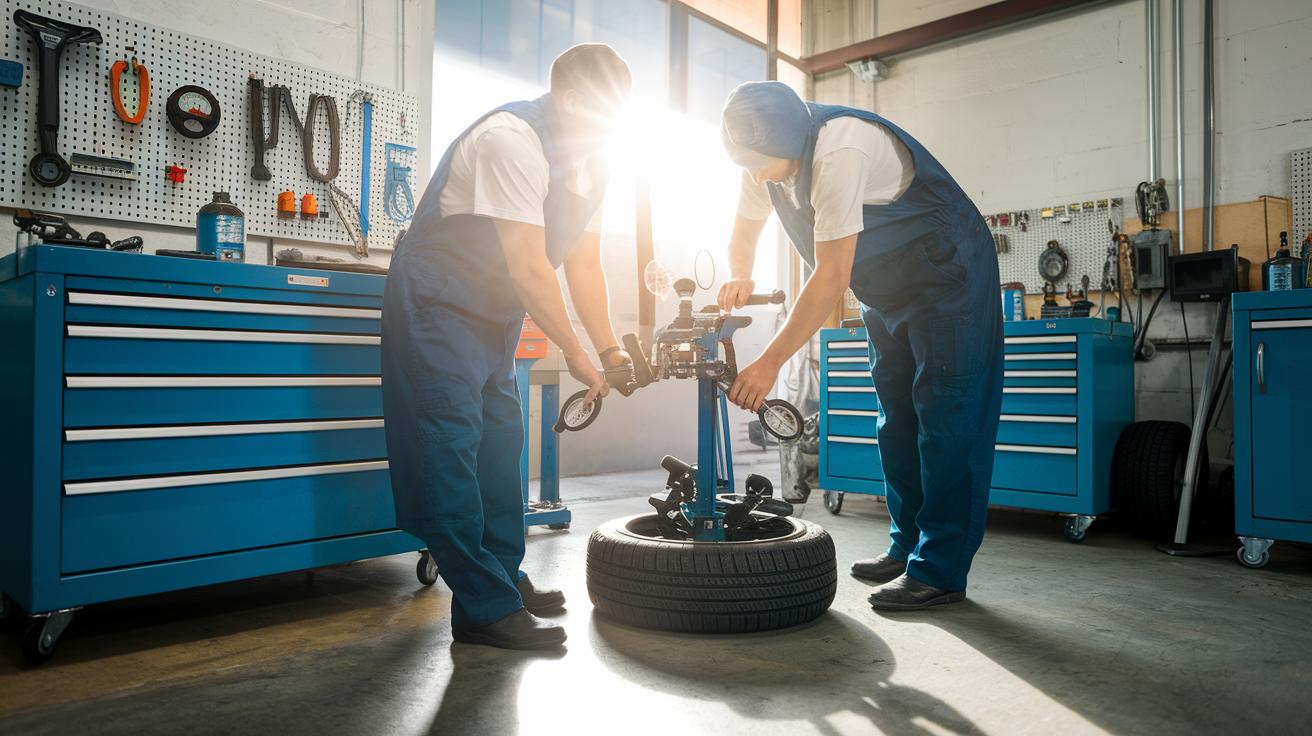


Have you ever felt that one tiny misalignment can ruin your whole drive? It can really throw your ride off.
Think of a tire alignment machine as your car's secret sidekick. It keeps your ride smooth and even reduces tire wear (the gradual wearing away of your tire’s surface) by up to 20%.
Imagine your car sitting steady on strong turntables while smart sensors carefully adjust each wheel until everything is lined up just right.
This tool turns a bumpy, off-balance drive into one that feels smooth and safe. Even small tweaks can make a huge difference every time you hit the road.
Tire Alignment Machine: Boost Precision & Performance
A tire alignment machine is a tool that checks and adjusts the angles of your wheels (things like toe, camber, and caster, which is just a fancy way of saying how your wheels sit) so they match the maker’s settings. When your car is lined up right, your ride feels smoother and your tire wear can drop by as much as 20%.
Inside this machine, you’ll find a mix of parts working together like a well-oiled team. There are strong wheel clamps, stable turntables that hold your car steady, smart optical sensors that grab exact readings, and a digital console that shows everything in real time. Think of it like fine-tuning your car with a precise wheel adjuster where every number is measured within about ±0.02°.
Technicians and shop managers use this tool because it really makes a difference. Better steering and even a small 3% boost in fuel efficiency are some of the benefits drivers notice right away. Ever tried driving with a wobbly wheel? It’s like holding a handlebar that just won’t quit shaking. With the help of a tire alignment machine, that wobble disappears, making your drive feel safer and more comfortable.
Usually, the process starts with lifting the vehicle and securing it on the turntables so the machine can do its job. Then, the digital console takes over, offering detailed readings that help adjust everything perfectly. One expert put it nicely, saying, "The readings from the alignment machine are like music – every little note matters." This hands-on care ensures that your car runs as smoothly and safely as possible.
Key Features of Modern Tire Alignment Machines
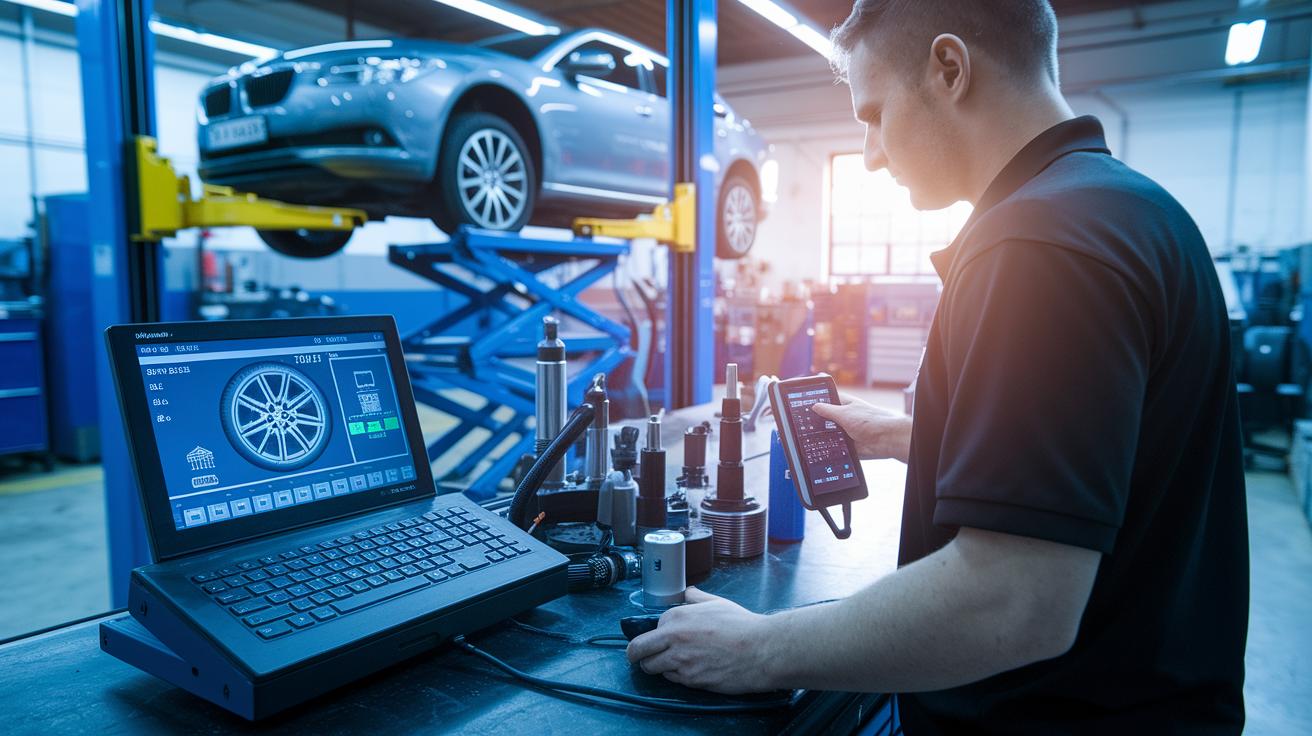
Modern tire alignment machines mix smart hardware with clever software to give you spot-on accuracy. Their digital screens work like your car’s dashboard, showing live camber (the tilt of the wheel) and toe (the wheel’s direction) data as you work. It’s a bit like seeing a live sports score, every detail pops up right then and there.
These machines use precision lasers to measure angles as fine as 0.01°. Optical sensors (tools that use light to measure things accurately) help catch even the smallest shifts, making it easy for a technician to fine-tune your car for a smooth, safe ride.
They also save time with automated sensor calibration, cutting setup periods by about 40%. This means the equipment is ready for action in no time. There’s even computerized geometry diagnostics that alert you when something isn’t right, acting like a helpful sidekick who keeps track of the details.
Top models often sport touchscreen controls and wireless connectivity. These features simplify the process and cut down on manual errors, giving shop managers and technicians a reliable tool that combines speed with impressive measurement precision.
Comparing Top Tire Alignment Machine Brands and Models
When picking a tire alignment machine for your shop, it helps to put the models side by side. Each option has its own perks for different vehicles and budgets. For instance, the Hunter model comes with an integrated lift mechanism (a system that helps raise the vehicle), making it a solid choice for cars and light trucks in the mid-price range.
Then there’s the Hofmann adjuster, a heavy-duty machine featuring advanced optical sensors (these use light to check alignment details). Its higher price fits shops that often work on tougher vehicles. The Atlas tool is another smart pick, it works with many vehicle types and uses an automated calibration routine so you can switch between models quickly without wasting time.
Next, the John Bean option uses computerized geometry diagnostics to ensure every adjustment is spot on, and the bonus data logging feature helps you track each job. And if you value modern, user-friendly technology, the Snap-on model might be just right with its touchscreen panel and wireless sensor pods.
| Brand | Model | Price Range | Vehicle Compatibility | Key Feature |
|---|---|---|---|---|
| Hunter | Hawkeye Elite | $12,000–$15,000 | Cars, Light Trucks | Integrated Lift Mechanism |
| Hofmann | Geoliner 690 | $18,000–$22,000 | Heavy-Duty Vehicles | Advanced Optical Sensors |
| Atlas | ProAlign | $10,000–$13,000 | Multiple Vehicle Types | Automated Calibration Routine |
| John Bean | V3300 | $14,000–$16,500 | Cars, Light Trucks | Computerized Geometry Diagnostics & Data Logging |
| Snap-on | Solus Ultra | $9,500–$11,500 | Cars, Light Trucks | Touchscreen Control and Wireless Sensor Pods |
Taking a close look at these models lets you choose the machine that best fits your shop’s mix of vehicles and budget, all while promising a reliable, precise alignment every time.
Assessing Calibration Unit Pricing and Cost Factors
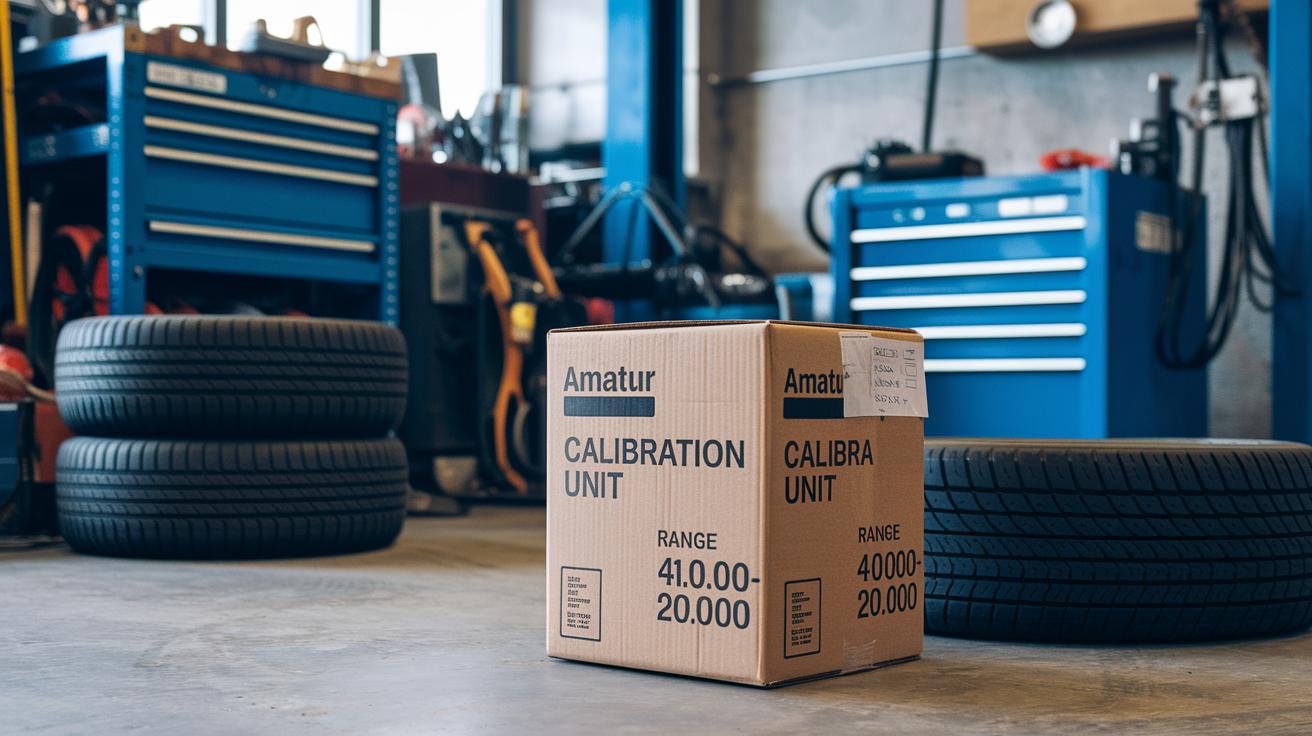
When you're shopping for a calibration unit, keeping an eye on price is just as important as checking your tire pressure before a long drive. For starters, basic devices that use shoes cost around $8,000. If you need more precision, the mid-range laser or optical aligners usually run somewhere between $12,000 and $18,000. And if you're outfitting a busy workshop or fleet, larger, heavy-duty units can go over $20,000. On the flip side, if you're watching your budget, used adjustment devices are a smart choice and are often priced between $4,000 and $6,000. Plus, you can often choose a lease or finance plan that spreads the cost out to roughly $200 to $350 a month.
It's a lot like setting up a proper tire alignment, balancing performance with cost. You have to look beyond just the sticker price and think about all the little extras that add up over time.
Key things to keep in mind are:
- Base unit price
- Installation costs
- Operator training (learning how to use it)
- Software licensing fees
- Maintenance plans
Looking at these factors together gives you a full picture, just like a check-up on your car’s overall health. By adding up the base price and all the extra expenses, you can figure out where you’ll get the best bang for your buck.
Performing Wheel Realignments with a Tire Alignment Machine
Once you’ve got your vehicle on the turntables and the sensor heads or wheel clamps in place, make sure the sensor heads are fastened tight. If things look off with the sensor data, check for any loose cables or gunk on the connectors. For instance, if you see a sudden spike in the readings, pause and inspect every connection before moving ahead.
Next up, as the machine measures toe, camber, and caster, don’t just rely on the automated prompts. Instead, compare these numbers with what you’d expect for your car. If you notice a difference of more than ±0.02° (a small but important variation), use the manual controls to tweak the sensors and run the calibration routine again. Like they say, if your readings continue to jump around during calibration, run another pass to be sure.
After you’ve made the adjustments, do a thorough check instead of just letting the final cycle run and hoping for the best. It helps to look at the sensor logs and compare multiple runs if the numbers don’t match up. And if you start seeing a pattern of odd behavior, it might be time to give the lift mechanism and adjustment controls a quick once-over for wear.
Finally, make it a habit to run calibration routines after several alignments. Regular checks like a calibration every tenth alignment can catch small issues early, ensuring that both your sensor systems and mechanical parts stay on track.
Calibration Tips and Troubleshooting for Alignment Devices
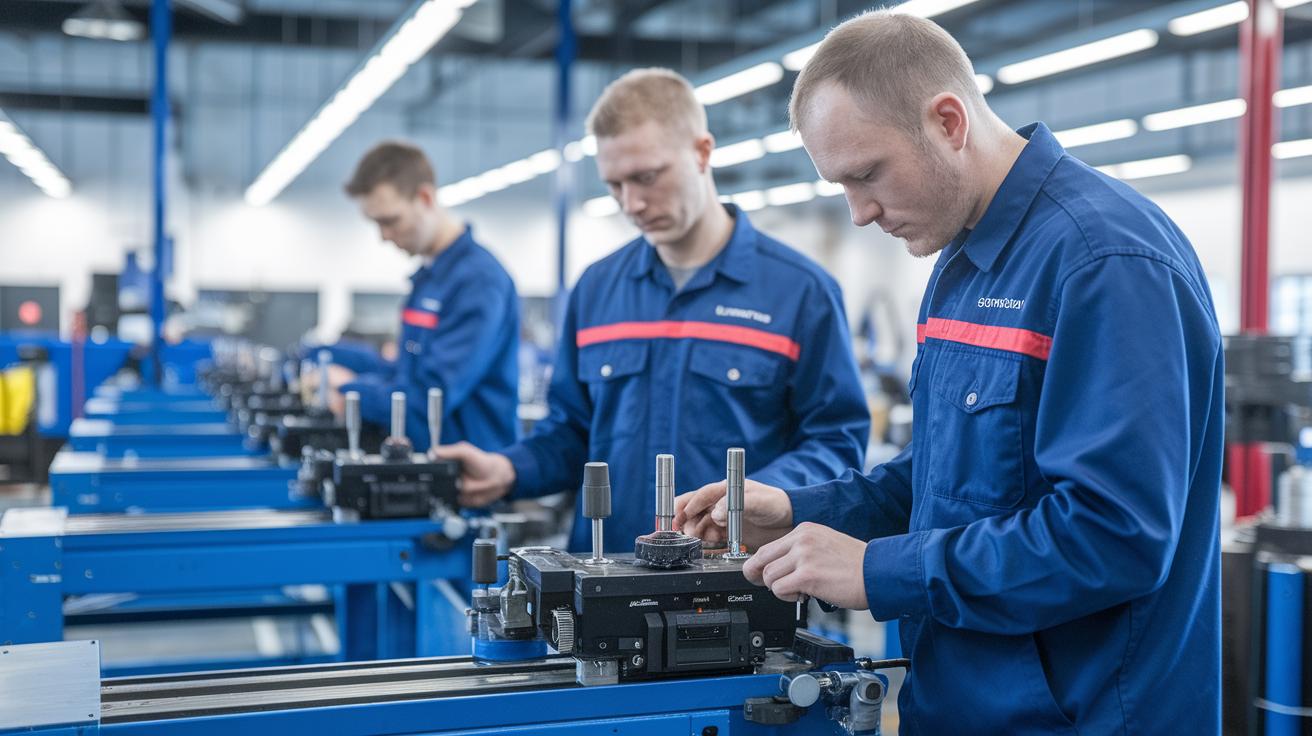
When you're working with an alignment machine, it's best to follow the manufacturer's guide. They typically suggest recalibrating every 500 alignments or roughly every three months. Think of this as your service checklist that helps keep your equipment running smoothly, similar to checking your headlights before a long drive. One thing I've learned is that treating the calibration routine like a regular car check can really pay off. Getting your sensors set to zero at the start is like making sure you're on the right road.
Calibration Tips
- Sensor zeroing procedures – it's like checking your pulse before a race. Making sure each sensor starts at zero helps avoid any unexpected changes.
- Turntable lubrication – a small amount of lubricant can keep the turntable spinning smoothly, just as a bit of oil keeps your engine purring.
- Verifying lift level – double-check that the lift mechanism is level. It's a bit like checking your tire pressure before hitting the road.
Common Troubleshooting Errors
- Inaccurate readings from worn clamps – when clamps are worn out, they can send off strange signals. A quick look-over can prevent wasted time.
- Misleveled lift rails – even a tiny tilt can mess up the alignment, so ensure everything is snug and even.
- Software mismatches – sometimes the software can glitch and trigger error alerts. Regular diagnostic checks can catch these issues when sensors report values that seem off.
Following these practical tips and troubleshooting steps can help you cut downtime and keep the machine running at its best.
Maintenance Best Practices for Tire Alignment Machines
Taking care of your tire alignment machine is a lot like keeping your car in top shape. Every morning, spend a few moments checking the wheel clamps, sensor cables, and turntable bearings – just like you’d quickly check the oil or mirrors before a long drive. These simple daily checks catch tiny issues before they have a chance to grow.
Each month, give the machine a bit of extra attention. Clean the optical lenses (they help the machine see correctly), update the alignment software, and put on the right lubricants for all the moving parts. It’s kind of like giving your car a quick wash and oil change – a little bit of care goes a long way.
And once a year, plan for a more detailed service. Replace any worn chains or belt drives, and recalibrate the machine back to its factory settings. Think of it as taking your car in for a major service so that every piece works together perfectly. No one wants unexpected surprises when precision is key.
Partnering with a certified service center can also make a big difference. These centers really know their stuff and use genuine parts, ensuring your machine stays reliable and on point over time.
- Daily checks: Inspect wheel clamps, sensor cables, and turntable bearings
- Monthly tasks: Clean optical lenses, update alignment software, and apply lubricants
- Annual service: Replace worn chains or belt drives and recalibrate to factory specs
Regular maintenance is a smart way to keep your machine running smoothly and extend its life.
Evaluating ROI and Workshop Efficiency Gains
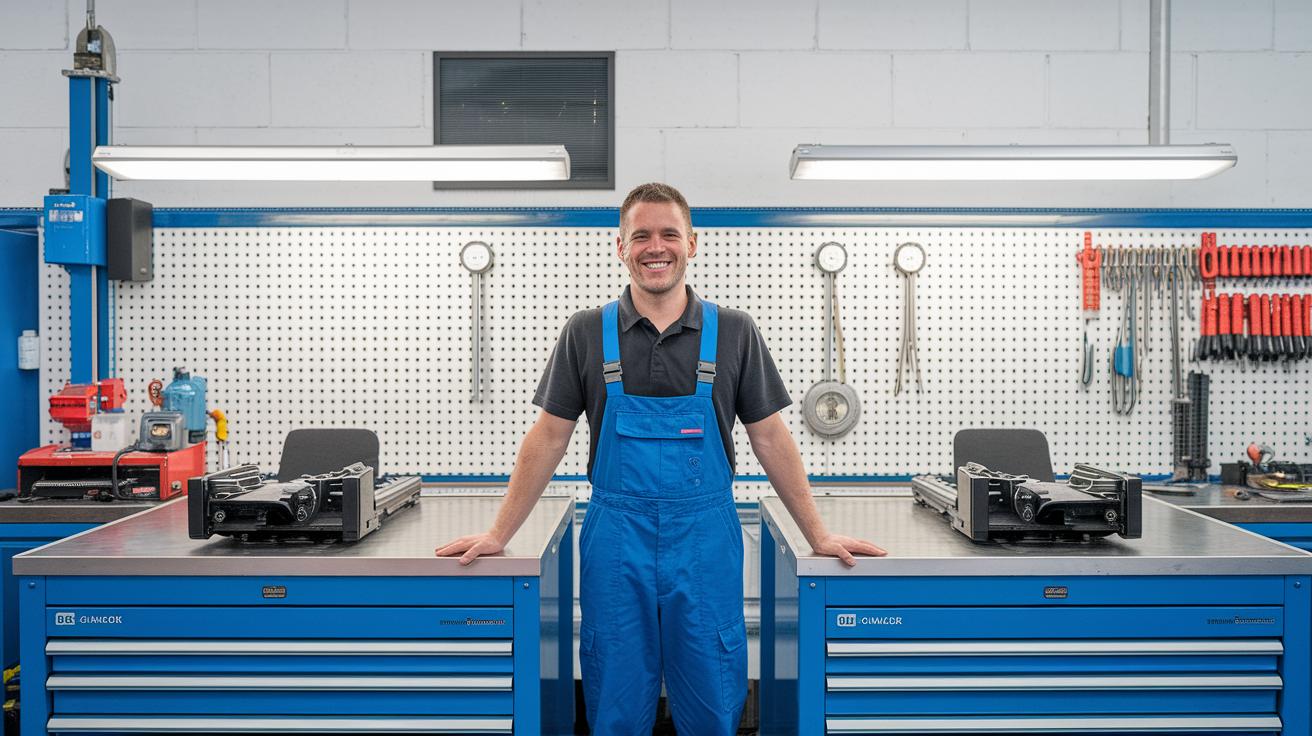
Modern aligners now handle 5 to 8 vehicles every hour instead of just 3 or 4 when done by hand. This boost really helps busy workshops keep things moving and cuts down on wait times for customers. With a quick calibration cycle, every alignment is done fast and with impressive accuracy, kind of like having that perfect tune-up for your car that keeps everything running smoothly.
Better precision not only speeds things up but also means fewer trips back to the shop and up to a 25% reduction in tire replacements. Think of it like fine-tuning a well-running engine; when everything is set just right, you run into fewer problems down the road. And, these machines work seamlessly with cars, light trucks, and even some vans, making them a handy tool for any shop.
For many high-volume workshops, the investment pays off in just 12 to 18 months. The improved service quality and boosted efficiency make these alignment tools a smart buy, especially when every minute saved and every tire replacement avoided adds up to a better bottom line.
Future Innovations in Tire Alignment Machine Technology
Imagine a tire alignment machine that talks to you live. It updates its software over the air while sending real-time data through smart, internet-connected tools (like IoT, which means devices that can chat with each other). This means technicians can get the latest updates without stopping by a service center. It’s almost like receiving a quick text from your mechanic to keep everything running smoothly.
Next, picture a machine that uses AI (that’s artificial intelligence, or computers learning from experience) to give you a heads-up before a small sensor problem turns into a big deal. Think of it as a friendly nudge that warns you about sensor issues before they impact your work. This little alert can help stop issues while they're still small, saving both time and money.
Also, as more cars become electric, tire alignment machines are starting to work with EV (electric vehicle) diagnostic systems. This means special steps can be taken to ensure electric cars line up perfectly every time. And soon, augmented reality (where digital hints appear right on your screen) will guide technicians during adjustments, like following an on-screen map to make everything just right. The future is all about making tire alignment easier and more precise for everyone.
Final Words
In the action, we broke down what a tire alignment machine is and why it matters. We covered how these systems work, compared the top models, and discussed pricing and routine upkeep. Each section showed how proper calibration and careful maintenance keep your wheels in check. Using a tire alignment machine means smoother rides and less wear on your tires. Keep these tips in mind for a safer, more reliable driving experience.
FAQ
FAQ
Where can I find a tire alignment machine near me?
The tire alignment machine near you means locating local service centers or dealers that offer both maintenance and sales for alignment devices, helping you quickly get the right equipment or service in your area.
What does a tire alignment machine for sale mean?
The tire alignment machine for sale refers to buying equipment that measures and adjusts wheel angles according to manufacturer specs. These devices are available new or preowned, with various financing options.
What is the Hunter alignment machine price?
The Hunter alignment machine price is around $12,000–$15,000. This range reflects its advanced features, including an integrated lift mechanism and accurate sensor technology for reliable vehicle alignment.
What are the top 10 wheel alignment machines available?
The top 10 wheel alignment machines highlight models from brands like Hunter, Hofmann, Atlas, John Bean, and Snap-on. They offer a mix of precision, technology, and multi-vehicle compatibility to suit diverse workshop needs.
What does an alignment machine for semi trucks involve?
The alignment machine for semi trucks is designed for heavy-duty calibration, offering robust features that accurately measure and adjust larger vehicles’ wheel angles, ensuring stability and safety for every road.
What is the tire alignment machine cost?
The tire alignment machine cost varies from about $8,000 for entry-level models to over $20,000 for commercial units, with factors like installation, training, and maintenance affecting the total expense.
What are the details of a Snap-on alignment machine?
The Snap-on alignment machine, such as the Snap-on Solus Ultra, offers features like a touchscreen control panel and wireless sensor pods, balancing smart technology with practical, cost-effective performance.
What does an alignment machine with lift do?
An alignment machine with lift integrates a mechanism for raising the vehicle, enabling precise wheel positioning during alignment and making the process smoother and more efficient for technicians.
Is an alignment machine worth it?
The alignment machine is worth it as it boosts safety, reduces uneven tire wear, and cuts service time. Investing in one can lower long-term costs by decreasing frequent tire replacements and improving performance.
Can I do my own wheel alignment?
Doing your own wheel alignment is challenging without the proper equipment and expertise. Professional services use specialized devices to measure angles precisely, ensuring your vehicle performs safely.
Is $100 for an alignment a good price?
The $100 alignment price may seem attractive, but quality can vary by location and vehicle type. It’s best to compare local market rates and read reviews to decide if it represents true value.
Can I realign my own wheels?
Realigning your own wheels is possible but usually not recommended without the right tools. Professionals have the equipment and expertise needed to ensure accurate and safe adjustments.


ketoconazole shampoo full guide
ketoconazole shampoo full guide
ivermectin rosacea results
ivermectin rosacea results
sildenafil safety standards
sildenafil safety standards
sildenafil vs tadalafil pharmacology
sildenafil vs tadalafil pharmacology