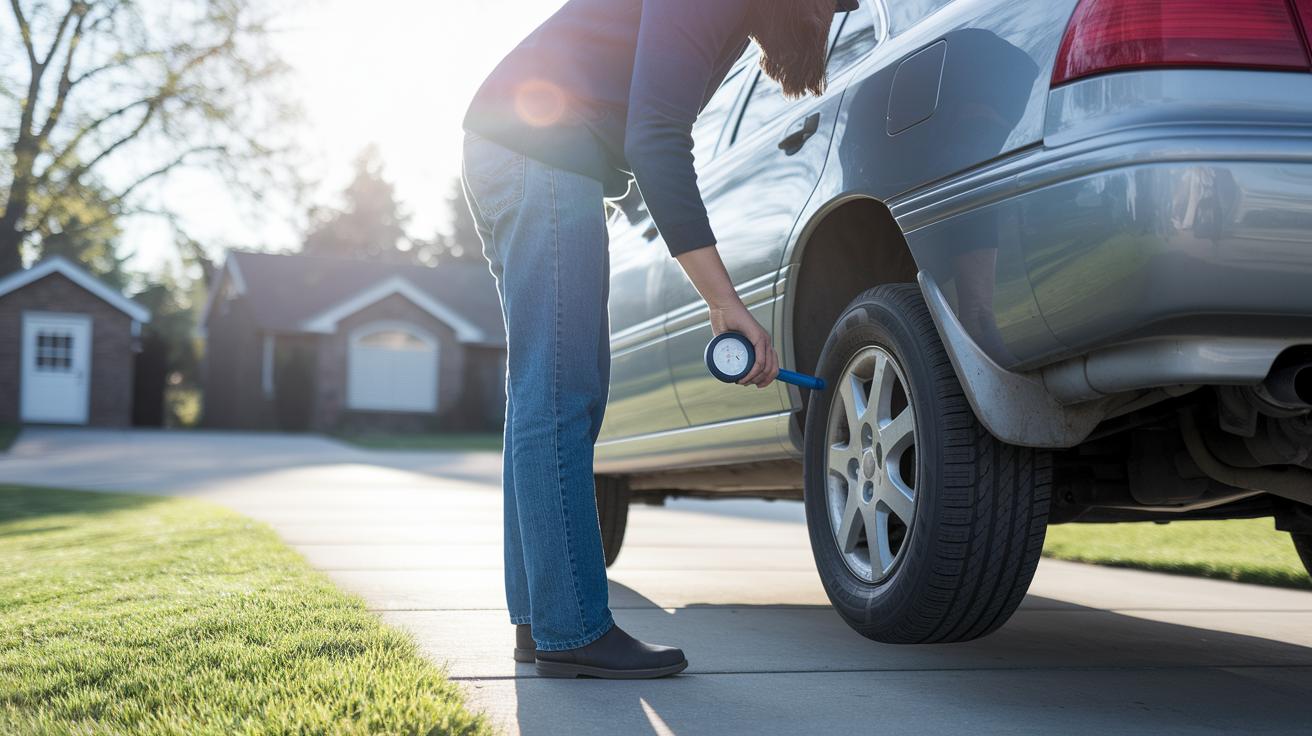


Ever wondered if your tire pressure is just right for a smooth ride? A quick check can help you avoid an unexpected stop and even save on gas. In this post, we'll show you an easy way to check your tire pressure with a trusted gauge.
We’ll walk you through every step, from taking off the valve cap to reading the gauge, so you can keep your tires in top shape. Ready to see how a few simple steps can boost your safety on the road?
How to Check Tire Pressure with a Gauge
Before you start, make sure your tires are cool. This gives you a true reading. First, take off the valve cap from your tire's valve stem so nothing blocks the gauge.
Now grab your tire pressure gauge. Whether it’s a digital one (accurate within 1 PSI) or an old-fashioned analog model, press it firmly on the valve stem. Hold it steady until the number on the gauge stops changing. It’s like waiting for your favorite song to hit a steady beat.
Once you see the PSI number, compare it to what your car recommends (usually between 32 and 35 PSI). If it reads lower than it should, add air slowly from a pump and check again until you get it just right.
When your tire has the right pressure, take the gauge off and quickly screw the valve cap back on. This keeps dirt and moisture out. Following these simple steps will help you keep your tires in top shape for a smooth, safe ride.
Essential Tools for Checking Tire Pressure
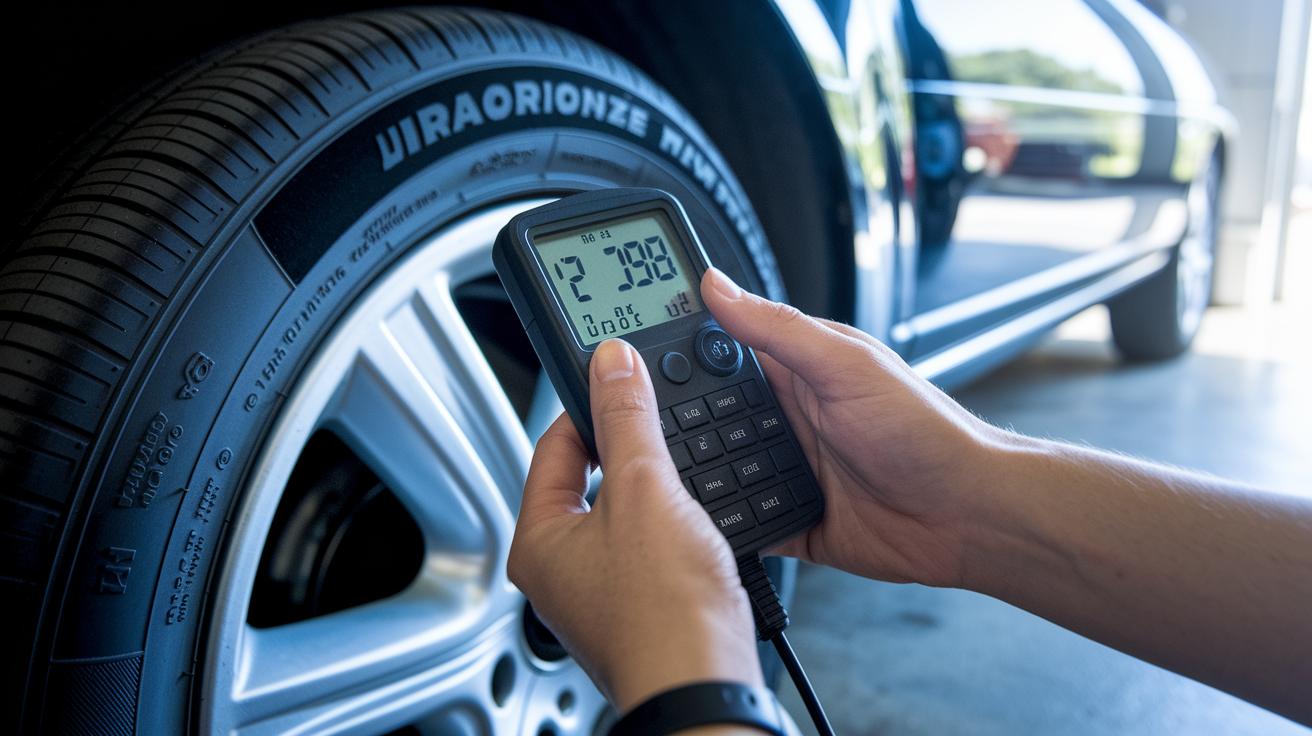
When it comes to tire care, a good digital gauge is your best buddy. These tools give you a reading that’s usually within ±1 PSI accuracy and even let you know when it’s time to replace the battery. It’s like feeling the steady pulse of your car when you press the gauge on your valve stem, modern and super handy.
Analog gauges are another great pick. They work mechanically and have been trusted over the years. There’s something satisfying about watching an old-school dial that reliably shows you what you need to know, even if it takes just a little more time to read.
Then there are portable inflator pumps that often come with built-in gauges. These are perfect for giving your tires some extra air at home without needing to hit the gas station. They mix the convenience of an air pump with a quick and clear reading, whether it’s digital or analog.
And don’t forget the classic gas station air hoses. They might not be as spot-on, but they really come in handy when you’re out on the road. Following the right maintenance tips, like checking your valve stems (you can find some good advice in our tire valve maintenance guide), will keep everything running smoothly. For more details on the tools, check out our car servicing tools guidelines.
Regular care for these tools means you’re always ready for a safe and smooth drive.
Estimating Tire Pressure Manually Without a Gauge
Start by pressing your thumb against the tire’s side. A well-inflated tire will give a little and bounce back fast, just like a spring. If it feels too soft or too hard, it might be a sign that the air level is off. Try using a light touch, and if you feel a smooth return, that's a very good sign.
Next, try checking the tire with your weight. Sit in your car and take a look at the tires. When tires are filled just right, they hold their shape even when the car’s weight pushes down on them. But if one tire seems to sag or change shape noticeably, it might not have enough air. Think of it like a sturdy chair that holds you up versus one that droops a bit.
Another handy method is to mark the tire tread with a bit of chalk or paint. Then, after driving a short distance, look at the mark left on the road. A small, even line means everything is working fine. However, a long, uneven smear could hint at a pressure issue.
Finally, give the tire a good look on a flat surface. If you spot any bulge over about 10 mm, that’s a clue that the tire might not be at the right pressure.
Using Onboard TPMS and Dashboard Displays to Check Tire Pressure

Your car has a built-in system that keeps an eye on tire pressure for you. Each tire is fitted with its own sensor that checks how many pounds per square inch (PSI) the tire holds and sends that info straight to your dashboard. You might see numbers for each tire along with little warning icons, sort of like a red flag saying, "Hey, check me!"
When your dashboard shows these readings, take a moment to compare each tire’s number. If all the tires show the same or similar PSI, you’re in good shape. But if one tire has a different reading or lights up with a warning, it might need some extra care. After switching tires or having them rotated, you might need to reset the system. Just check your vehicle’s manual for simple instructions, which usually ask you to hold down a button until the warning light disappears.
Some of these systems even provide real-time pressure updates, which can help you see how your tires handle bumpy roads or shifts in temperature. This quick glance at your dash makes it really easy to keep your tires in tip-top shape.
Maintaining Optimal Tire Pressure for Longevity and Efficiency
Taking care of your tire pressure isn’t just about being safe, it also helps you save money on gas. Check your tires at least once a month and definitely before a long drive. When the heat rises by about 10°F, your tire pressure might shift roughly by 1 point, so it's a good idea to keep an eye on it in warmer weather.
Well-inflated tires wear more evenly (tread wear means the surface of the tire wears out evenly), help your car get better gas mileage, and lower the chance of a tire blowout. Next time you stop at a gas station or a spot with free air, take a minute to make sure your tires are at the right pressure.
For a smooth ride and longer-lasting tires:
- Check your tire pressure every month.
- Give it a look before any long trips.
- Compare your readings with the car’s recommended pressures (usually found on a sticker in your car).
There are even handy apps that can point you to nearby free air pumps for quick fixes. Keeping your tires at the right pressure helps avoid issues that come from both over- and under-inflation. For more tips on common tire care mistakes, click on this link: common tire care mistakes to avoid.
Regular care like this saves you money and helps your car stay efficient and safe on the road.
Final Words
In the action, we walked through a clear guide on how to check tire pressure with a gauge. We shared a step-by-step process for using both digital and analog tools. We even looked at simple, hands-on techniques when a gauge isn’t handy. You learned how onboard systems can help you monitor conditions while keeping safety in mind. Following these tips gives you the know-how to maintain your tires for safe, confident driving. Keep your tires in top shape and enjoy every mile ahead.
FAQ
What does a tire pressure gauge do?
The tire pressure gauge measures the air pressure (PSI) in your tires. It gives a clear reading so you know if your tires are inflated correctly for a safe drive.
How do you check tire pressure using your dashboard TPMS?
The onboard TPMS uses sensors to measure tire pressure and displays readings on your dashboard. It alerts you when a tire’s pressure is low, helping you maintain proper inflation.
How can I check tire pressure without a gauge?
Checking tire pressure without a gauge involves simple tactile and visual tests. A firm thumb press and watching for tire bulges can help you see if your tires might need extra air.
How do you properly check tire pressure at home or at a gas station?
The proper way involves removing the valve cap, pressing the gauge firmly onto the valve stem until the reading stabilizes, and comparing the PSI to the recommended level on your vehicle.
How do I know if my tires need air?
You know your tires need air when the pressure reading is lower than recommended. A tire that feels softer or looks misshapen is a sign it might need additional air.
What is the process to check tire pressure on vehicles like Volkswagen or Audi?
For cars like Volkswagen or Audi, use the onboard TPMS or a manual gauge. Remove the valve cap, press the gauge firmly, note the PSI, and compare it to the model’s recommended pressure.


terbinafine dosage
terbinafine dosage
toradol indications overview
toradol indications overview
ketoconazole mode of action
ketoconazole mode of action
toradol migraine effectiveness
toradol migraine effectiveness
ivermectin scabies peer‑reviewed data
ivermectin scabies peer‑reviewed data
minoxidil foam vs liquid evidence‑based guide
minoxidil foam vs liquid evidence‑based guide
Variability Documentation
Variability Documentation
Food Delay: Sildenafil vs Levitra
Food Delay: Sildenafil vs Levitra
sildenafil action explained
sildenafil action explained