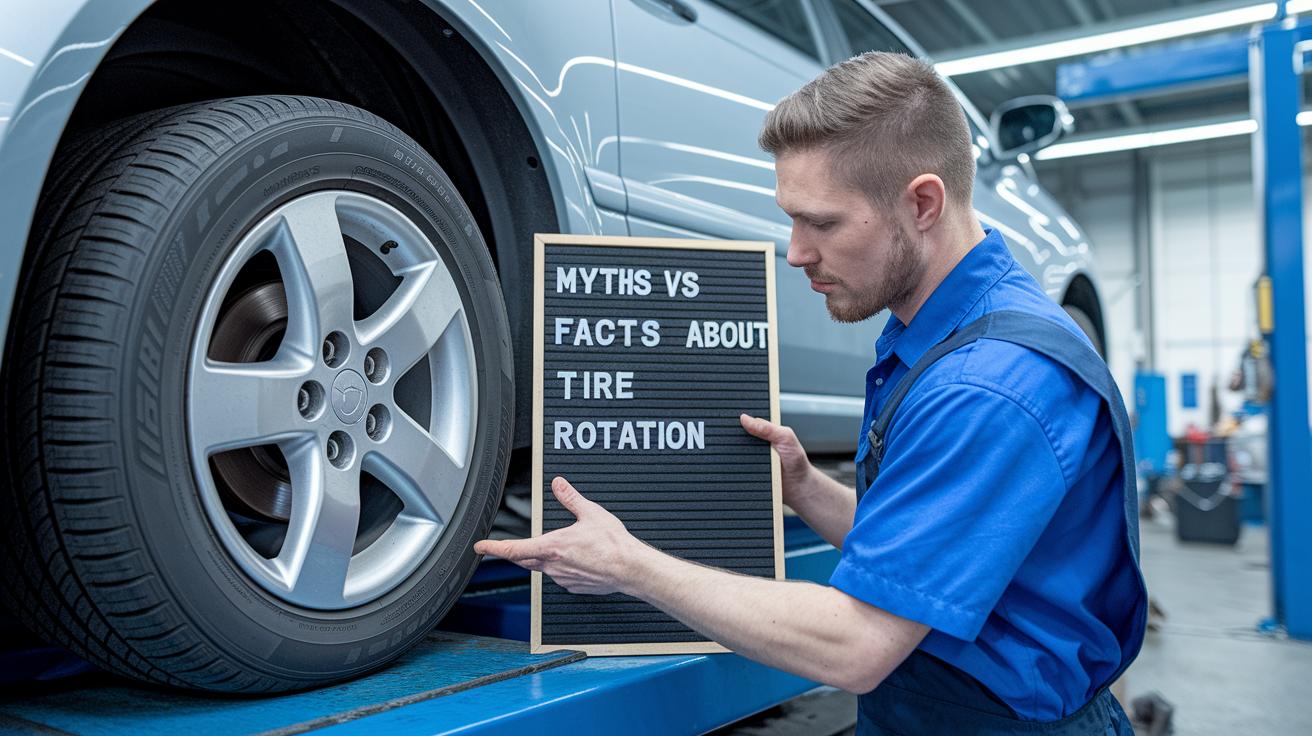


Ever wonder if your tire rotation routine might not be doing what you think? Sometimes we hold on to old rules without questioning them, even when fresh advice points us in a new direction.
We bust the myth that rotating your tires every 5,000 miles is set in stone. Following your car's manual, sort of like checking the gas gauge before a big trip, could help your tires last longer and keep your ride safe.
Imagine the ease of knowing your tires are in tip-top shape just by tweaking your routine a bit. It might be worth a try, don’t you think?
Essential Tire Rotation Myth Busting: Key Facts vs Fiction

Many drivers think rotating their tires is just another routine chore based on old habits. It’s easy to fall for myths when you mix up common advice with outdated ideas, leaving you unsure about your car’s best care schedule.
Often, you hear that you should change your tires every time you get an oil change at 5,000 miles. But many car makers suggest a rotation every 6,000 to 8,000 miles instead. Not every car is the same, so one rule may not fit all.
Here are some common myths:
- Rotations aren’t needed for safe driving.
- Only brand-new tires should be rotated.
- You must rotate tires with every oil change at 5,000 miles.
- Keeping tires properly inflated alone will stop uneven wear.
The truth is that switching all four tires helps them wear evenly, makes them last longer, and keeps your car safer. Instead of sticking to the 5,000-mile rule, check your car manual, it might recommend rotating every 6,000 to 8,000 miles. Whether your tires are new or have seen many miles, moving them around helps keep the same performance at every corner of your ride. And if you trust a professional service, you can rest easy knowing your tires are balanced for a smoother, safer journey.
Addressing Rotation Interval Myths vs Manufacturer Guidelines
Many drivers stick to a simple 5,000-mile tire rotation rule, but most car manuals actually recommend rotating every 6,000 to 8,000 miles. When you link tire rotation to an oil change (usually every 5,000 to 7,500 miles), you might overlook factors like your driving style, how much weight you carry, and the road conditions. Rotating your tires too often can mess with how they naturally wear, kind of like how your shoes might wear uneven if you always favor one foot. On the flip side, not rotating enough can lead to uneven tread wear.
The smart move is to follow your car's manual while keeping an eye on your tires' condition. Weather, road types, and your driving habits all play a part in when a rotation is really needed. For more details on setting the right schedule, check out how often to do tire rotation.
Sticking to the manual’s advice helps keep your tires balanced and extends their life. By also taking note of how your tires hold up in everyday driving, you can avoid the downsides of both over-rotating and under-rotating. For more tips on keeping your vehicle in great shape, visit preventative car maintenance.
Debunking Tire Rotation Pattern Myths Across Drivetrains

Front-Wheel-Drive Patterns
If you drive a front-wheel vehicle, try a forward-cross (or X-pattern) rotation to even out tire wear (tread wear means how quickly the tire surface erodes). In this method, your front tires slide to the back on opposite sides while the rear ones come forward. It’s like swapping your running shoes so that one pair doesn’t wear out faster than the other. Ever noticed how a balanced setup can make your ride feel smoother? For more details on these methods, check out the link provided.
Rear-Wheel-Drive Patterns
For rear-wheel-drive cars, a rearward-cross rotation is a solid choice. Here, the rear tires move straight up to the front while the front tires head to the opposite rear positions. This swap ensures that the tire taking on heavier loads gets a break, which helps all your tires wear evenly. This way, you keep your ride safe and steady without stressing just one part of your tires.
All-Wheel-Drive Patterns
If your vehicle is all-wheel drive, you need a rotation method that balances mileage across all tires. You can either go with a full cross, where each tire moves to the opposite corner, or try a side-to-side rotation that shifts tires from left to right. Either way, this method deals with the unique wear patterns of an AWD system, keeping your tires evenly worn and your handling top notch.
| Drive Type | Recommended Rotation Pattern | Purpose |
|---|---|---|
| FWD | Forward-cross or X-pattern | Keeps tire wear balanced by swapping diagonally |
| RWD | Rearward-cross | Shares the load to even out wear between front and back |
| AWD | Full cross or side-to-side | Makes sure each tire logs similar mileage |
Cost and DIY Myths: Evaluating Expense vs Expertise
Lots of drivers think a tire rotation is extra cash down the drain, but really, it's a smart, low-cost move to keep your ride in top shape. Most shops charge between $25 and $50, which is a tiny fee when you think about what could happen if your tires wear out unevenly or much sooner than they should. Even if adding another service seems like an extra expense, doing regular rotations actually helps your tires last longer, saving you money in the long run. Curious about the fees? Check out the tire rotation cost link for more details.
Some might be tempted to handle rotations by themselves to dodge the fee, but doing it on your own can be risky. Experts use special lifts, computerized alignment tools, and tight-lug techniques (that means they tighten the nuts on your tires to a specific strength) that most of us don’t have at home. Without these exact tools and skills, a DIY rotation might end up causing uneven tread wear or even mess with your car's handling, leading to bigger expenses later.
Going with a pro isn’t just about saving time, it’s also about keeping you safe on the road. Skilled technicians make sure your tires are balanced just right, which helps your car handle better and keeps your tires in good shape longer. So next time you’re tempted to save a few bucks by doing it yourself, remember that expert care really makes a big difference in keeping your car reliable and performing at its best.
Maximizing Tire Lifespan: Evidence-Based Rotation Recommendations
Did you know that switching your tires around on a regular basis can extend their life by up to 20%? Moving your tires helps even out their wear, so both new and older tires end up performing better. New studies back up what we’ve known from before, showing that balancing the wear can seriously boost your tire life.
Pairing tire rotation with simple checks, like verifying that your alignment is good and your tire pressure is right (inflation levels matter, you know), can further improve how your tires handle the road. Every car is a bit different depending on the load it carries and your driving habits, so these extra checks can reveal subtle wear patterns that you might otherwise miss.
Try these steps to get the most out of tire rotation:
- Look at your tire tread closely to spot any uneven wear or minor changes.
- Adjust how often you rotate your tires based on what you observe in their wear, instead of following a fixed schedule.
- Combine rotation with routine alignment and tire pressure checks to really support your tires’ performance.
Enjoy the smoother ride!
Final Words
In the action, we broke down common myths that hide behind routine tire rotation advice. We explored how rotations help balance wear, compared DIY risks to professional care, and checked the right intervals using manufacturer tips. By sorting fact from fiction, our tips make it easier to choose proper rotation timings and patterns for any drive type. The insights help boost tire longevity and keep you safe. Tire rotation myths debunked: separating fact from fiction sets the stage for a smoother ride. Happy driving.
FAQ
Do tire rotations actually matter?
Tire rotations matter because they promote even wear and extend tire life. Regular rotations balance mileage across all four tires, improving safety and performance by following manufacturer guidelines on rotation intervals.
Are rotating tires just moving them around?
Rotating tires isn’t simply moving them around. Instead, it systematically swaps tire positions to balance wear, ensuring that no tire carries excessive mileage on one side, which keeps your ride safe and stable.
Is tire rotation still a thing?
Tire rotation is still a key maintenance practice. It remains essential for preserving tire tread, ensuring balanced wear, and maintaining handling. Following the proper rotation schedule keeps your tires performing at their best.
Is there a wrong way to rotate tires?
There is a wrong way to rotate tires when the incorrect pattern is used for your specific drive type. Following the proper rotation procedure ensures each tire wears evenly, which keeps your car running smoothly.

