


Ever wonder if a tiny gap in your tire’s design could change how your car feels on the road? A little misalignment as small as 0.1 mm might cause your tire to lose some of its grip and smooth handling.
Even small differences in how tires are made can change your ride. Your sport tires might feel a bit different during sharp turns, affecting how steady you feel when you take a curve at speed. In this post, we’re taking a closer look at how these small variations play a big role in your tire’s performance. It turns out, getting things just right in the factory isn’t just important, it really makes a difference.
Tolerance Variations’ Direct Effects on Sport Tire Performance

Sport tires are the only part of your car that touches the road, so even tiny differences in their design can be a big deal. For example, if the bead seating (where the tire meets the rim) or belt alignment (the layers that keep the tire’s shape) is off by more than 0.1 mm, you might notice a 7% drop in how well the tire handles. Even a little gap can stop the tire from sitting securely on the rim. This means your car might not feel as stable when taking fast turns.
If the tire tilts or wobbles (what we call radial run-out) by 0.3 to 0.5 mm, more issues come into play. This extra misalignment can make the tire vibrate more, about 0.5 g higher than normal. That extra shake can speed up uneven wear and disturb the smooth contact between the tire and the road, especially when roads are wet, cutting wet-grip performance by up to 10%. This shows that careful, precise manufacturing is vital if sport tires are to perform their best under heavy load and intense driving.
Even small deviations can hurt performance. When clearance issues and run-out problems happen, they mess with the tire’s grip and stability. Fixing these tolerance flaws is key to keeping tires responsive, safe, and reliable, especially during high-speed maneuvers.
Manufacturing Processes and Precision Limits in Sport Tire Production
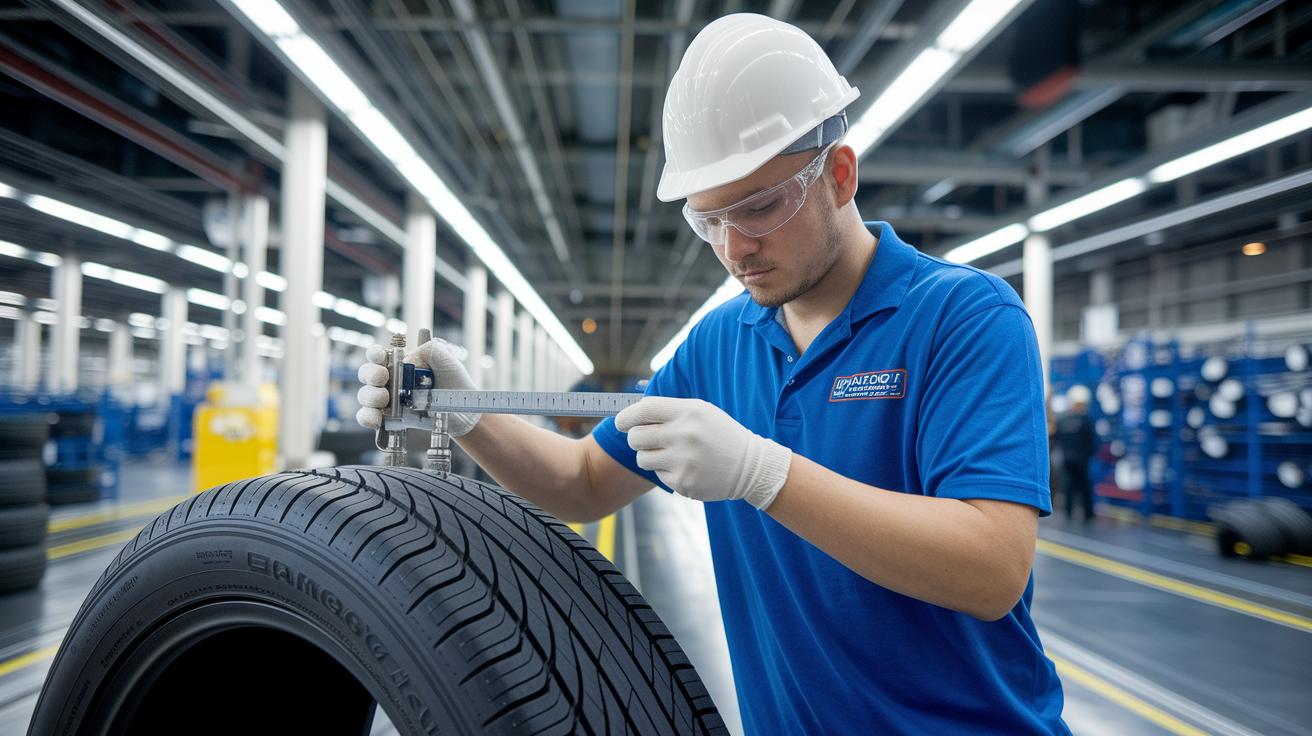
During the extrusion and curing stages, tire makers work hard to control every key part. They keep the tread depth within plus or minus 0.2 millimeters and the sidewall thickness to plus or minus 0.15. This careful control is really important for sport-grade rubbers (the tough materials used in sports tires) because even a tiny change can affect how the tire grips the road. By using tire manufacturing technology, they make sure each tire meets strict marks and is ready for top performance.
Using modular tools along with smart maintenance cuts production differences by 30%. This makes sure each tire comes out as uniform as possible.
Laser micrometers, which can check details as small as 0.01 millimeters, continuously watch the mold cavities while the tire compound is setting. This close check helps the material spread out evenly, even in firmer (higher-durometer) formulas needed for fast driving and tricky roads. By keeping the production process within set limits, tire makers boost the overall reliability and safety of every ride.
Dimensional Deviations and Grip Consistency in Sport Tires

Small variations in tire production, like run-out errors, can change how weight is spread out. For example, a tiny 0.2 mm mistake might add an extra 0.3 g of vibration and lower grip by 2%.
Keeping the bead-to-rim alignment within ±0.1 mm is really important, especially when you're driving fast. This close tolerance helps the tire stay in good contact with the road. The table below shows how even the smallest changes can boost vibrations and reduce grip.
| Deviation (mm) | Vibration Increase (g) | Grip Reduction (%) |
|---|---|---|
| 0.2 | 0.3 | 2 |
| 0.3 | 0.5 | 5 |
| 0.5 | 1.0 | 10 |
Every tiny millimeter matters when it comes to controlling vibrations and keeping grip. Manufacturers use these close measurements to maintain balanced load distribution and steady handling at high speeds.
Material Consistency and Polymer Blend Tolerances Impacting Traction

Sport tires use a mix of different polymers, and getting the mix just right is key. Even a small mix-up in the ingredient ratios can change how stretchy the tire rubber is. For instance, keeping the mix within plus or minus 0.5% is super important so the tire responds well whether you’re cruising or cornering. It’s a bit like following a great recipe, the right balance means you get a tire that grips the road reliably.
If the mix isn’t done evenly, the rubber might not spread out the same way every time. This uneven blend can change the tire’s contact area by up to 5%, which might throw off your steering, especially when you take sharp turns or drive in the rain. Newer methods like spectroscopic scanning (a quick check of the material’s makeup) and inline rheometry (measuring how the material flows) help cut these differences by about a quarter. This careful checking makes sure the tire’s material stays even so it can handle sudden moves with ease.
When the polymer blend is spot on, the tire not only stays flexible but also holds onto the road better. It’s this attention to detail in mixing that helps sport tires deliver on their promise of great grip and smooth steering every time you hit the road.
Quality Verification Protocols for Sport Tire Tolerance Control

When it comes to making sport tires, we rely on super-precise tools to ensure everything is just right. We use coordinate measuring machines (CMM) both before and after the curing process to check that the bead seat (where the tire meets the rim) and belt alignment stay within a 0.02 mm range. Even a very small error here can change how a tire performs on the road.
Another key test is deflection benchmarking, where we load the tire with 2 kN (a measure of force) to see how it bends. We run these tests on rigs with built-in sensors, if you’re curious, you can learn more about our advanced tire testing technology here: advanced tire testing technology. We also use techniques like laser triangulation (shining a laser from different angles) and infrared thermography (using heat images) to scan the tire’s surface. These methods not only catch little inconsistencies early but also help our teams predict and fix issues, which cuts defects by 18%.
We also keep our tools calibrated and monitor everything step by step. Regular check-ups using precise measuring methods and sensor tools make sure that the synthetic compounds in the tire work well even under tough conditions. This careful process helps manufacturers keep high standards so that every sport tire delivers on its promise of stability and grip.
Case Studies: Optimizing Manufacturing Tolerances in Racing Tires

When tire makers tighten up the small details during production, the difference shows on the track. Even tiny changes in how parts fit together can help racers shave seconds off their lap times, keep a better grip on the road, and build tires that stay tough even under heavy stress.
One example comes from adjusting the belt alignment (how the internal layers of a tire line up) with a tight tolerance of ±0.05 mm. This change helped improve lap-time consistency by 0.2 seconds. Pretty neat, right?
Another study looked at the tire’s tread curvature (the shape of the part that meets the road). They managed to reduce deviation from 0.4 mm to 0.15 mm, which helped the tire hold its grip longer by 12%.
A third case used real-time thermal monitoring during the curing process (a method used to harden the tire). This practice boosted the tire’s strength under load by 8%.
Manufacturers are using these precise tweaks to push racing tires to new heights. A tiny adjustment here or there – whether tweaking belt alignment, perfecting tread curvature, or monitoring heat in real-time – can mean a big win when it comes to performance on the track.
Future Trends in Precision Control for Next-Gen Sport Tires

Emerging technologies are making tire building incredibly precise. Think of it like using tiny building blocks in a very smart way. Nanotech is used in special polymer lattices (a type of flexible material structure) that hit exact measurements, within plus or minus 0.05 mm, and help get rid of extra heat by about 6%. This means tires can work reliably even in tough conditions. In short, every little detail counts, setting new standards for durability, safety, and performance.
New quality checks are also helping improve things. AI-driven systems use machine vision (cameras and smart software) to catch errors smaller than 0.01 mm during the tire-making process. Engineers run computer tests that mimic real driving, so they can adjust settings on the fly like tuning up your car during a long trip. This careful tweaking makes sure the tires grip well, balance correctly, and handle smoothly, especially at high speeds.
And then there’s self-healing elastomers, rubber-like materials that fix small cracks on their own in real time. These smart compounds help the tires recover quickly from minor issues while keeping performance steady. All these changes point to a future where precise control isn’t just about performance, but also about creating safer and more efficient vehicles. The road ahead looks bright.
Final Words
In the action, our article walked through how small changes in tire tolerances affect grip, vibration, and handling. We covered production checks, quality tests, and real-world study examples that show just how important precise tire measurements are.
We showed that careful manufacturing and clear quality measures boost tire safety and performance. Every tiny change in production can make a real difference during everyday drives.
Remember, the impact of manufacturing tolerances on sport tire performance drives safe and confident rides.
FAQ
How does tolerance impact manufacturing and why is it important to use tolerances during manufacture?
Tolerance variations define the allowable limits in parts, ensuring they fit together correctly. They keep manufacturing consistent, reduce mismatches, and support safety and performance in products, including tires.
How do tires affect performance?
Tires influence performance by creating a solid connection with the road. Their dimensional accuracy and proper alignment directly affect grip, handling, and overall ride comfort.
What are tolerances in manufacturing?
Tolerances in manufacturing refer to the small, acceptable variations in a part’s dimensions. They provide guidelines that maintain consistency and quality in the final product.

