


Ever wonder if machines can almost think for themselves when they make tires? Today, robots handle lots of steps, from mixing the rubber to shaping and baking the tire (baking here means curing the rubber so it sets just right).
It’s a bit like a chef who tastes the soup to check if the flavors are just right. Special sensors, devices that watch every move, look for any trouble early on, making sure every tire is made just the way it should be.
This new way of working speeds things up, cuts waste, and saves money. It’s exciting to see smart technology letting tire makers deliver tires that consistently perform well on every road.
Robotics-Driven Transformation in Tire Manufacturing
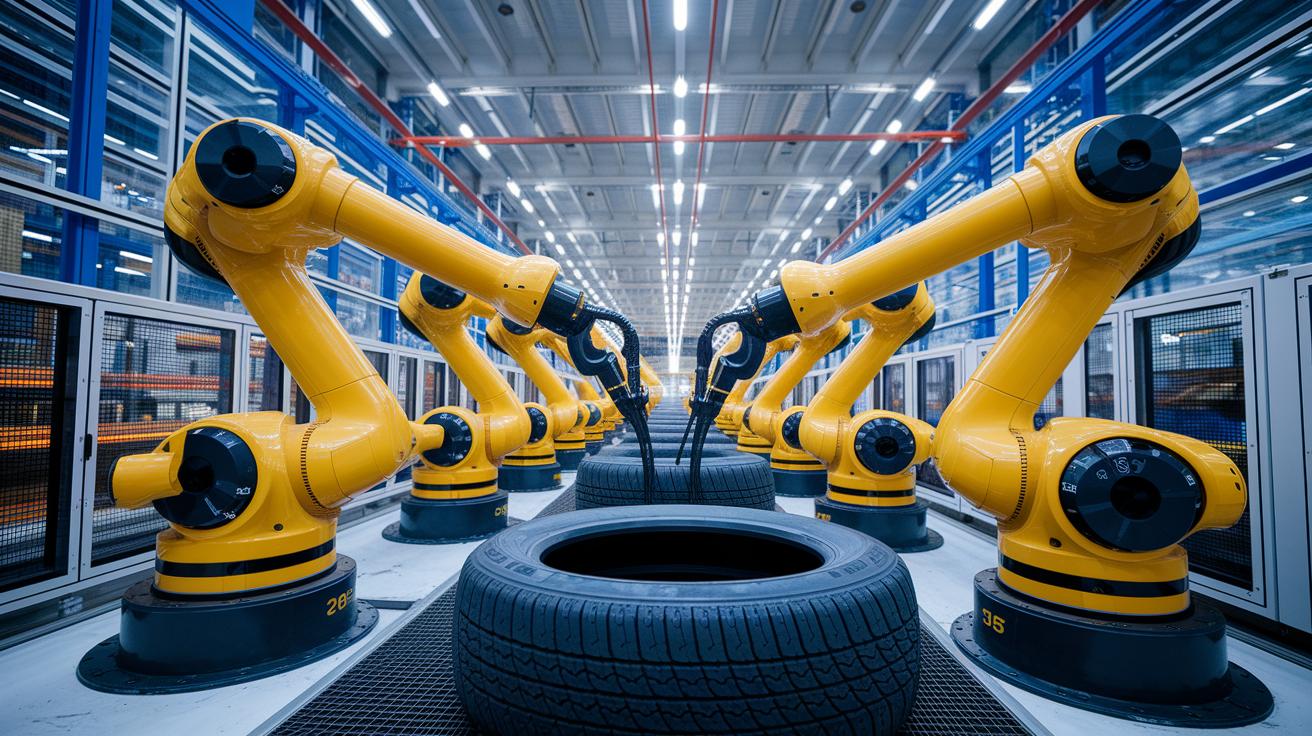
Robots are a big part of how tires are made today. They handle important jobs like mixing rubber (the stuff tires are made of), shaping them, and curing them in a process called vulcanizing. Using robots speeds up production, keeps the quality even, and cuts costs too. It’s kind of like a chef who keeps tasting the soup and adjusts the recipe as he goes.
This modern machine help doesn’t just make things faster, it also cuts down waste by spotting problems early. Sensors and controls watch every step, sort of like checking your car’s dashboard. With data from these sensors, the system can tweak things in real time to make sure each tire comes out just right. Thanks to this careful monitoring, every tire gets the same treatment and the factory can easily ramp up production.
Early tests even show that tire factories might soon run almost on their own with just a bit of human help. Manufacturers are using the latest tech to make the whole process smoother and lessen the heavy lifting. Saving money, better performance, and reliable tires are just some of the benefits this change brings. If you’re curious to learn more, you can check out the resource provided.
This new tech mixes smart ideas with practical methods, making sure that every tire is both high quality and cost-effective.
Using robots, manufacturers are ready to tackle future challenges with proven, efficient solutions every day.
Key Robotics Technologies Powering Tire Production
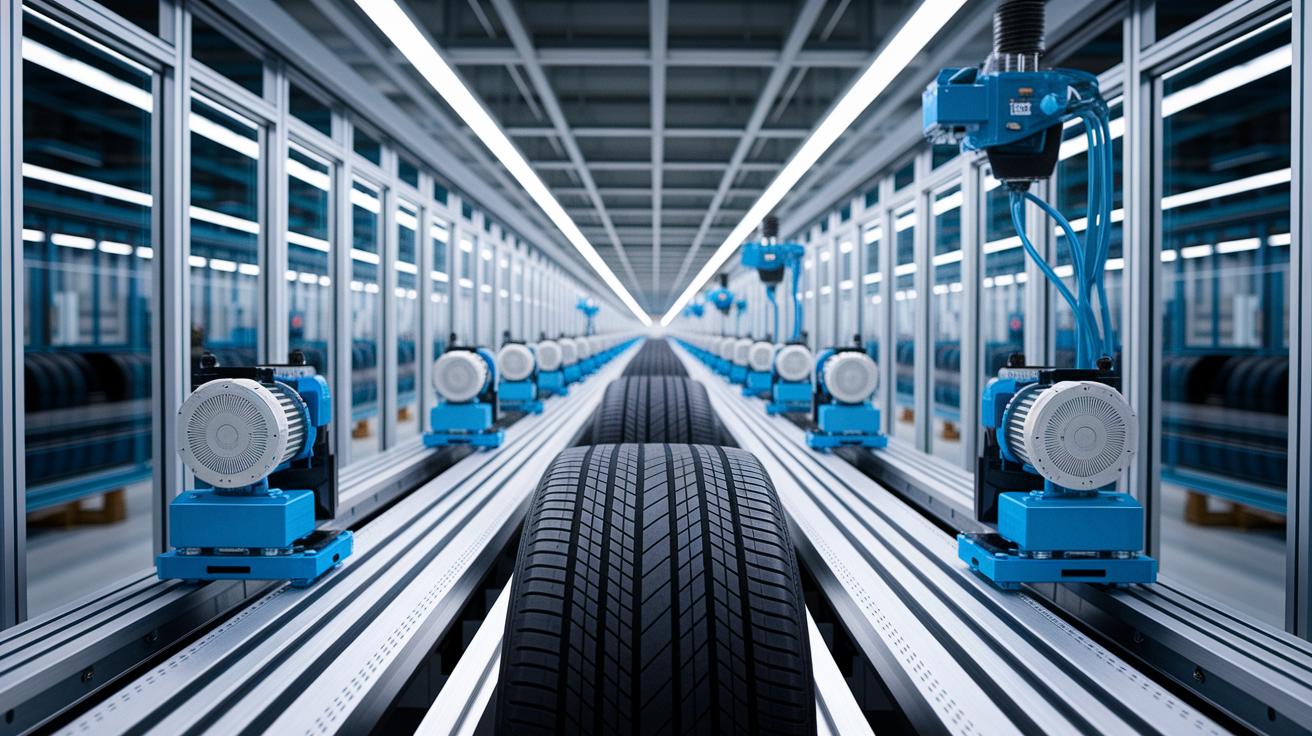
Servo motors and drives take electricity and turn it into straight and turning motions. They’re a big deal in tire making because they make sure every move is just right, like clockwork. This means the process stays consistent from start to finish, which is really important for a smooth operation.
The advanced tire-making tech from KEB unified drive hardware works with many types of motors all at once. It handles induction (motors that work off regular power), PM servo (motors that use permanent magnets for smooth motion), linear (motors that move in a straight line) and torque motors (motors that control twisting force) on one platform. This setup cuts down on the time engineers spend putting pieces together and juggling spare parts. In short, it works like one trusty tool that makes the whole production line simpler and more flexible.
Robot helpers, or cobots, are also a key part of the factory, especially in tighter spaces where extra precision is needed. These robots work alongside other machines, adding extra skill for tasks in small areas. Their presence lets tire production adjust quickly to changes on the shop floor without losing the careful accuracy that modern manufacturing demands.
Efficiency and Quality Gains through Robotic Automation

In tire production, robotic systems keep everything moving quickly so more tires are made in less time and at a lower cost. They work fast and smart, quietly saving money. Think of it like a production line that catches mistakes and cuts down on waste, you know, just like checking your work before you head out.
Robots also bring a high level of accuracy to jobs like welding and assembling tires. These systems work with the care of an artist creating perfect strokes, ensuring every tire gets the same careful treatment. This steady work not only boosts quality but also means fewer warranty claims because each tire meets strict standards. Real-time sensors, which work like a tire’s own health check, keep a close eye on the process and alert operators if something seems off. They team up with lean production practices to remove any extra steps and keep operations smooth.
Automated systems also help maintain steady output, even when unexpected hiccups occur. By cutting down on human mistakes, they reduce waste and scrap. This precise work creates a win-win situation: production lines run more efficiently, and every tire remains top-notch. It’s like having a well-tuned engine that gives you smooth rides and confidence on every trip.
Safety and Precision Standards in Robotic Tire Manufacturing
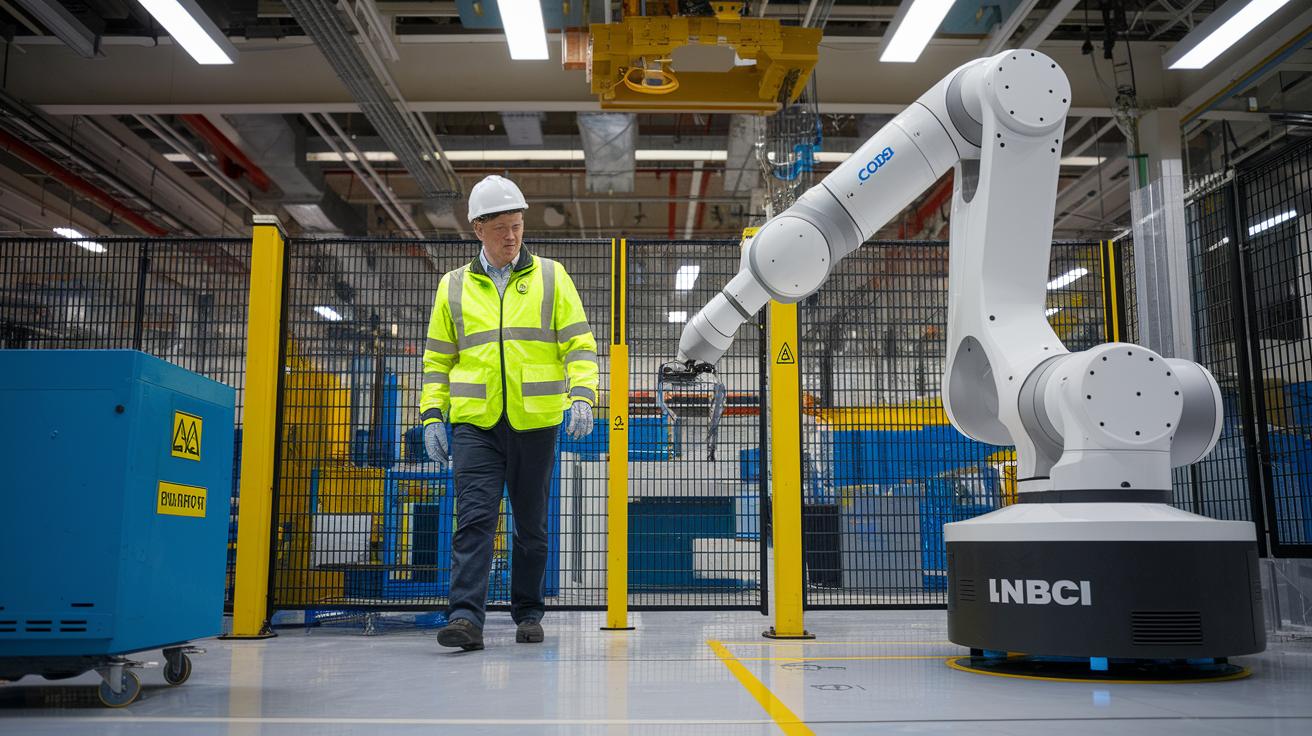
Imagine a system that slows down the moment someone gets too close, much like when you gently press your brakes to avoid a bump. In our factory, a robot can sense a nearby worker and instantly adjust its movement to steer clear, ensuring everyone stays safe. Safety features like Safe Torque Off (which cuts power to the motor) work together with optional Safe Motion systems (SLS and SLD with Safety Module 3) to protect anyone nearby.
EN ISO 13849-1:2008 tells us that cobots (collaborative robots) must be able to detect when a person is close. When someone steps near, the machine immediately slows down, uses less force, and carefully controls its path. So, if you ever find yourself near these machines, you can be sure they’re set to react right away, keeping the operation safe without slowing production much.
Predictive maintenance plays its part too. By checking important numbers in real time, the system can warn us if something might go wrong before it causes a breakdown. Plus, with remote control automation, techs can watch over the machines from far away and make quick changes whenever needed.
All these careful measures make sure that robotic tire manufacturing not only meets tough safety standards but also keeps production running smoothly with people’s safety in mind.
Case Studies: Robotic Applications in Tire Manufacturing
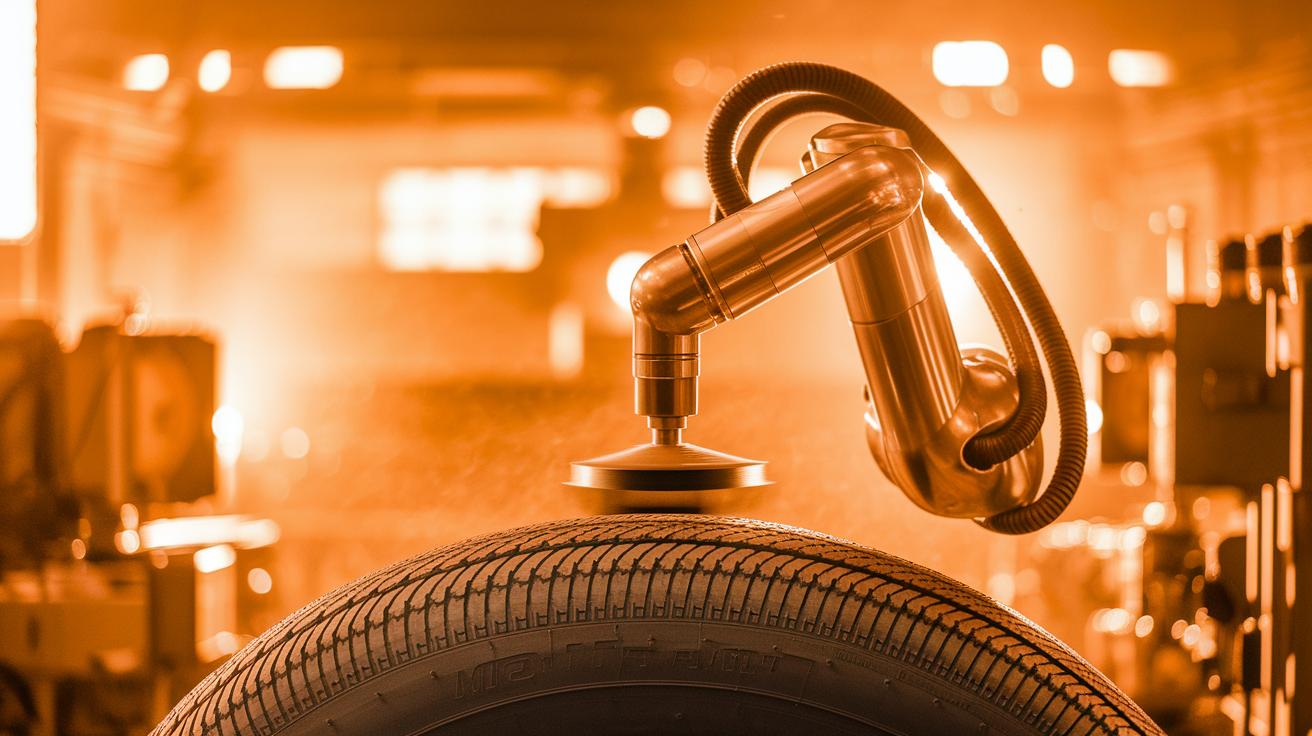
Robots in tire making are making the process run smoother. They handle different jobs with steady precision. For example, sanding robots like the RTS2000i work to smooth out tire surfaces before the rubber cures. They take off rough edges so the tire looks neat and ready for the next step.
There’s also the RTS1000i deflashing unit that cuts away extra material for cleaner edges. And then the DTS1000i steps in to drill and tap tiny holes, much like making perfect spots for a tight assembly. Tire makers say these setups give better quality and help cut down on errors.
Flame treatment modules, like the HTS100i and HTS100io, get tire surfaces ready for sticky bonding. They warm up and treat the rubber so adhesives can grip better. Alongside these, the P250 rail robot takes on heavy tasks on a set path, reducing the need for manual work and boosting safety.
Robots in the ARC Mate, Collaborative, CRX, Delta, and LR Mate families do even more tasks, from putting just the right drop of glue to spraying a thin coat that protects each tire. Imagine a robot arm spreading glue as evenly as peanut butter on bread. It’s that careful and consistent.
These examples show how smart robotic systems can speed up production and cut waste. Each solution is designed to perform its task reliably, giving tire makers the quality they trust every day.
Challenges and Future Outlook for Robotics in Tire Fabrication

Old tire-making electronics often need expensive updates even though many mechanical parts can work well for 10 to 20 years. This leaves manufacturers with the challenge of boosting systems without tossing out equipment that still does a good job. It’s a bit like adding new gadgets to an old car, you’re bringing in the latest tech while keeping parts that have already earned their keep. Imagine a production line that can adjust its own settings, much like a car that fine-tunes its engine for a smoother ride based on the road conditions.
Looking ahead, some new patents hint at smart, hands-off systems that could really change how factories run. Think of production lines that keep an eye on their own output with built-in data tools, making small tweaks all by themselves with hardly any human help. In short, moving toward these self-tuning systems is a brave new step. Manufacturers are working to set up flexible, mix-and-match automation platforms that not only make things more efficient but also open up the road to next-generation tire production.
Final Words
In the action, we saw robotic systems boost every step of tire production. Robots mix compounds, mold shapes, and weld parts with steady precision. This article highlighted the role of robotics in tire manufacturing processes, showing how tech drives consistent quality and safety.
We talked through key techniques and real-time monitoring that help lower costs and improve output. With smart automation and expert service, every drive is set for a smoother, safer ride.
FAQ
What role do robots play in manufacturing and production?
The role of robots in production is to handle repetitive tasks like mixing, molding, and welding. They boost throughput, improve consistency, and help lower production costs while keeping safety in check.
Who are the big 4 in the industrial robotics industry?
The term “big 4” in industrial robotics typically refers to leading companies known for their advanced automation solutions and reliable robotics systems in manufacturing, though the specific names can vary with market shifts.
What is the main purpose of robotic automation in vehicle manufacturing?
The main purpose of robotic automation in vehicle manufacturing is to speed up assembly lines, reduce manual errors, and deliver consistent quality, ultimately making vehicle production more efficient.
What is the main advantage of using robotics in manufacturing?
The main advantage of robotics in manufacturing is its ability to improve accuracy and speed in production tasks. This leads to better quality products, fewer errors, and a smoother overall production process.

