


Have you ever wondered if your car's tires could be made by a 3D printer soon? It's a pretty neat thought.
This new way of making tires flips old ideas on their head. Instead of taking weeks to create a working design, tire makers are testing and building prototypes in just a few days. They use computer blueprints and advanced materials (that means stuff built to last on tough roads) to make tires that really respond to how you drive.
Imagine the steady purr of your engine while your tires maintain a strong grip, even on a rainy day. It's a fresh look at speed, strength, and smart design in tire production.
How 3D Printed Tire Technology Is Transforming Tire Production
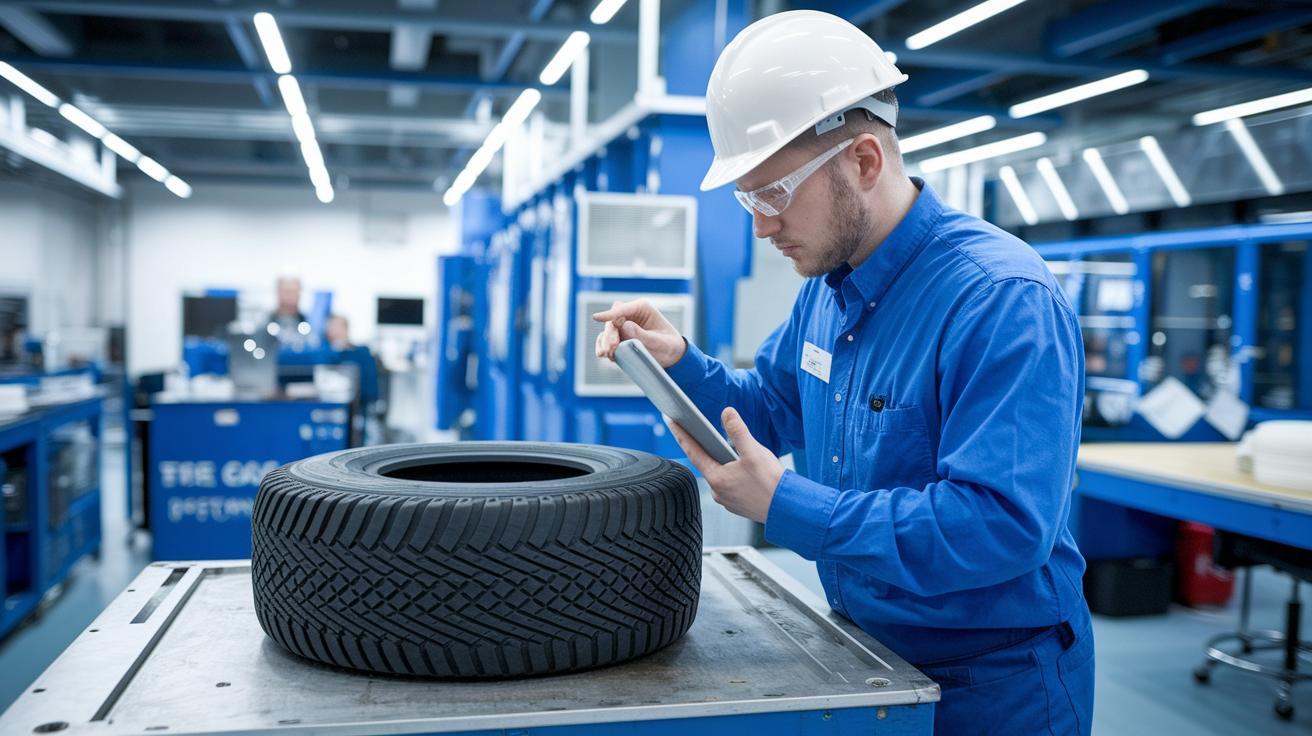
Digital production has completely changed how tires are made. It all starts with a detailed digital plan created using advanced computer-aided design (CAD) software, which captures every little detail of the tire tread (the part of the tire that meets the road). Think of it as shifting from a simple sketch to a high-tech digital workshop. Instead of relying on old methods, tire makers now use 3D printed technology that makes production quicker and more flexible.
New materials are also playing a big part in this change. With special compounds like carbon-fiber-reinforced polymers (materials mixed with strong fibers to make them tougher) and high-performance elastomers (durable, flexible rubbers), tires now offer better durability and improved road performance. And here's the neat part: testing prototypes now takes just days instead of weeks or months. This means engineers can try out new ideas and fine-tune things like safety, noise levels, and overall performance much faster.
- Customizable tread patterns at a microscopic level
- Prototype cycles that wrap up in days
- Improved material strength thanks to advanced polymers
- Integrated sensors that give real-time feedback on performance (like tire pressure and temperature)
- Less waste due to precise material use
Performance boosts are visible in every part of the process. Smart sensors are keeping an eye on things like pressure, temperature, and even road conditions, which means the tires are not only reliable but also help the whole vehicle run better. These precise production methods are paving the way for tires that are both strong and smart enough to adapt to whatever the road brings.
Material Innovations in 3D Printed Tire Technology
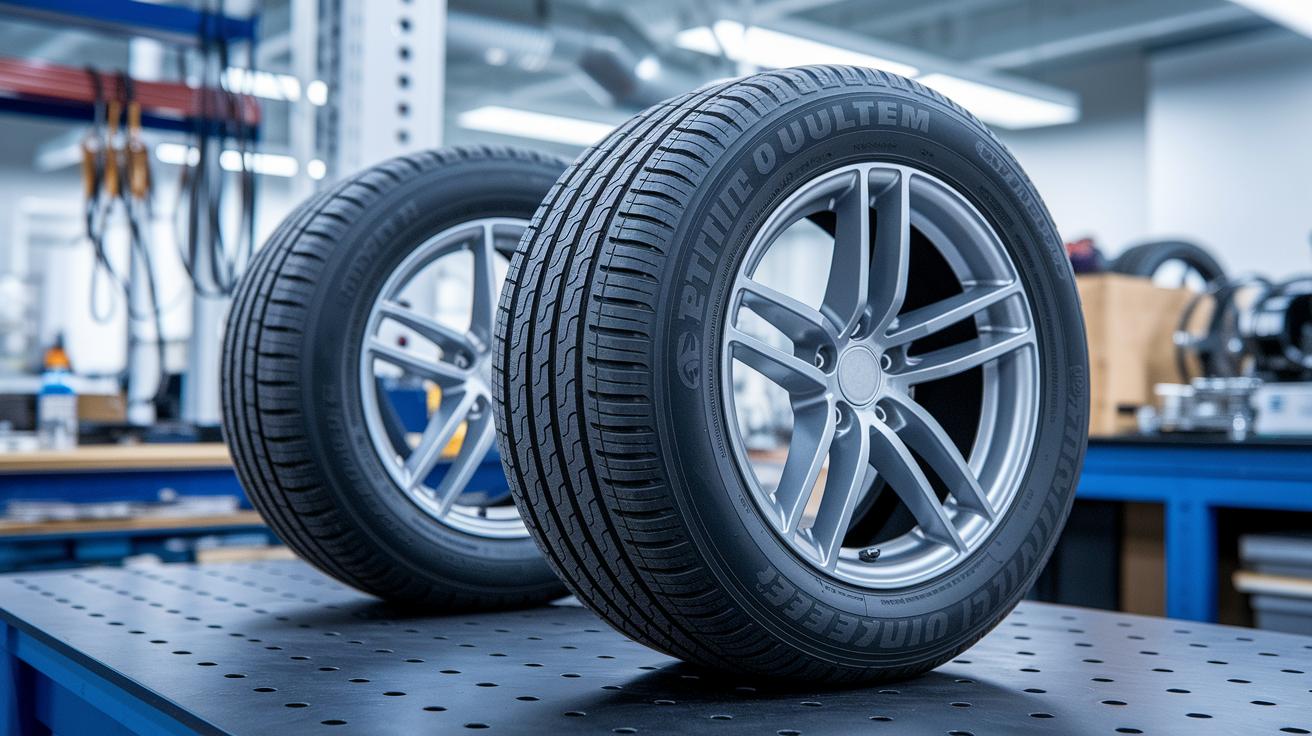
BigRep machines teamed up with new plastic mixes are totally changing how we make tires. They use tough plastics like PEEK (a strong, long-lasting material) and ULTEM® (which holds its shape nicely) to build tire parts that really stand up to the test. TPU filament, a flexible plastic, gives airless motorcycle and specialty tires the bounce and strength they need. And adding carbon-fiber parts helps the tire treads keep their grip and stay durable as they wear.
Also, Figure 4 resin RUBBER-65A BLK acts a lot like normal rubber. It’s perfect for testing out new tread designs. These cool advances in materials are shifting us from old rubber tires to smarter, precision-built ones. Using these special plastics and fibers, manufacturers can create tires that are both tough and ready for today’s road challenges.
| Material | Key Properties | Printing Application |
|---|---|---|
| PEEK | High durability and temperature resistance | Structural components |
| ULTEM® | Dimensional stability and strength | Prototype components |
| TPU Filament | Flexibility and resilience | Airless tire designs |
| Figure 4 resin RUBBER-65A BLK | Elastomeric, similar to thermoplastics | Tread prototypes |
Additive Manufacturing Methods for 3D Printed Tire Technology

The process starts with our advanced 3D Systems’ Figure 4 resin printers. These printers build up support parts one layer at a time, much like stacking building blocks. For the metal parts, they use something called selective laser sintering (SLS), which is a fancy way to fuse tiny metal particles together ensuring every detail matches the design. Also, special slicing software works with real-time monitoring to fine-tune each step, so every piece comes out just right.
Then come the BigRep STUDIO machines. These machines offer build volumes that are about ten times larger than standard desktop printers. That means they can produce bigger tire prototypes and handle more complex designs easily. This kind of advanced gear goes hand-in-hand with today’s car tech trends, making it a smooth ride from prototype to full production.
Alongside this, there’s an ecosystem of filament dry cabinets and rapid-prototyping services that team up with industrial robotics to bring automation into the mix. With a layer-by-layer process and integrated workflows, manufacturing stays both scalable and efficient. The result? Tires that benefit from continuous improvements and precision every time they roll out.
Performance Analytics and Lifecycle in 3D Printed Tire Technology

Imagine a tire that can check itself in real time. Thanks to smart sensors that watch tire pressure, temperature, and even the road conditions, these tires adjust as they go. They help keep you safe by ensuring the right grip no matter how the road changes. Virtual tests speed up design by checking things like safety, noise, grip, and how hard it is to roll. And since these airless, 3D printed tires don’t get flats as easily and need less upkeep, they really last longer.
Today’s tools can also simulate heavy loads and test how well a tire handles heat. Studies show that 3D printed tires not only cut down on waste but also make recycling at the end easier. With predictive testing, engineers can see how much wear a tire may get before it even hits the road, much like getting a peek at the future. In truth, these smart designs lower production costs and help the environment, all while delivering top-notch performance.
- Durability (how many hours a tire runs before 20% of its surface wears down)
- Thermal stability (the highest steady temperature the tire can handle in °C)
- Load-bearing capacity (how much weight the tire can manage, measured in kN)
- Acoustic performance (the drop in noise levels measured at 50 mph)
- Recyclability (the share of the tire that can be reused at its end-of-life)
Challenges in Scaling 3D Printed Tire Technology

Old methods like using simple 2D sketches and aluminum molds can take weeks and cost a lot, slowing down the process of trying out new tire designs. Sure, industrial robots could speed things up by adding more automation, but they have to work within current smart manufacturing systems, and that isn’t always easy.
When it comes to making tires in large numbers, strong quality checks and digital twin models (virtual copies used to simulate real products) are a must if every tire is to meet high standards. Companies often struggle to line up material checks and the technical details needed to guarantee that each batch is just as good as the last. Without these measures, the cost-saving plans can fall apart and fast production becomes much harder.
To beat these obstacles, manufacturers need to re-examine their quality checks and plan carefully for scaling up production. This means facing cost issues head-on while integrating automation, using digital twins, and setting up reliable quality control systems. It’s not just about investing in new technology; it’s also about training people and refining processes so that every tire is consistent in quality. Only by tackling these challenges can 3D printed tire technology move from innovative prototypes to reliable, mass-produced products.
Future Prospects of 3D Printed Tire Technology in the Automotive Industry

There’s a lot of buzz about 3D printed tires these days. Companies like Hankook are already showing us what’s possible with their non-pneumatic i-Flex tire, which is made for an autonomous mobility platform called the HPS-Cell. And then there’s BigRep, whose airless motorcycle tire on the NERA eBike proves that smart tire ideas are catching on. It’s fun to see how these new tires are being built to work better with electric vehicles and special uses.
Digital twin tools are making tire design faster and smarter. Basically, designers can test and change tire ideas in a computer simulation that copies real-life conditions. This means they can check how a tire might wear out (that is, how quickly its surface erodes) or need repair before building it for real. AI is also helping, so new tire ideas can be prototyped quickly and efficiently. These methods not only speed up the work but also help reduce waste, which is great for our planet.
Looking ahead, tire technology is set to change even more as electric and self-driving vehicles become common. Imagine advanced sensors inside a tire that send real-time info on grip and wear. This data can help keep the ride safe and smooth, even on tough roads. Manufacturers are focused on making tires that perform under tough conditions, while also being kinder to the environment. Cool, right?
Final Words
In the action of our discussion, digital production strategies, material innovations, and sensor-driven performance analytics came together to show how 3d printed tire technology is changing tire production. We looked at rapid prototyping, additive manufacturing methods, and challenges in scaling production while also shining a light on emerging auto solutions.
Thanks to these exciting developments, 3d printed tire technology offers smoother, safer rides. Embracing 3d printed tire technology means stepping into smarter, more reliable auto solutions ahead.
FAQ
What is the new tire technology?
The new tire technology refers to 3D printed tires that use detailed digital blueprints and advanced materials like carbon-fiber-reinforced polymers, combined with smart sensors that monitor performance in real time.
Is it possible to 3D print rubber?
It is possible to 3D print rubber-like materials by using flexible elastomer formulations, which replicate rubber’s elasticity and durability in specialized tire prototypes and other flexible components.
What is the most profitable thing to 3D print?
The most profitable items to 3D print tend to be custom, high-value components. In tire production, rapidly prototyped smart parts often yield greater returns due to their precision and quick turnaround.
What is the 45 degree rule for 3D printing?
The 45 degree rule means that printed overhangs at angles below 45 degrees typically require support structures to maintain stability, ensuring better print quality and reducing material sag.

