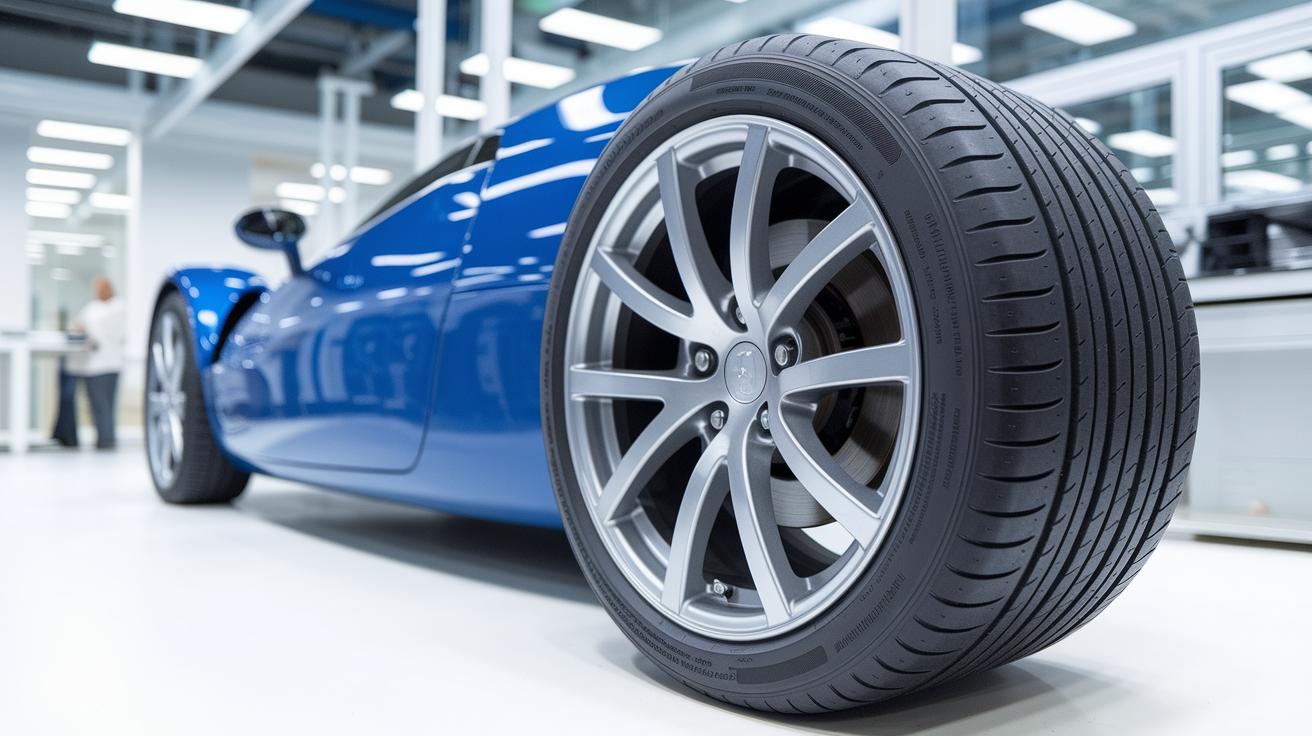


Have you ever wondered what your tires would say if they could talk? New tire technology is changing the way we drive and look after our cars.
Today, tiny sensors (small devices that check things like the air in your tires, how warm they get, and how fast their surface wears out) work hard to keep an eye on tire pressure, temperature, and wear. And smart computer tools, powered by AI (a bit like a clever helper), give tire care an extra boost.
In this article, we'll take a look at two cool trends that could make your tires even more responsive and efficient. These advances might help you save fuel and make your tires last longer. It feels almost like having a good friend who always watches over your car's safety.
Key Innovations Driving Future Trends in Smart Tire Technology

Smart tire sensors and wireless connections are quickly changing how our tires work. These tiny sensors keep an eye on things like tire pressure, temperature, and tread wear (how quickly the tire surface wears down) while also checking road conditions. They send data in real time, usually through Bluetooth or other wireless networks, right to your car’s system or even your phone app. It’s like having a trusted friend who’s always checking in on your tire’s health. For more details on how these sensors work, check out how do smart tire sensors work.
Some key benefits include:
- Real-time tire pressure monitoring
- Temperature and thermal scanning
- Tread wear detection alerts
- Road-condition analysis modules
Keeping your tire pressure just right can lead to real benefits, like saving up to 5% on fuel and extending the tire’s life by about 15%. Quick alerts about tread wear help you know when it's time to swap out tires so you always get a good grip on the road. These smart sensors also help cut down on the chance of blowouts and keep your ride comfortable, even when tire conditions suddenly change.
Advanced road-condition modules add another layer of safety by constantly checking the road ahead. They can quickly spot icy patches, wet spots, or bumpy terrain and help adjust how the tire works to keep your car steady. This smart reaction is important for everyday drivers and even for fleet operators who need a reliable system to handle sudden road changes. Overall, these smart systems make tires not only more responsive but just better suited for today’s driving challenges.
Artificial Intelligence in Rubber Engineering Enhancing Future Smart Tire Trends

Artificial intelligence in rubber engineering is changing our view on how tires wear out and when they need a checkup. AI models look at tire wear patterns and use smart math (machine learning) to adjust things like tread shape and rubber hardiness. This means we can spot problems up to 30% earlier than the old ways, giving us time to fix things before they really go wrong. By mixing smart design ideas with sensors that predict faults, engineers can mimic different road conditions to really improve tire performance. It’s a new way to make tires last longer while making your ride smoother.
Fleet owners and tire makers now have handy dashboards that show real-time sensor data and predict when a tire might fail. These dashboards use AI to catch early issues, which helps reduce downtime by 20%. In simple terms, the system alerts you early so repairs can be done before any big problems show up. This proactive approach saves money and boosts road safety while continuously tuning tire performance. With these smart systems evolving, managing tire care is set to become smarter, safer, and way more efficient.
Connectivity Platforms and Real-Time Pressure Oversight in Future Trends

Connected analytics platforms are now a key part of smart tire systems. They use wireless data exchange like BLE (a short-range, low-energy radio signal) and LPWAN (a network that covers long distances with very little power) to send tire information via IoT (Internet of Things) systems. The data flows straight to cloud-based management tools, so you don't have to check things manually. It means drivers and fleet managers always have access to up-to-date tire info, no matter where they are.
Live dashboards now let you keep an eye on tire pressure in real time. They send instant alerts when tire pressure changes by more than 5 psi (pounds per square inch). By combining strong connected analytics with remote monitoring, these systems track tire conditions every second. The steady flow of data helps spot changes fast, which leads to a smoother ride and fewer tire problems.
For both fleet managers and everyday drivers, real-time pressure monitoring brings big benefits. Remote setups cut manual checks by about 40% in commercial fleets, making tire maintenance much more efficient. Today’s vehicle systems use wireless connections so even a small pressure change triggers a quick alert. This keeps tires performing at their best, boosts safety, and cuts down on unnecessary stops for repairs.
Self-Adjusting Pneumatic Systems and Adaptive Performance Tuning in Smart Tires

Imagine your tires taking care of themselves so you always have the right air pressure. Self-adjusting pneumatic systems check how heavy your vehicle is, how fast you're going, and even the temperature outside. They adjust the pressure for you, keeping it within about 2 psi of what’s needed. Cool, right? Think of it this way: it’s like your smartphone automatically dimming its screen; you barely notice the change.
Adaptive performance tuning kicks it up a notch. When you take a sharp turn, this system quickly adjusts the tire’s grip and shape in less than a blink (about 100 milliseconds). It tweaks the tread (the rubber part that touches the road) to help you stay balanced during curves or unexpected maneuvers. Ever notice how a smooth turn can change the whole ride? This smart adjustment makes that possible.
Then there’s dynamic performance tracking. This part keeps an eye on how your tire is doing by checking things like slip angles (which tell you if the tire is sliding a bit) and friction (basically, how well the tire grips the road). Using simple, automated commands along with your car’s computer, the system fine-tunes the performance in real time. It’s just like having a tiny pit crew constantly making sure everything is set for a safe, smooth drive.
Sustainable Material Breakthroughs and Advanced Composite Innovations Shaping Future Smart Tire Trends

Scientists are busy creating greener tire materials that promise a smoother ride for everyone. They’re using natural ingredients to make bio-based rubbers that lower carbon emissions by about 20%. And you know what’s cool? Tiny, nano-engineered mixtures (think of small bits of silica and graphene that toughen up the tire’s side) can cut rolling resistance by around 8%, making your drive feel easier.
Next, researchers are testing self-healing polymers that pack microcapsules (small pockets that patch up minor punctures on their own) to keep tires in tip-top shape. Meanwhile, new tire formulas are blending plant oils and recycled materials to maintain that trusty grip and durability, all while being kind to our environment.
These eco-friendly ideas are rewriting the rules on tire toughness. Advanced composites help tires last longer and perform consistently on every road. By mixing everyday green ingredients with smart engineering, manufacturers are crafting tires that hold up under tough conditions and still show love for nature. It’s like getting the best of both worlds: reliable traction and safety with a smaller carbon footprint.
| Material | Benefit | Development Stage |
|---|---|---|
| Bio-based rubber | 20% lower CO₂ | Pilot production |
| Nano-composite sidewalls | 8% less rolling resistance | Lab validation |
| Self-healing polymers | Automatic puncture repair | Prototype trials |
So, by blending smart technology with green ideas, tire makers are setting the stage for a future where every journey is safer, smoother, and kinder to the planet. Think about it, like enjoying that steady hum of an engine on a long drive, you get reliable performance wrapped in an eco-friendly package.
Industry Impacts and Market Predictions for Future Trends in Smart Tire Technology

The global smart tire market is on an exciting ride, with experts predicting it could grow by about 12% each year through 2030. And it gets even better, electric vehicles, which more and more people are choosing, might boost their market share by up to 18%. Smart tires, which use built-in sensors and digital tools to warn you when maintenance is needed (that’s predictive maintenance in plain talk), are quickly becoming a favorite for improving road safety and performance.
There’s a lot of teamwork going on in the industry too. Big car makers and tech experts are getting together at events like the CIIE to set common standards. Their joint efforts are making sure that smart tires not only pass safety tests but also work well with digital systems that keep an eye on tire health in real time.
Fleet managers are also noticing the benefits firsthand. Some expect to see a return on their investment within just 18 months, thanks to lower maintenance costs and smoother service schedules. As more drivers and fleet operators use smart tire systems to plan repairs before any problems occur, everyone can enjoy a more efficient and confident driving experience.
Final Words
In the action, we explored smart sensors, AI predictions, and connected platforms that adjust tire pressure and react to road conditions.
We looked at systems that offer real-time alerts, tune performance automatically, and help extend tire life.
Advances in material design also show promise in reducing environmental impact while boosting durability.
All this points to a future where future trends in smart tire technology help drivers enjoy a smoother, safer ride.
FAQ
What is the future of sensor technology?
The future of sensor technology in smart tires embraces advanced sensors that keep an eye on pressure, temperature, tread wear, and road conditions. They send real-time data via wireless networks to vehicle systems or phone apps for improved safety and efficiency.
What is the 3% rule for tires?
The 3% rule for tires suggests that even a slight, roughly 3% drop in tire pressure can impact performance, fuel efficiency, and wear. It serves as a reminder to check and adjust tire pressures regularly.
How is the Smart Tire Company doing?
The Smart Tire Company is progressing by integrating cutting-edge sensor technology, IoT connectivity, and adaptive systems. They are aligning their innovations with current trends to boost tire safety and overall performance.
What are the latest tire innovations?
The latest tire innovations feature smart sensors for tracking pressure and tread wear, AI-driven forecasting for maintenance, connected platforms for real-time alerts, and self-adjusting systems that fine-tune performance on the move.

