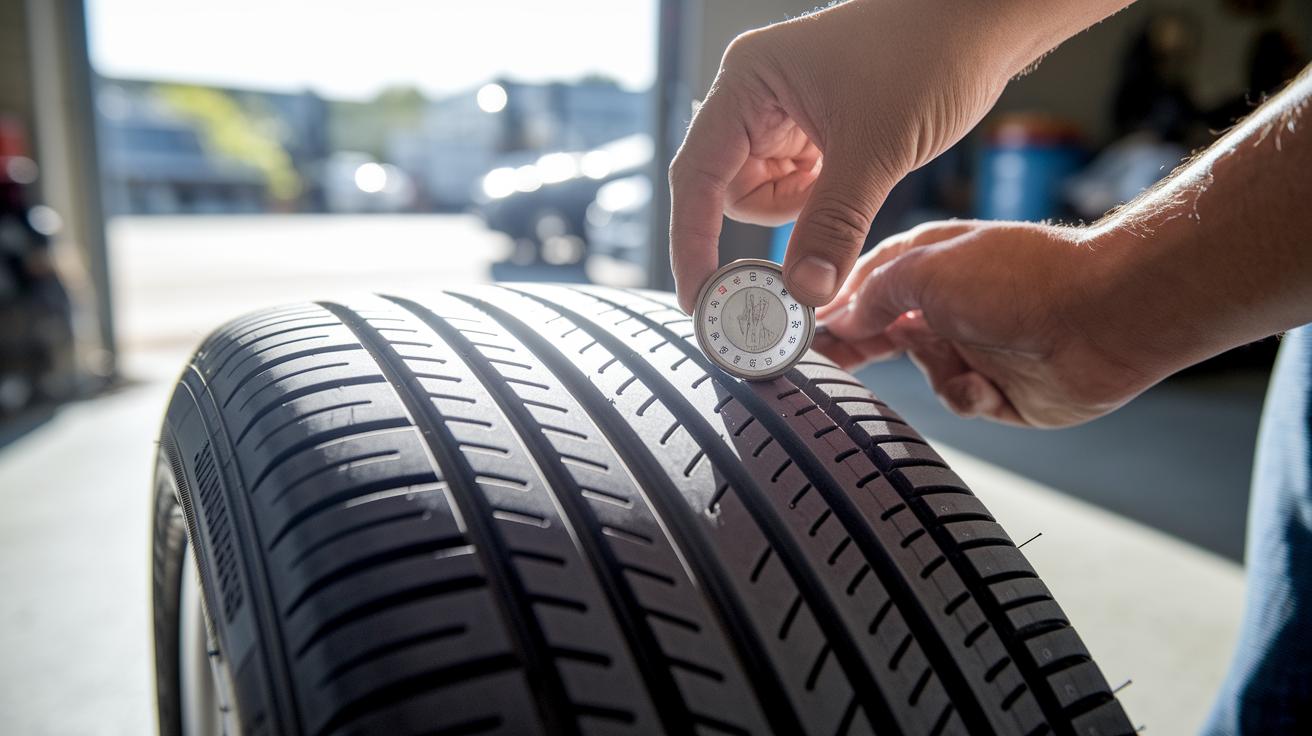


Have you ever thought that a coin might be a simple way to keep you safe on the road? It might sound a bit odd, but checking the grooves in your tires (the tread that touches the road) with a coin is a quick trick.
In this guide, we'll show you how to use a penny or a quarter to check if your tires are worn out. We’ll also explain how you can use a gauge (a tool that measures tire wear) or even a ruler to get a closer look.
Stick with us, and you'll pick up a neat trick to help keep your ride smooth and safe.
Quick In-Home Tire Tread Depth Measurement
Penny Test
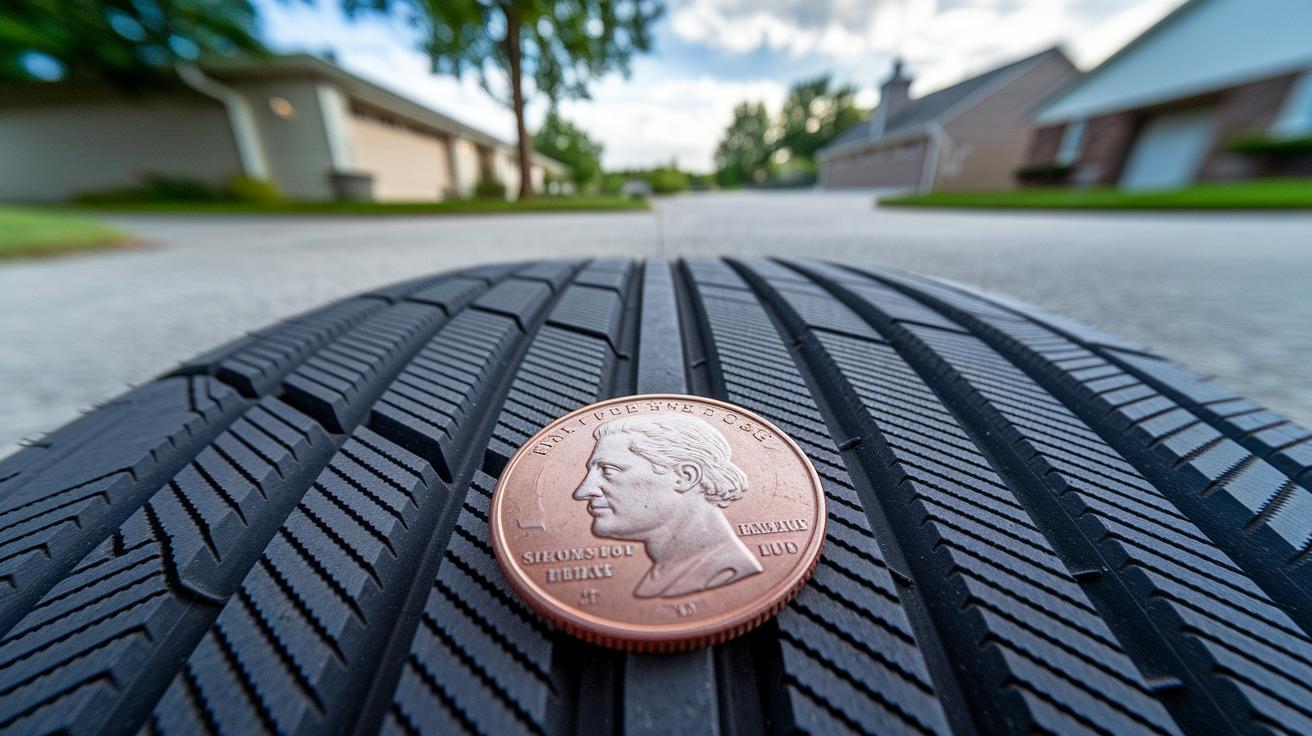
Grab a penny and flip it upside down. Stick it into one of the grooves on your tire. Take a good look to see if Lincoln’s head shows up completely. If you can see his whole head, that means your tire tread is below 2/32 inches, which isn’t safe. It’s a bit like doing a quick roadside check, if Lincoln’s face pops out, it’s a clear sign that the tire is worn out. Try a few different grooves to be sure nothing odd is going on.
Quarter Test
Now, take a quarter and place it in another groove with Washington’s head facing down. If the tread lines up with or sits above Washington’s head, your tire has at least 4/32 inches of tread, meaning it’s in decent shape. Check a few spots on each tire to catch any uneven wear that might need a closer look. This handy coin trick is an easy way to keep an eye on your tires without needing any special tools.
Essential Tire Tread Depth Measurement Tools
Tire Tread Gauge
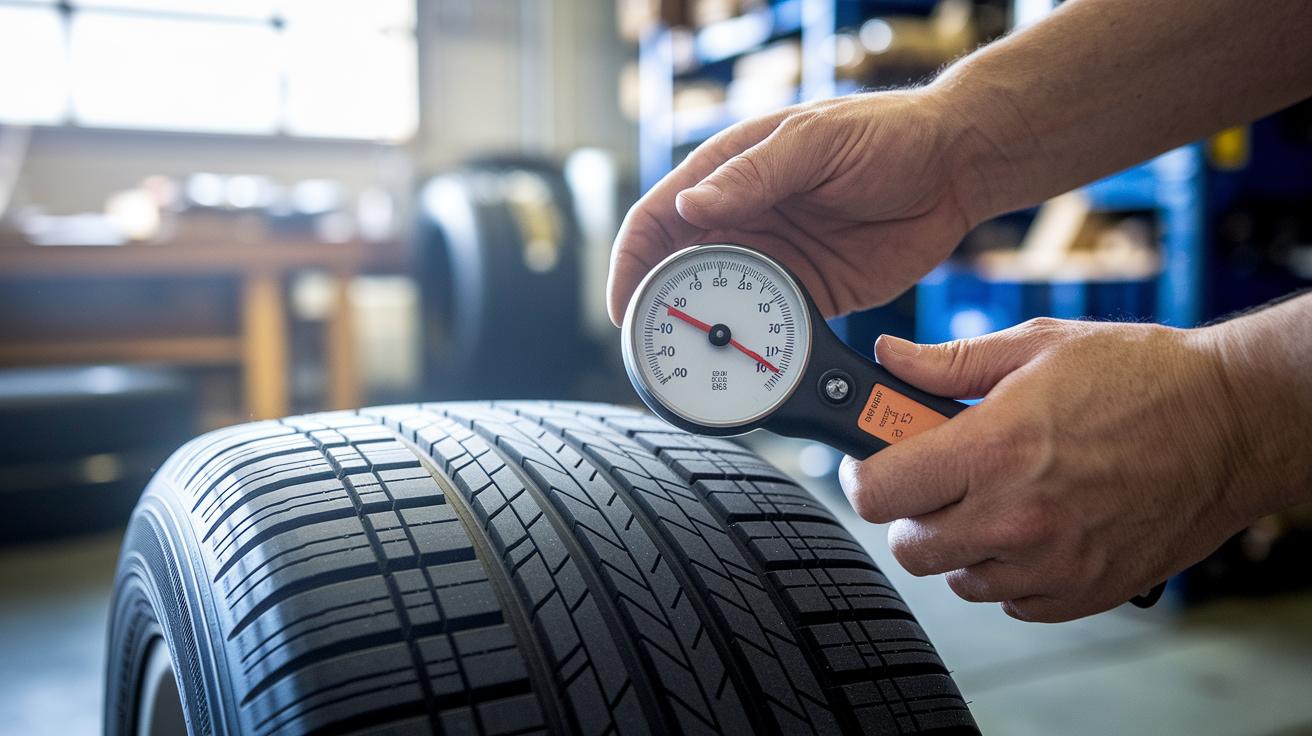
This tool is like a little scale for your tires. It gives you a quick read in 32nds of an inch so you can really tell how deep your tread is. For example, when it shows 10/32 inches, it means your tire is almost as good as new. Using a tread gauge is far more accurate than relying on a coin or just looking at the tire, and it helps you catch wear before it turns into a safety problem.
Ruler Technique
If you don’t have a tread gauge around, a regular ruler works well too. Just slide the ruler into a clean groove on the tire and see where the tread meets it. Sure, it might not be as exact as the gauge, but it still gives you a good feel for how much tread you’ve got left. Think of it like checking your fuel gauge, it’s simple and does the trick.
Digital Apps and Electronic Gauges
Today’s tech has stepped in with smartphone apps and electronic gauges. These smart tools scan the tire’s tread and show you the measurement on screen. It turns a routine check into a high-tech process that makes tracking changes over time super easy.
Step-by-Step Tire Tread Depth Check Procedure

Start by parking on a flat surface with the parking brake engaged. Clear away any dirt or debris from the tire grooves so you can see everything clearly.
-
Pick one groove on the tire and look at three spots: the outer edge (shoulder), the middle, and the inner edge. This way you can tell if the wear is even.
-
Take a penny and tuck it into the selected groove with Lincoln’s head turned down. If you see part of his head sticking out above the tread, it means the tread is less than 2/32 inches deep and the tire might not stick well to the road. It’s a simple sign that your tire could be nearing its safe limit.
-
Now switch the penny with a quarter. Place the quarter in the same groove, this time with Washington’s head facing down. If the tread touches or goes above his head, it shows there’s at least 4/32 inches left, which should keep your tire grippy on wet roads.
-
Jot down what the penny and quarter show for each spot. Comparing the results from the shoulder, center, and inner edge can help spot differences and might point to issues like low tire pressure or alignment problems.
-
Finally, repeat these checks on all four tires to make sure each one meets safety standards.
Tire Tread Depth Results and Safety Standards

The law requires your tire tread to be at least 2/32 inches deep. When the small wear bars inside the tire line up with the tread, it means the tire is at its limit and should be replaced. Tires worn below this mark can be dangerous since they may lead to hydroplaning (when water causes your car to slide) and longer stopping distances.
For a safer ride in the rain, it's best if your tires hold around 4/32 inches of tread. Front tires usually lose tread faster, so keep an eye on them. Uneven wear might signal issues like low air pressure or wheel misalignment.
| Requirement | Tread Depth |
|---|---|
| Legal limit | 2/32 inches |
| Improved performance | 4/32 inches |
Checklist:
- Ensure your tires have at least 2/32 inches of tread.
- Replace tires when the tread reaches or goes below 2/32 inches.
- Frequently check your front tires for uneven wear.
- Aim for tread above 4/32 inches for better safety in wet conditions.
Think of it like this: if your brakes were worn right down to the minimum, you'd get them fixed right away to stay safe on the road.
Tire Tread Depth Maintenance and Replacement Indicators

Keeping your tires in good shape is key to a safe ride. One smart move is to rotate your tires every 5,000 to 7,000 miles. It’s a bit like switching seats on a long car ride so that everyone gets a fair look out the window.
Another tip is to check your tire pressure often. When your tires are filled up just right (according to the maker’s advice), they wear evenly. Think of it like glancing at your fuel gauge before a long trip, you don’t want any surprises down the road.
Regular alignment checks are also really helpful. They stop your tires from wearing unevenly and keep them in top form. Look for signs like sidewall damage, cupping (when the tire forms little dips), or tread separation. Notice any of these? It might be time to get them looked at.
- Rotate tires every 5,000 to 7,000 miles.
- Keep up with proper air pressure.
- Get your wheel alignment checked regularly.
- Watch for sidewall issues and uneven tread wear.
When you see that the grooves in your tire have worn down to 2/32 inches or the wear bars line up with the tread surface, it’s a clear sign that you need new tires. Taking care of these details will help your tires perform their best every time you hit the road.
Final Words
In the action, the guide walked through easy coin tests and precise measurements to check tire wear at home, from using a penny to gauge when your tires need replacing, to relying on a tire gauge or digital app for accuracy.
This guide clearly explains how to check tire tread depth and regular maintenance tips that help every driver stay safe. Keeping your tires in top shape means better grip, smoother rides, and more confidence on the road.
FAQ
What is a tire tread depth gauge?
A tire tread depth gauge is a tool that measures the depth of your tire’s grooves in 32nds of an inch, helping you quickly check for wear and decide if your tires remain safe.
How do I check tire tread depth at home?
Checking tire tread depth at home can be done with a coin test, a ruler, or a tire gauge. Simply clean the groove, insert the tool, and compare the reading to safe standards like 2/32 inches.
How do I check tire tread with a penny?
The penny test involves placing a penny upside-down in the tread groove; if you see all of Lincoln’s head, your tire tread is below safe limits, typically indicating 2/32 inches or less.
How do I check tire tread with a quarter?
The quarter test means inserting a quarter upside-down into a tread groove. If Washington’s head is at or above the tread, it shows the tire has more than 4/32 inches of tread remaining.
Is the penny test for tires accurate?
The penny test offers a quick, home method to review tire wear. While it gives a general idea of tread depth, it isn’t as precise as a dedicated tire tread gauge.
What does a 2/32 tire tread look like?
A 2/32 tire tread is almost flush with the built-in wear indicators on the tire. At this point, the tire is worn out and should be replaced immediately for safe driving.
What is a good tread depth on a tire?
A good tread depth is above 4/32 inches, as new tires usually have between 10/32 and 11/32 inches. This depth offers reliable grip in various road conditions.
How can I check tire tread using a ruler?
To use a ruler, insert it into a tread groove and look at where the tread meets the ruler. This simple method lets you measure how much tread is left accurately.
What is a tire tread gauge chart?
A tire tread gauge chart provides a visual guide to convert your measured values into safe depth levels. It helps you quickly interpret your readings against standard safety benchmarks.
What is a safe tire tread depth in millimeters?
A safe tire tread depth is about 2/32 inches, which is roughly 1.6 millimeters. Staying above this level is key to maintaining proper grip and safe driving conditions.
How do Reddit users suggest checking tire tread depth?
Many Reddit users recommend cleaning the tire grooves and using a coin test or a dedicated gauge. This method is a handy, reliable home trick when professional tools aren’t available.

