


Have you ever thought about switching your tires all by yourself without going to the shop? It might seem a bit tricky at first, but with a few simple steps, you can do it and help your tires last longer.
Imagine chatting with a good friend about how to get the job done. First, you'll need to loosen the lug nuts (those are the bolts that hold the tire in place), and then lower your car safely so you can work on it.
With these straightforward moves, you’re set to keep your ride smooth and safe. Ready to see just how a few smart moves can make a real difference?
Step-by-Step Guide to Tire Rotation

Rotating your tires helps them wear evenly and can make them last longer. This guide breaks down each step so you can do your tire rotation safely at home, just like chatting with a friend.
First, give the lug nuts a slight loosen before you lift the car. This little trick makes it easier to remove them later. Then, raise the car by using the jacking points found in your owner’s manual.
Next, secure the vehicle with jack stands. This keeps it safe and steady while you work on it. Carefully remove each wheel one by one, watching out in case any bolts get stuck.
After that, swap the wheels using the right pattern for your vehicle. Doing it this way helps the tires wear uniformly. Once the wheels are in place, hand-tighten the lug nuts in a star pattern. This approach helps the wheel settle in evenly.
Then, slowly lower the vehicle back to the ground. When it’s down, use a torque wrench to tighten the lug nuts to the manufacturer’s recommended setting (around 80-100 feet per pound). This step makes sure everything is secure.
Before finishing up, take a moment to check that each lug nut is at the right tightness and the wheels are firmly in place. It’s also a good idea to check your tire pressure and make sure each tire is filled to the manufacturer’s suggested PSI. This extra step keeps you safe and helps your tires work efficiently.
For most passenger cars, a tire rotation every 5,000 to 7,500 miles is a smart routine. Following these steps can help you avoid uneven wear and vibrations, making your ride smoother every time you’re on the road. Enjoy the peace of mind that comes with taking good care of your tires!
Why Tire Rotation Matters and When to Schedule It

When you rotate your tires, you're not just evening out wear. It can boost your fuel economy by about 3% and help your tires last up to 20% longer. Imagine driving with tires that grip the road unevenly, causing small shakes that make the ride feel off, even on a familiar, rainy day. Regular rotations keep your tires balanced and your ride smooth.
Many folks think tire rotation is just another routine expense. But skipping it can mean uneven contact with the road, which leads to extra vibrations and a rough ride. It’s a bit like riding a bike where one tire wears down faster than the other, you end up compensating for the imbalance and your journey suffers.
Most vehicle manuals suggest rotating your tires every 5,000 to 7,500 miles. Over time, missing this simple step can throw off your tire pressure distribution and affect your car’s overall performance. For more tips on when to rotate your tires, check out the link here: how often to do tire rotation.
Selecting the Right Tire Rotation Pattern for Your Vehicle

If your car is front-wheel drive, you’ll usually switch tires using a forward cross pattern. That means the tires in front move straight back while the ones in the back hop over to the front. It’s much like swapping seats at a family dinner so that every tire gets a fair share of the spotlight. This way, each tire wears out evenly, keeping your ride smooth and reliable.
For cars that run on rear-wheel drive or four-wheel drive, a rearward cross pattern works better. With this method, the tires at the back move straight ahead, and the front tires cross over to the rear. Imagine rearranging a sports team so that every player shifts into a different spot to boost balance and stability on your drive.
When you have an all-wheel drive car or ones with non-directional tires (tires that can be installed in any direction), the X-pattern is usually the best choice. In this pattern, every tire swaps with its diagonal partner, so they all get a similar experience on the road. Picture swapping corners in a square, giving each tire a new view. However, if your car uses directional tires (tires designed to work best in one direction), you’ll want to stick to a simple front-to-rear swap. This keeps the tire’s design working as it should and helps maintain safety and peak performance.
Essential Tools and Safety Measures for Tire Rotation

Before you start rotating your tires at home, make sure you have all the right tools handy. You’ll want a lug wrench to loosen and tighten bolts, a torque wrench (which helps ensure lug nuts are tightened just right), a floor jack, jack stands, wheel chocks to stop any rolling, and a pair of work gloves. Keeping these tools nearby is like having a trusty toolbox that saves you from making extra trips and keeps your work smooth and safe.
When it comes to safety, there are a few key steps to follow. Park your car on a flat surface and set the parking brake so the vehicle stays still. Then, place wheel chocks behind the wheels that remain on the ground to avoid any accidental rolling. Always use the jacking points recommended in your owner’s manual, and never crawl under the car unless it’s securely supported by jack stands. These simple safety habits help protect you and make tire rotation worry-free.
Troubleshooting Common Issues During Tire Rotation
Dealing with Stuck Lug Nuts
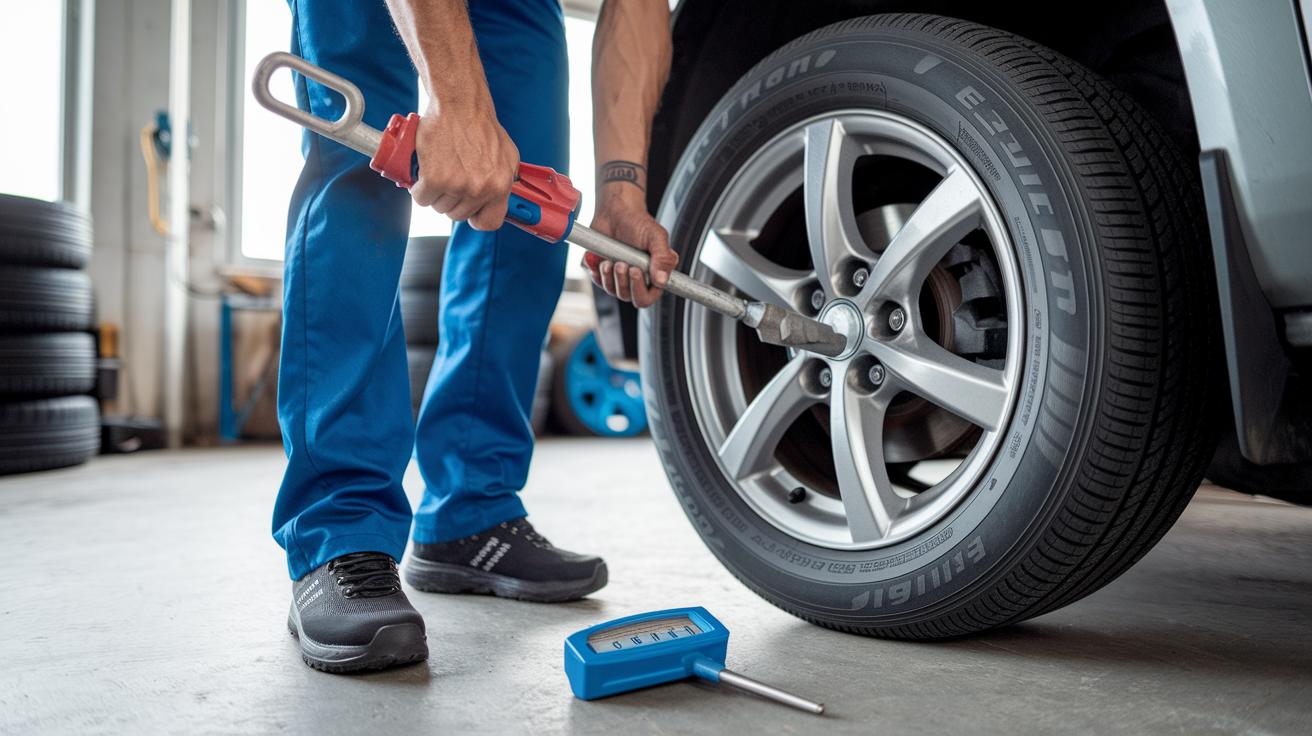
Sometimes you might find that a lug nut just won't budge. When that happens, a little extra care goes a long way. Try spraying some penetrating oil on the nut (this liquid helps break down any buildup) and let it sit for about 10 minutes. Then, use a breaker bar at a 45° angle and apply steady force. This method usually frees up that stubborn nut without causing damage. And don’t forget to start by turning the lug nuts by hand, it helps avoid cross-threading and keeps everything lined up just right.
Detecting and Addressing Uneven Wear
Uneven tire wear can really affect how your ride feels. A quick way to check is by using a tire gauge (like a small ruler for your tire’s grip). If your reading is below 4/32 inches, your tire might need a rotation or even replacing. Keep an eye out for signs such as cupping, where the surface shows little dips, or feathering, where the edges wear unevenly. These clues are a friendly hint that it might be time to inspect your tires more closely.
Before you wrap things up, make sure each lug nut is tightened to the manufacturer’s specified torque, typically around 80 to 100 foot-pounds. Safety first, right?
Final Words
In the action, we broke down the steps needed to do a tire rotation safely. We saw how each step, from loosening lug nuts to torque checking, keeps your tires in top shape. The post also shared why regular rotations help maintain tire life and offered tips for choosing the right rotation pattern. Safety tips and fixes for common issues were covered too. All this helps you know how to do a tire rotation and keep your ride smooth and safe. Enjoy the drive!
FAQ
What is the recommended interval for tire rotation?
The recommended interval for tire rotation is every 5,000–7,500 miles, which helps keep tread wear even and extends tire life, saving you money on replacement costs.
Why is tire rotation important?
Rotating tires is crucial because it evens out tread wear, can extend tire life by up to 20%, and improves fuel economy. These benefits make your rides smoother and more cost-effective.
How do I perform a tire rotation at home?
Performing a tire rotation involves eight main steps: loosen lug nuts, lift the car, secure with jack stands, remove wheels, swap positions, hand-tighten in a star sequence, lower the vehicle, and finally torque to factory specs.
What are the correct tire rotation patterns for different drivetrains?
Tire rotation patterns vary by drivetrain: front-wheel drives follow a forward cross; rear- and four-wheel drives use a rearward cross; all-wheel-drive or non-directional tires use an X-pattern, while directional tires swap front to rear only.
What tools and safety measures should I use for a safe tire rotation?
Essential tools include a jack, jack stands, lug wrench, torque wrench, wheel chocks, and gloves. Always work on level ground, use factory jacking points, set the parking brake, and never go under an unsupported vehicle.
How do I troubleshoot stuck lug nuts during tire rotation?
Stuck lug nuts can be managed by applying penetrating oil, letting it soak, and using a breaker bar at a 45° angle for steady force. Start tightening by hand to avoid cross-threading, and apply heat if needed.
How do I detect and address uneven tire wear?
You can detect uneven wear by checking tread depth with a gauge and looking for cupping or feathering patterns. Tires showing less than 4/32″ tread should either be rotated or replaced based on wear severity.

