

Have you ever played around with your tire pressure and felt like your car was a different animal? In some computer tests, changing the pressure only made a tiny difference in lap times. But plenty of drivers say their car handles in a whole new way with every little tweak.
We’re here to explore if tire pressure really affects your speed or if it’s just a feeling. By looking at both lab tests and real-world driving, we break down what those small changes mean when you’re behind the wheel.
Definitive Analysis: Does Tire Pressure Impact Lap Times?

Tests with the Assetto Corsa Miata showed that changing tire pressure only makes a small difference in lap times. When pressures were varied from 15 to 40 psi in 4 psi steps, the best performance was at 28 psi. Lap times only changed by about 0.25 seconds when pressures were set between 24 and 40 psi. Even with these noticeable pressure differences, the AI driver’s lap times stayed almost the same, which is pretty surprising.
But here's the kicker: while the AI driver kept a constant pace, human drivers reported feeling a real difference in how the car handled. They said that even small changes in tire pressure, especially when the pressures weren't the same at the front and rear, affected grip and balance. It’s those subtle feelings that you just can’t get from a computer simulation.
In truth, real on-track testing is needed to fully back up the simulation results. Live conditions, with all their unpredictable variables, can change the way the car behaves when tire pressure is adjusted quickly. So, while the tests give us a good hint, more real-world runs are essential for a complete picture.
Motorsport Physics Fundamentals: How Pressure Affects Grip and Handling

Tire pressure is a big deal when it comes to how your tire meets the road. It’s usually measured in PSI (pounds per square inch) or bars. When your tire is underinflated (not filled with enough air), it flattens out more, so more of its rubber touches the ground. At first, that larger contact might seem like a bonus, but it also makes the tire softer and less precise.
Underinflated tires can feel slow to respond because all that extra bending means they can’t quickly follow the road. On the flip side, if a tire is overinflated (filled with too much air), it stays round and only a small spot of rubber meets the pavement. This smaller contact patch feels a bit like switching from comfy sneakers to a high heel; your grip on the road changes noticeably.
When a tire is too firm, you might notice that it doesn’t absorb bumps or curves very smoothly, which can make tight corners feel choppy. And, have you ever felt like the car was twitching in a turn? That’s often what happens when tires are overinflated, they react sharply but can seem a bit unbalanced.
Temperature also plays a part in this whole grip story. As you drive and the tire heats up, the air inside expands and increases the pressure. This extra pressure makes the contact patch shrink even more, reducing friction with the road. Conversely, if the tire cools quickly, its pressure drops, and the ride can feel softer. It all comes down to how these little changes affect your overall handling on the track.
Experiment #1: Uniform Tire Pressure Testing and Lap Time Variations

We ran some tests on the Miata using Assetto Corsa with tire pressures set at 24, 28, 32, 36, and 40 psi. Our real-world runs matched what we saw in our earlier simulations. At 28 psi, the car zoomed around the track a bit quicker, with differences averaging about 0.25 seconds between pressures.
For instance, here’s a fun tidbit: Before she was famous, Marie Curie once carried test tubes of radioactive material in her pockets, never knowing the danger that would later change her life. It shows that even small changes can sometimes have a big story behind them.
| Pressure (psi) | Lap Time Delta (s) |
|---|---|
| 24 | +0.25 |
| 28 | 0.00 |
| 32 | +0.15 |
| 36 | +0.20 |
| 40 | +0.25 |
Compared to tests where tire pressures weren’t the same, even little tweaks can change how the car grips the road and feels to the driver. Uniform pressures make for small, even shifts, but mixing them up might bring out different performance hints when you push the limits.
Experiment #2: Asymmetrical Tire Pressure Setups and Handling Shifts

In this test, the team tried something different by putting sport tires in the front and all-season tires in the back. Sport tires are firmer and give a sharper feel (they're built for a quick, sporty response), while the all-season tires up rear offer a softer grip designed for everyday driving and lasting a long time. The idea was to see how mixing different tire types and pressures changes the way the car handles.
Drivers noticed that the front grabbed the road faster during turns. As they steered into corners, the sport tires gave quick feedback and a snappy grip. Meanwhile, the softer all-season tires at the back didn’t hold as well, which sometimes made the car feel a bit less steady through the curves.
This mix has its pros and cons on the track. On one hand, it helps teach drivers how different tire responses work when entering a turn. On the other, the uneven grip might cause instability during high-speed sections, making it less ideal if you're chasing the best lap time.
Human vs. AI Test Comparisons: Pressure Effects on Real Drivers

Our testing found that computer-run laps kept almost the same times even when we tweaked the tire pressures. It’s a bit like watching a clock that keeps perfect time no matter what slight changes you make, it just keeps ticking smoothly thanks to a very controlled simulation.
But when real drivers took the wheel, even small pressure adjustments made a big difference. They could feel that tiny shifts in pressure changed how well the tires gripped the road, especially when going into and out of a corner. In truth, drivers rely on their own feel to decide on the best tire pressure for optimal handling.
Measurement and Calibration: Trackside Tire Pressure Management

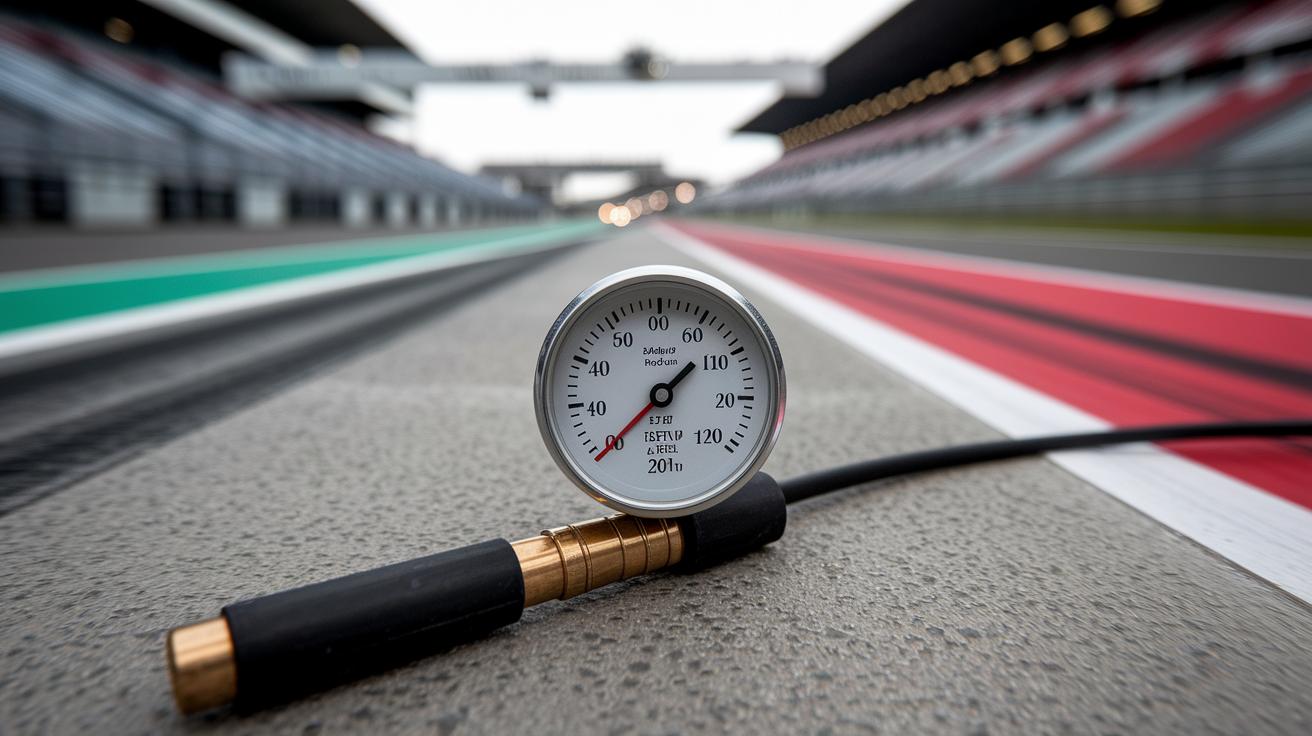
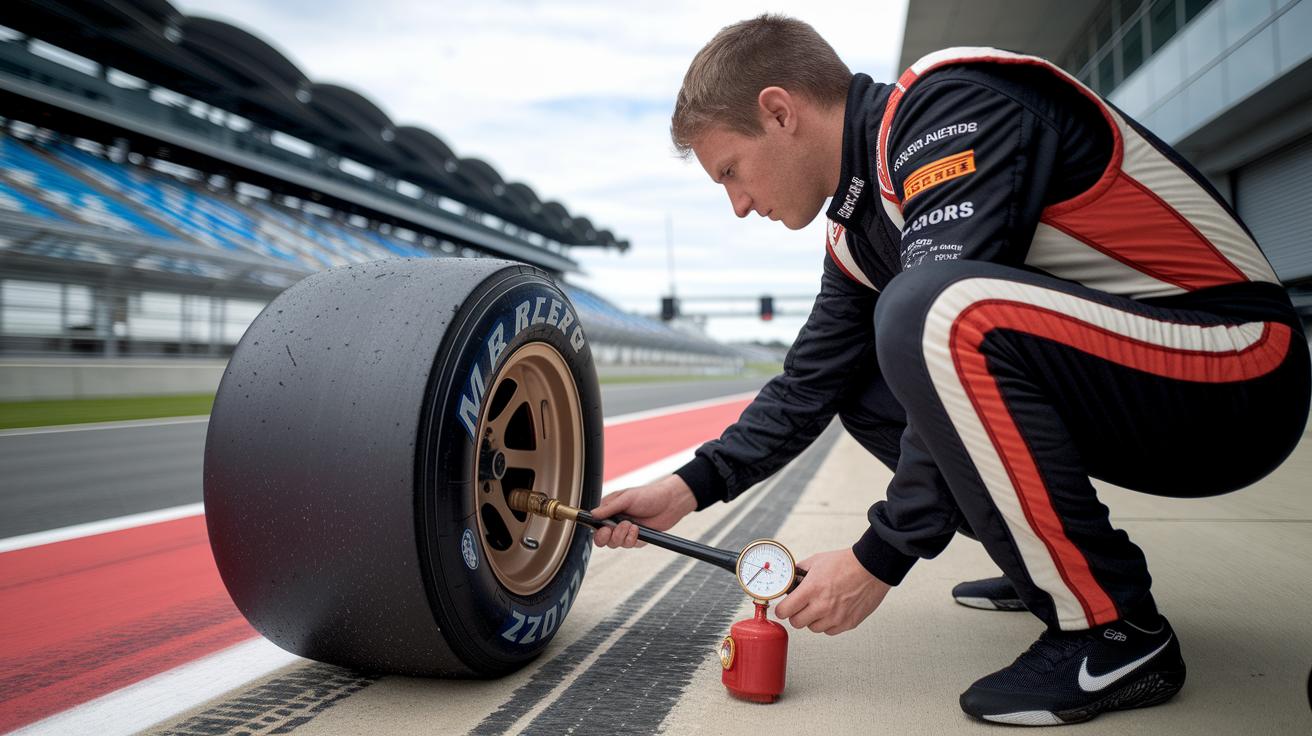
After a track run, it’s important to check your tire pressure and temperature right away. The moment your car leaves the track, tire readings can change fast because they cool down quickly. Taking these quick readings shows you the real condition of your tires and helps you catch any changes before the pressure drops too much, which might lower your tire’s grip.
- A digital tire pressure gauge (about £20) gives clear PSI readings. You can learn more about this with the tire pressure monitoring technology.
- A tire pyrometer (around £120) measures the temperature at three spots on your tire: the outer edge, center, and inner edge.
Here’s a simple process to follow:
- First, check the pressure on all four tires (front left, front right, rear left, and rear right) immediately after your run.
- Next, record the tire temperatures at the outer edge, center, and inner edge while they are still warm.
- Then, compare these temperatures. You should see a difference of about 10 to 15°C (degrees Celsius) from the outer edge to the inner edge.
- Finally, adjust your tire pressure and camber settings based on the data, aiming for an even spread of heat across the tire.
Understanding this data is key to keeping your tires evenly in touch with the road and ensuring the best grip. If the temperature is uniform across the tire, it is working safely. But if you see big differences, it might mean the pressure is off, which could lead to less grip or uneven tire wear. Using live data on the track, like with wireless tire sensor technology, can help you make even better adjustments by giving you real-time insights. Fine-tuning your setup with these quick readings keeps your tires at their best, leading to more steady lap times and smoother handling on the track.
Establishing Optimal Tire Pressure Benchmarks for Lap Time Reduction
Factory settings are just the starting line. Instead of relying solely on those numbers, try tracking your tire pressure alongside real-time track conditions. For instance, every time the track temperature shifts, jot down the tire pressure. I once noticed that a small 2 PSI change on a cooler track gave a noticeably firmer grip.
The weather and track surface can really change how your tires work. Rather than sticking only to the manufacturer’s PSI, take a moment to check the track’s temperature and the feel of the asphalt. This helps you compare your pressure readings with the grip you experience, giving you a full picture of performance changes.
Making tiny tweaks and logging each change turns guesswork into a clear, methodical process. Write down the pressure and note the weather during different runs. This way, you can see which adjustments give you better grip and smoother handling.
Keeping your tire pressure steady across your runs helps even out lap times. Using a detailed log to capture both environmental factors and pressure variations sets up a reliable system for fine-tuning your settings throughout any fast-paced track session.
Final Words
In the action, tests showed that tire pressure settings can create measurable differences in lap times. The experiments, whether using uniform or uneven pressures, revealed how human drivers felt shifts in grip and balance while AI maintained steady runs. These findings spark curiosity about the impact of tire pressure on lap times: myth or fact? More on-track tests will help match simulation data with real-world feel.
The results keep us optimistic about refining tire performance for a safer, smoother drive.
FAQ
How does tire pressure impact lap times according to Reddit discussions?
The effect of tire pressure on lap times is fact-based. Testing shows small lap time variations from 24 to 40 psi, with an optimal point around 28 psi. Both simulation and driver feedback confirm handling changes.
What are the common guidelines for iRacing and sim racing tire pressures?
The common iRacing tire pressure guidelines cover dry and wet setups across cars like GT3, F4, and MX-5. Racers adjust pressures for grip and handling, relying on specific simulation tips tailored to each vehicle type.
How do you check tire temperatures in iRacing?
The method to see tire temperatures in iRacing involves using in-game telemetry tools. Racers can view detailed temperature readings by checking the tire pyrometer data provided with the simulation’s interface.
Does tire pressure affect overall vehicle performance?
The belief that tire pressure affects performance is true. Proper pressure adjusts handling, grip, and wear, all of which contribute to a vehicle’s overall balance and response during a race.
What does the 4 psi rule on tires mean?
The 4 psi rule on tires means that tire pressures are often adjusted in 4 psi increments to fine-tune handling. This rule helps identify the best balance between grip and stability during performance tests.
Does tire pressure have any effect on the odometer reading?
The idea that tire pressure affects the odometer is a misconception. The odometer relies on tire rotations, and while extreme pressure changes might alter the tire’s circumference slightly, the impact is typically negligible.
Is it true that tire pressure affects gas mileage?
The notion that tire pressure affects gas mileage is true. Under-inflated tires increase rolling resistance, which leads to higher fuel consumption, while properly inflated tires promote better fuel efficiency.

