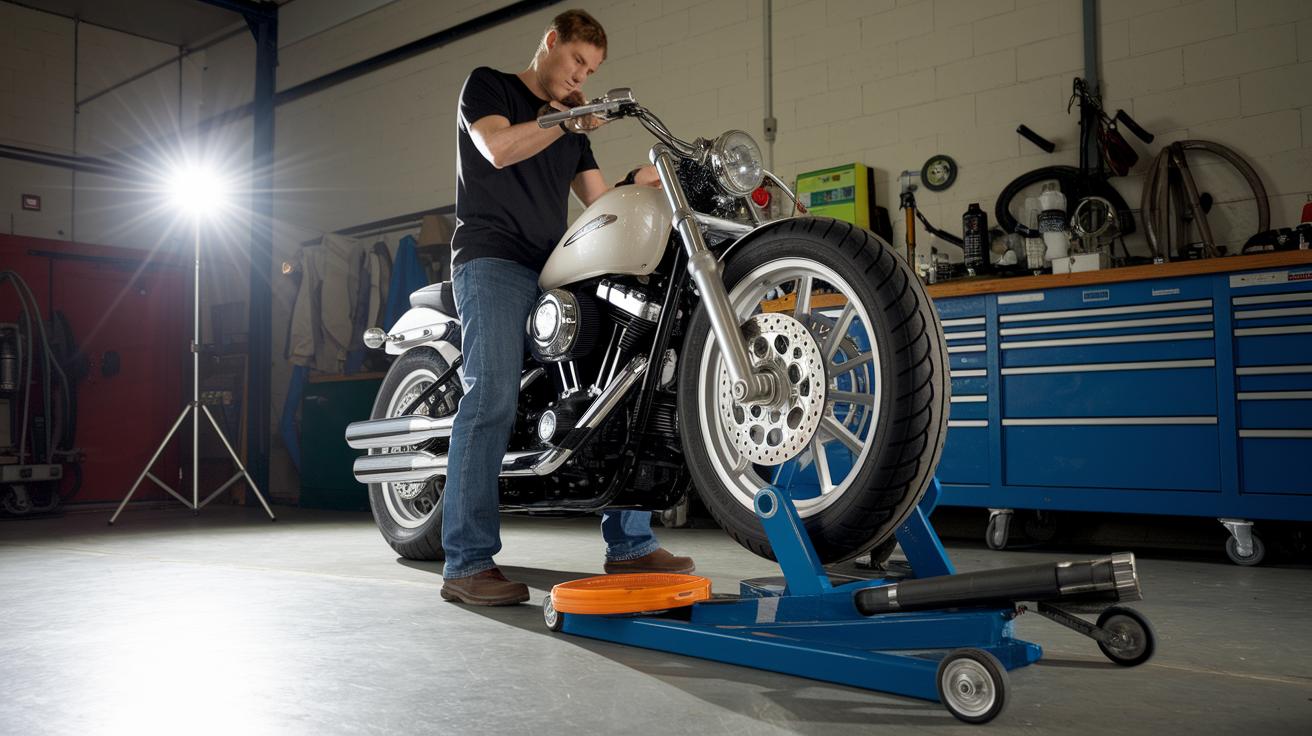


Ever notice how a little wobble can turn an easy ride into a bumpy one at 50 mph? It might seem like nothing, but if your tires aren’t balanced right, your bike can feel off and less safe.
When your tires have uneven weight, you can feel a quick jolt through your bike that makes steering a bit tricky. Checking your tires, whether you do it while the bike is still or moving, helps keep your handlebars steady, saves fuel, and makes your tires last longer.
So next time you plan a ride, think about these simple checks. A steady ride can really boost your confidence every time you hit the road.
How Motorcycle Tire Balancing Enhances Ride Safety & Performance
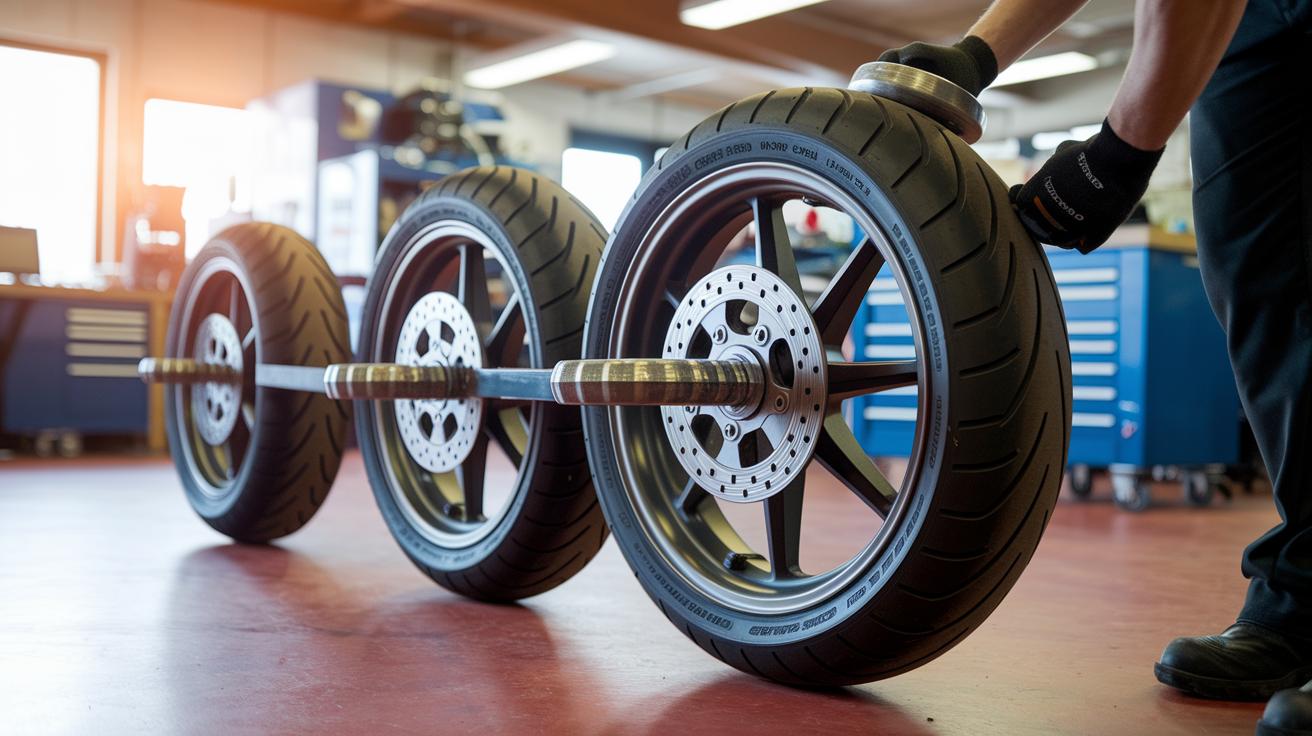
Balancing your motorcycle tires means spreading the weight evenly around the wheel so your ride stays smooth and safe. It fixes little weight differences that can make the tire spin unevenly. When the tire is still, static balancing finds heavy spots and evens them out. When it’s moving, dynamic balancing checks how the tire behaves and makes adjustments on the fly. Fun fact: at speeds over 50 mph, even a tiny imbalance can be felt with every twist of the handlebars.
Static balancing is like adding small weights to fix a heavy spot, much like how you’d hang a crooked picture straight. Dynamic balancing, on the other hand, watches the tire as it spins and tweaks things in real time to reduce any wobble. In a nutshell, it’s about getting every part of your tire working together, just like a team that clicks perfectly on the road.
When your tires are balanced right, you’ll notice smoother handling, better fuel economy (usually about a 3-5% boost), and a lower risk of tire blowouts or uneven wear. Even weight spread means less vibration and wobble, giving you a more stable ride. Plus, keeping your tires balanced can make them last longer, so you spend less time at the mechanic and more time enjoying the open road.
Essential Motorbike Balancing Toolkits & Equipment

If you work on your motorbike at home or in a busy shop, these toolkits are really useful. They come with handy items like static bubble balancers (which offer a quick weight check), spin-balancers to see how a tire behaves when moving, bead injector kits that adjust themselves, and portable mass stabilizers to boost your bike’s performance on the go. Each piece helps spread the weight evenly so your bike rides with confidence.
Commercial tools bring some cool features to the table. For instance, the Weaver® W-937M-40 is loved for its small, compact design that fits nicely even in tight spaces, all while working great. And then there’s the top-selling Weaver® W-957M-40, which has a 40 mm shaft that fits most bikes and works well for everyday checks. Plus, the Weaver® W-987M uses laser-guided alignment and an Ultra HD LCD display for super-accurate readings even when things get busy. Home-use models are simpler and easier on your wallet, while shop-grade machines come packed with advanced features at a higher cost. For more tips on keeping your equipment in top shape, check out maintenance tips for tire installation equipment.
DIY Static Alignment & Dynamic Procedures for Motorcycle Tires

Before we get started, remember that safety is your top priority. Always work on a cool tire and make sure your bike is supported securely. This will keep you safe as you work on balancing your bike’s tires at home.
First, deflate the tire completely so no pressure builds up while you work. Next, take out the valve core so the beads (tiny glass balls) can move freely. Then, use your chart to measure just the right amount of these tempered glass beads (small, hard beads made to help balance the tire). Carefully inject the beads through the valve stem, making sure they spread out evenly. Finally, reinflate the tire and spin the wheel to allow the beads to settle into the low spots and adjust the balance on their own.
Static spin-balancing is a classic way to check if your tire has an even weight spread. Think of it like using a bubble level on a picture frame to see which side is heavier. Meanwhile, the bead method works on the fly. As the tire spins, the small glass beads move and settle exactly where they’re needed, almost as if they know what to do on their own.
For a ride that feels smooth, getting the balance right is key. It helps to double-check the bead count with your chart each time. A little tip: stick to the same steps every time you balance your tires so any unusual changes become easy to spot. Whether you pick the quick check with static spinning or go for the ongoing adjustment with the beads, both methods make sure your bike runs smoothly and safely when you hit the road.
Comparing Motorbike Bead Weight Application vs. Solid Rim Weights

When you’re getting your bike’s tires balanced, you basically have two choices. One way is to go with ABC’s tempered glass beads, which do all the work on their own while your tire spins. These beads are round and smooth, so they naturally slide into the low spots as weight builds up.
Then there’s the classic method with solid rim weights, like clip-on or adhesive ones. With these, you have to put them on the rim by hand. Many riders have trusted this method for years, although it involves some trial and error, especially when you’re dealing with fast speeds.
| Method | Pros | Cons |
|---|---|---|
| ABC’s Tempered Glass Beads | Self-balancing and round for natural settling | Less control when you need precise balance in extreme conditions |
| Clip-on/Adhesive Rim Weights | Reliable and gives you manual control over placement | Needs careful trial and error, especially at high speeds |
In the end, picking between bead weights and traditional rim weights is all about what you’re comfortable with. Do you like the idea of a system that adjusts on its own, or do you prefer to measure and place things by hand? Each has its pluses and minuses, but both are meant to keep your ride smooth and safe on the road.
Motorcycle Tire Balancing: Smooth Ride Assurance
When your bike starts feeling a bit off, you might notice a shaky handlebar when you’re riding between 30 and 60 mph, or see uneven tire wear after around 1,000 miles. Sometimes your bike might even pull to one side. These little signals mean your tire might be unbalanced, a bit like when the weights aren’t spread out evenly, and can make your ride rough. Take a moment to check your rim for any bends or dents, and give your balancing beads (the little weights that help keep your tire even) a quick look. For example, if your bike leans just a bit at 40 mph, it might be time for a closer look.
Next, fixing the problem is pretty simple. Start by checking if your rim is completely straight; even a tiny bend can make a vibration worse as you speed up. Then, if those beads look like they’re out of place, give them a little adjustment, like a quick tune-up for your bike so everything fits just right. If you happen to have a balancing machine, use it to fine-tune your tire even more. This helps smooth out both the obvious wobble and any hidden imbalances you might not notice right away.
Remember, a little routine check-up goes a long way. Try to rebalance and inspect your tires every 3,000 miles so you’re always ready for a safe and comfortable ride.
Motorcycle Tire Balancing Services & Cost-Effective Options
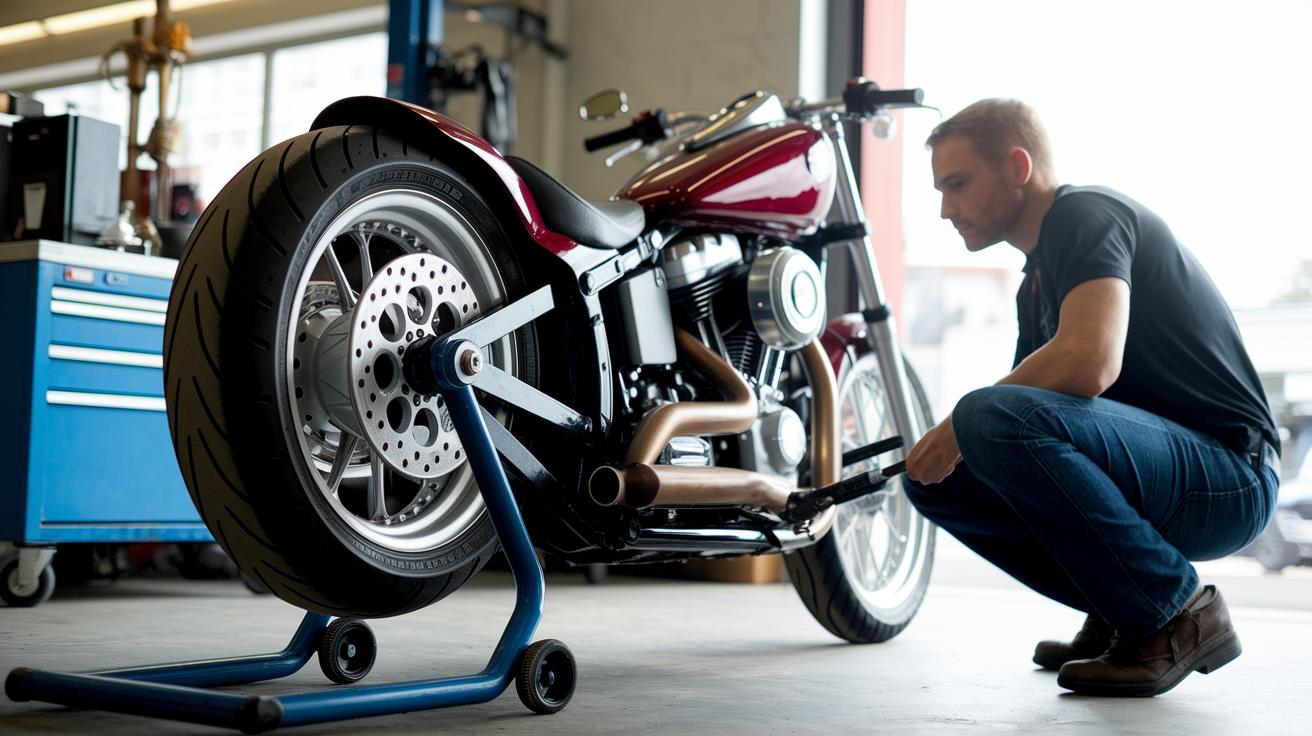
Prices for balancing your motorcycle tires can really vary. If you call in a mobile service, you might pay about $20 to $30 per wheel, while a shop might charge between $150 and $250 for two tires. Sure, doing it yourself can save some money, but often the extra cost for a pro is worth it for the easy, spot-on work.
Some service packs, like ABC’s Motorcycle Service Packs, offer just the right amount of beads (those small metal pieces that keep tires balanced) starting at $15, which can help cut down on extra fuel waste and tire wear. Mobile units are ready to roll and come to you, saving time and even helping your bike run more efficiently on gas. Ever notice how a well-balanced ride feels smoother? For many riders, paying a little more for expert help means getting a reliable ride and longer-lasting tires without the hassle of constant tweaks.
If you’re looking for a balancing expert nearby, check out local reviews and certifications. Doing so lets you compare prices and helpful tips to keep your bike safe and smooth on the road.
Final Words
In the action, the post explained how motorcycle tire balancing reduces vibrations, promotes smooth handling, and extends tire life. It covered the basics, the essential tools and home procedures, and compared bead applications with traditional rim weights. Troubleshooting tips and cost-effective service options were also shared to keep your ride safe and reliable. With clear, practical advice for both DIY fixes and professional help, you can confidently improve your motorcycle performance. Ride on safely and enjoy the peace of mind that comes with quality tire care.
FAQ
Q: What does a motorcycle tire balancing kit include?
A: The motorcycle tire balancing kit typically includes weights, a bubble balancer or stand, and adapters. These tools help distribute weight evenly to reduce vibration and improve ride comfort.
Q: What is considered the best method for motorcycle tire balancing?
A: The best method for motorcycle tire balancing evenly distributes weight across the wheel. Combining static balancing with bead or weight adjustments creates a smoother ride and enhances overall performance.
Q: Where can I find motorcycle tire balancing services near me?
A: The local motorcycle tire balancing services use professional equipment to adjust your tires. These services help reduce vibrations and improve safety by addressing imbalances that can affect ride quality.
Q: What are motorcycle tire balancing weights and how do they work?
A: The motorcycle tire balancing weights are small metal pieces placed on the rim. They counterbalance weight differences, reducing vibrations and contributing to a more stable and enjoyable ride.
Q: How do I balance motorcycle tires without using a machine?
A: The way to balance motorcycle tires without a machine is by using a DIY approach, such as tempered glass beads that shift during rotation to automatically counteract imbalances and smooth out your ride.
Q: What are motorcycle tire balancing beads and what is their benefit?
A: The motorcycle tire balancing beads are tiny tempered glass spheres that move inside the tire as it spins. They naturally adjust to fill low spots, helping to reduce vibration and improve ride smoothness.
Q: What is a motorcycle tire balance stand used for?
A: The motorcycle tire balance stand holds the tire securely while you attach weights or beads during the balancing process. This steady support makes it easier to achieve an even weight distribution.
Q: What does a motorcycle wheel balancer adapter do?
A: The motorcycle wheel balancer adapter allows different wheel sizes to securely fit onto balancing machines. It ensures that your tire is accurately aligned for proper static or dynamic balancing.
Q: Is balancing motorcycle tires necessary for safe riding?
A: The balancing of motorcycle tires is necessary because it minimizes vibrations and uneven wear. This leads to a smoother, safer ride with improved handling and fuel efficiency.
Q: Can I balance my motorcycle wheels at home safely?
A: The balancing of motorcycle wheels can be managed at home using a proper kit, like bead-injection tools. While DIY methods work well, professional services may offer extra precision if needed.
Q: How much does it generally cost to balance a motorcycle tire?
A: The cost to balance a motorcycle tire usually falls between $20 and $30 per wheel for mobile services, with professional shop rates ranging from $150 to $250 for a complete service.
Q: How do motorcycle tires get balanced during installation?
A: The balancing of motorcycle tires is achieved by adding weights or using beads that adjust the tire’s mass. This process evenly distributes weight to reduce vibration and enhance ride smoothness.

