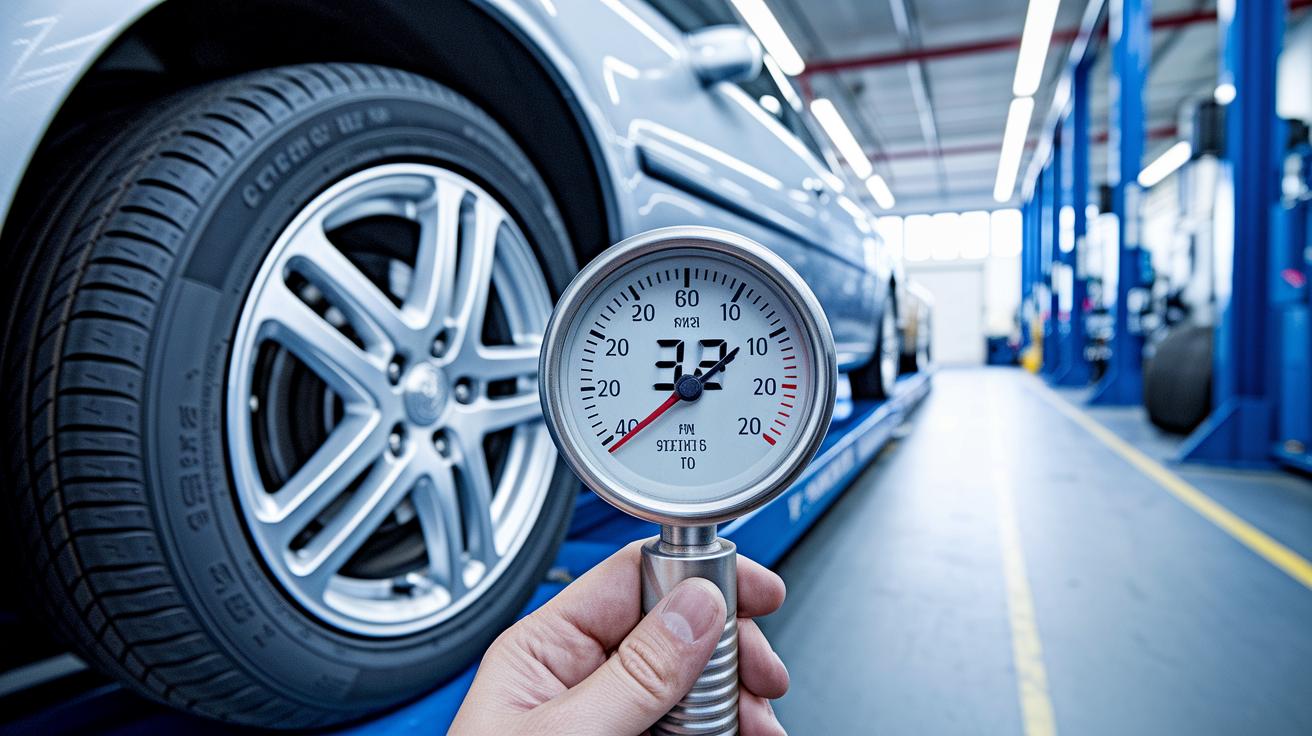


Ever noticed that some tire guides show PSI while others list Bar or kPa? It can seem a bit confusing at first, especially if you’re trying to know what works best for your car. But here’s the thing: keeping the right air in your tires (that is, the correct force of air in each tire) is what gives you a smooth ride and great grip on the road.
In this article, we break down the differences and give you simple steps to convert between them. It’s a bit like checking your tire’s air pressure before a long drive, you do it in a few easy steps and feel confident when you hit the road.
Tire pressure units: Accurate conversion made simple
Tire pressure is the extra push of air inside your tire above the normal air around you. This extra push keeps your tire hard enough to offer a smooth ride and a good grip on the road. It’s a bit like blowing up a basketball where the air inside boosts the pressure beyond the air around it. Keeping your tires at the right pressure helps with handling, grip, and even saves you a bit on gas.
| Unit | Definition | Equivalents |
|---|---|---|
| PSI | Pounds per square inch (a measure of force on each square inch) | 1 PSI = 0.06895 Bar = 6.89476 kPa |
| Bar | A unit that comes from the metric system (it shows pressure in a simple way) | 1 Bar = 14.50377 PSI = 100 kPa |
| kPa | Kilopascal (1,000 pascals, the basic unit for pressure) | 1 kPa = 0.145038 PSI = 0.01 Bar |
Most folks in countries that use the imperial system see PSI in their car manuals and on tire sidewalls. In places like Europe where the metric system rules, Bar is the go-to. And increasingly, people in Canada, Australia, and even bike riders are using kPa as a clear alternative to PSI and Bar.
Regional Tire Pressure Units and Recommended Standards

Different regions use tire pressure units that match their long-held practices and local measurement styles. In areas sticking with the imperial system, PSI is the go-to choice. Over in many European spots, and even some parts of Canada and Australia, people prefer using metric units like Bar or kPa (which stands for kilopascals). It all comes down to history and local rules. Using the right unit helps you keep an accurate check on your tire air, so your car handles better and saves fuel, too.
- United States: They use PSI. For most passenger cars, it’s usually around 30 to 35 PSI.
- Europe: They use Bar, with a common range of about 2.0 to 2.5 Bar.
- Canada: Most often, they use kPa, with a typical range of 200 to 250 kPa, although some might use Bar.
- Australia: They go with either kPa or Bar, and their ranges are similar to those in Canada and Europe.
Always take a quick look at the sticker on your door jamb or check your owner’s manual for the right tire pressure. It’s a simple habit that keeps your ride safe and running at its best.
Tire Pressure Units Conversion: Formulas and Reference Table
When you're checking your tire pressure and need to switch between PSI, Bar, and kPa, these six simple formulas will do the trick. They come from basic equivalency values, so it's as easy as a quick roadside chat.
Here’s what you need:
- PSI to Bar: Divide the PSI by 14.50377.
- Bar to PSI: Multiply the Bar by 14.50377.
- PSI to kPa: Multiply the PSI by 6.89476.
- kPa to PSI: Divide the kPa by 6.89476.
- Bar to kPa: Multiply the Bar by 100.
- kPa to Bar: Divide the kPa by 100.
For example, since one Bar equals 14.50377 PSI, just dividing the PSI you're reading by 14.50377 tells you the Bar value. The same idea applies to the other conversions.
| Conversion | Formula |
|---|---|
| PSI → Bar | PSI ÷ 14.50377 |
| Bar → PSI | Bar × 14.50377 |
| PSI → kPa | PSI × 6.89476 |
| kPa → PSI | kPa ÷ 6.89476 |
| Bar → kPa | Bar × 100 |
| kPa → Bar | kPa ÷ 100 |
If you’re in a hurry or just want hassle-free conversions, try using an online calculator or an app. It’s like having the perfect co-pilot for your tire checks.
Best Practices for Maintaining Tire Pressure Units

It’s best to check your tire pressure when the tires are cold because that gives you the truest idea of how much air is inside. When your tires warm up, the pressure can go up, which might not reflect what they really need. This can affect your safety and even your gas mileage.
First, grab a good gauge (whether digital or dial that shows PSI, Bar, or kPa) and keep a small air pump nearby. Next, take a look at your door sticker or your owner’s manual for the perfect tire pressure numbers.
Then, try this simple trick: each month before you head out, check the pressure when the tires are cold. If the pressure isn’t just right, use a service station pump or your portable inflator to add or remove air until you hit that sweet spot. Finally, check one more time with your gauge to be sure it’s all set.
These routine checks go a long way. Keeping your tires at just the right pressure helps your car stick to the road, gives you a smoother ride, uses less gas, and even prevents your tires from wearing out too soon. Over time, these small steps can save you money, boost how well your car runs, and keep you safer on the road. For more detailed tips, visit the tire pressure maintenance guide at tityres.com?p=3133.
Advanced Tire Pressure Units: Digital Gauges and Sensor Calibration
Analog gauges use simple mechanical springs to show tire pressure. They give you a basic reading but don’t let you switch easily between PSI, Bar, and kPa. With digital gauges, you can quickly change the units so you always see your tire pressure the way you need to, whether you follow imperial or metric standards. Plus, these digital tools are usually more precise and easier to set up, which helps keep your tire pressure just right.
To keep your gauge working smoothly, try this simple calibration routine: first, set your gauge back to zero; then, compare its reading to a known-pressure source. Next, adjust the gauge until it matches perfectly, make sure to seal all connections to prevent leaks, and finally, write down the next date for calibration. It’s like tuning your car before a long drive.
Also, remember that TPMS sensors come preset with PSI in the U.S. and Bar in Europe. Regular calibration, roughly every six months, makes sure both your digital gauges and TPMS sensors keep giving you accurate readings. This little extra effort can go a long way in keeping your car safe and your ride comfortable.
Final Words
In the action, we explored what makes tire pressure units like PSI, Bar, and kPa so important for safe driving. We broke down how each unit works, shared conversion formulas, and explained why a quick tire check every month can boost your confidence behind the wheel.
We also covered digital gauge calibration tips and compared regional standards. With well-understood tire pressure units, keeping your tires in good shape is a smart decision that leads to a smooth ride ahead.
FAQ
What does a tire pressure units chart or conversion chart show?
A tire pressure units chart shows how PSI, BAR, and kPa relate by using clear conversion factors, like 1 BAR equals about 14.5 PSI and 100 kPa, to help gauge proper tire inflation.
What is 240 tyre pressure in PSI?
The measurement of 240 tyre pressure, when expressed in kPa, converts to roughly 34.8 PSI, giving you a clear idea of the tire’s inflation level.
What is a tire pressure units calculator?
A tire pressure units calculator is a tool that quickly converts values among PSI, BAR, and kPa, making it easier to check and compare your tire pressure measurements accurately.
What do car tyre pressure front and rear or car tyre air pressure lists indicate?
Car tyre pressure lists show recommended inflation levels for both front and rear tires, which can differ. These recommendations are found on your door sticker or in the owner’s manual for safe performance.
What does 2.1 BAR in PSI tyre pressure mean?
The value of 2.1 BAR converts to roughly 30.5 PSI, using the factor that 1 BAR approximates 14.5 PSI, so you know how your tire pressure compares in different units.
What is 250 tyre pressure in PSI?
If 250 is in kPa, it converts to about 36.2 PSI, which helps you ensure your tires are inflated correctly according to your vehicle’s guidelines.
What is 2.4 BAR in tire PSI pressure?
A measurement of 2.4 BAR converts to approximately 34.8 PSI, offering a straightforward conversion to understand your tire’s inflation in PSI.
What does 32 PSI mean?
When a tire shows 32 PSI, it means the pressure is 32 pounds per square inch above atmospheric pressure, a common specification for many passenger car tires to maintain safety and performance.
What is 240 kPa tire pressure?
A tire pressure of 240 kPa means the pressure is 240 kilopascals above atmospheric pressure, which is equivalent to about 34.8 PSI or 2.4 BAR, depending on conversion preferences.
What does 2.5 BAR mean in PSI?
The reading of 2.5 BAR converts to around 36.3 PSI using the conversion factor, making it easier to compare and maintain tire pressure in familiar units.

