


Ever wonder if your AWD car can stay balanced without rotating your tires? Think of your tires as a well-coordinated team that needs a little switch-up now and then. Rotating them every few thousand miles isn’t just routine work, it helps your tires grip the road better and last longer (that means the tread wears more evenly).
This guide breaks down a few simple steps to keep your tires wearing evenly. Follow these tips, and you might notice your ride feels smoother, your car performs better, and you could even save some money on repairs. Ever feel that a few small tweaks can really make a big difference?
Essential Tire Rotation Guidelines for All-Wheel Drive

If you drive an AWD car, rotating your tires is extra important since all four tires connect with the road. Switching them every 3,000 to 5,000 miles (4,800–8,000 km) keeps wear even, which means your car handles better and stays safe. It’s a bit like balancing your car's grip, right after checking tire pressure, rotating your tires is key.
Before you get started, grab your tools: a lug nut wrench, a sturdy jack, and jack stands. Follow your car’s specific rotation pattern as shown in the owner’s manual. This helps keep everything even and balanced.
These tire care steps not only improve fuel efficiency but also make your tires last longer. It’s like moving seats on a seesaw to keep things balanced. Spending a few extra minutes now can help avoid future damage and unexpected repair costs.
Remember, every vehicle is unique. Always check your owner’s manual to set up a tire rotation plan that fits your AWD car perfectly, so you can enjoy a smoother and safer drive.
Step-by-Step AWD Tire Rotation Process

First, grab all your tools, a lug nut wrench, a hydraulic jack, jack stands, a torque wrench, and some chalk or tire markers. These help you get set for a safe tire rotation. Make sure your car is parked on a flat, level spot so it stays steady. Engage your parking brake and put blocks under the wheels that aren’t being lifted.
Before you lift anything, slightly loosen all the lug nuts. This keeps them from tightening on their own when the car is raised, which can be a hassle later. Then, use your hydraulic jack to lift one corner of your car. Find the lift point recommended by your vehicle’s maker, and once it’s high enough, slide a jack stand right under it. Repeat this for every corner, one at a time, until all four tires are off the ground.
Now that your car is safely up in the air, follow your AWD system’s tire rotation instructions. In simple terms, move the front tires to the back and let the rear tires move to the front, with the proper crossing pattern if your guide suggests it. Once the tires are swapped, tighten the lug nuts back down using a star or crisscross pattern. Then grab your torque wrench and tighten them to the manufacturer’s recommended setting (usually around 80 to 100 ft-lb).
After all the lug nuts are set, slowly lower your car back onto the ground. It’s a good idea to check your work by rechecking the lug nut tightness after you drive about 50 miles. This extra step helps make sure everything stays secure on the road.
Tire Rotation for All Wheel Drive Simplified

If you drive an all-wheel drive vehicle, you can rotate your tires just like on a rear-wheel drive. The front tires move straight to the back, and the back tires cross over to the front. This simple switch helps the tires wear evenly and takes extra stress off the differential (the part that helps smooth out power to the wheels).
Just follow the plan in the table below. For more details on how this rotation works, check out our tire rotation pattern page.
| Order | From | To |
|---|---|---|
| 1 | Front Left | Rear Right |
| 2 | Front Right | Rear Left |
| 3 | Rear Left | Front Left |
| 4 | Rear Right | Front Right |
Timing and Benefits of Tire Rotation for All-Wheel Drive
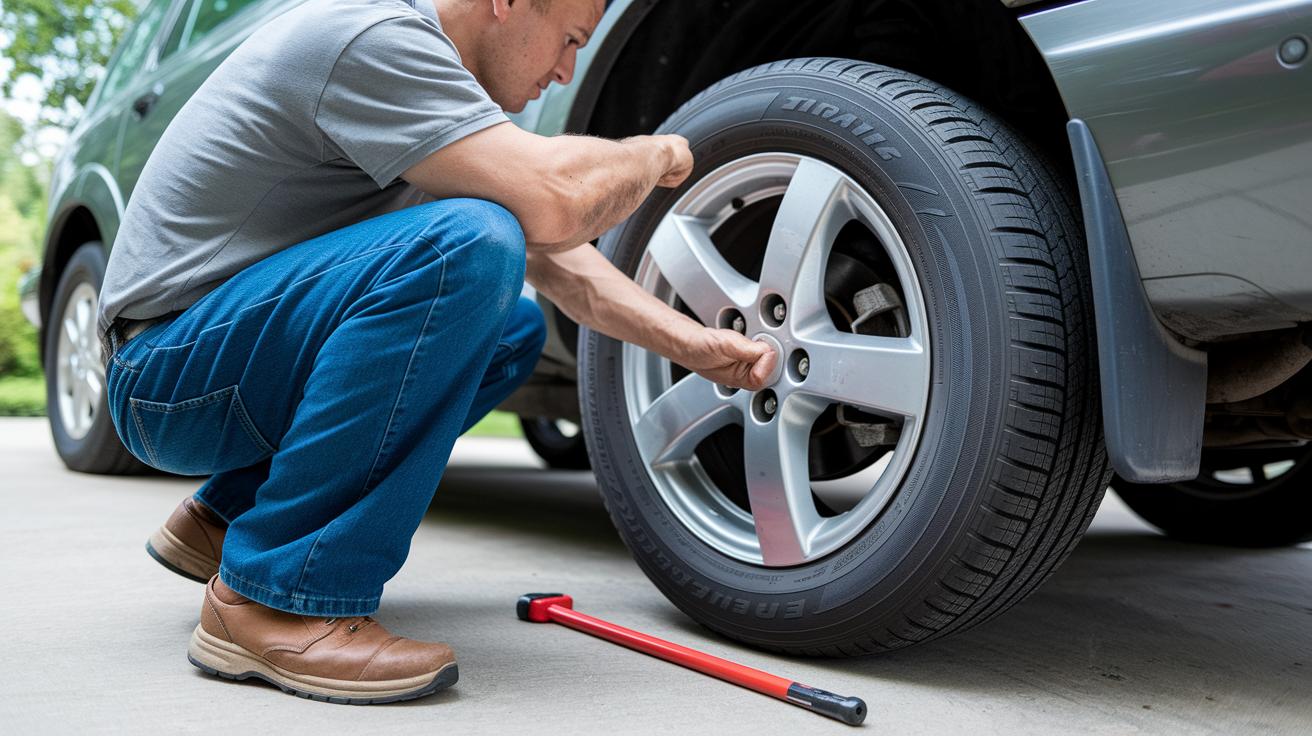
We’ve now joined this info with our Essential Tire Rotation Guidelines to make your tire maintenance tips easier to follow. New research shows that keeping up with regular rotations can boost your tire life by up to 20% (that means less frequent wear). This change is all about helping you get the most out of your tires without added hassle.
Maintenance Tips and Common Mistakes in AWD Tire Rotation

When you're working on your car's AWD tire rotation, safety always comes first. One easy mistake is mixing up the order when removing and putting the tires back. Stick with the recommended pattern to keep the drivetrain happy. It really helps to mark each tire's spot with chalk or stickers before you start, you know, kind of like labeling your tools before tidying up.
Another common slip-up is not tightening the lug nuts enough. Loose lug nuts can make your tires wear unevenly or even come off while you're driving. Use a wrench that’s been calibrated and set it to the right torque as shown in your owner’s manual, and then double-check it after about 50 miles on the road.
It’s also easy to forget checking the tire pressure during a rotation. Tire pressure is super important for both safe driving and good performance, so give it a quick check every time you work on your car.
Don’t stop there, other simple checks can boost your vehicle’s care. For example, take a look at the tread depth and the sidewalls each time. While you’re at it, it might be smart to do a quick brake inspection and check your fluids. This approach is a bit like using a full car maintenance checklist for a complete view.
| Step | Action |
|---|---|
| 1 | Mark tire positions with chalk or stickers before removal. |
| 2 | Confirm torque settings with a calibrated wrench. |
| 3 | Inspect tread depth and check for sidewall damage. |
| 4 | Re-torque lug nuts after about 50 miles. |
Final Words
In the action, this article broke down everything you need to know about AWD tire care. It explained how proper tire rotation for all wheel drive helps even out tread wear and boosts performance. You learned clear steps on safely rotating tires and the right sequence to follow. These insights help you get the most out of your tires, offering peace of mind on the road. Keep these tips in mind and drive confidently, knowing your tire maintenance is spot on.
FAQ
What is the proper rotation pattern for AWD vehicles?
The proper rotation pattern for AWD involves swapping tires in a cross sequence, where front tires move to the back and rear tires move to the front. This method keeps wear even across all four tires.
What do online discussions say about AWD tire rotation?
Online discussions, like those on Reddit, suggest following manufacturer guidelines. They emphasize that using a clear rotation chart helps maintain tire balance and prolongs tire life on AWD vehicles.
What is the tire rotation cost for AWD vehicles?
Tire rotation for AWD vehicles typically costs a modest fee at service centers. Prices vary, so it’s a small investment that can help prevent costly tire replacements later.
What are the tire rotation patterns for front-wheel and rear-wheel drive vehicles?
Front-wheel drive tires usually shift straight back while rear-wheel drive tires are moved forward. Both patterns are designed to reduce uneven wear and keep vehicle performance steady.
How often should you rotate tires on AWD vehicles?
AWD tires are generally rotated every 3,000-5,000 miles. Regular rotation at these intervals promotes even tread wear and maintains safe handling during different road conditions.
How should you rotate tires on an AWD vehicle?
You should rotate AWD tires by exchanging front and rear positions according to the manufacturer’s recommended sequence. This helps achieve even tire wear and supports optimal vehicle performance.
Is tire rotation necessary for 4 wheel drive vehicles?
Tire rotation in 4 wheel drive vehicles is needed to maintain proper tire balance and prevent uneven wear. Regular rotations keep the drive system running smoothly and safely.
Do front or rear tires wear faster on AWD vehicles?
In AWD vehicles, tire wear is usually balanced across all four corners. Occasional differences may occur with driving habits, so periodic inspections help catch any uneven wear early.

