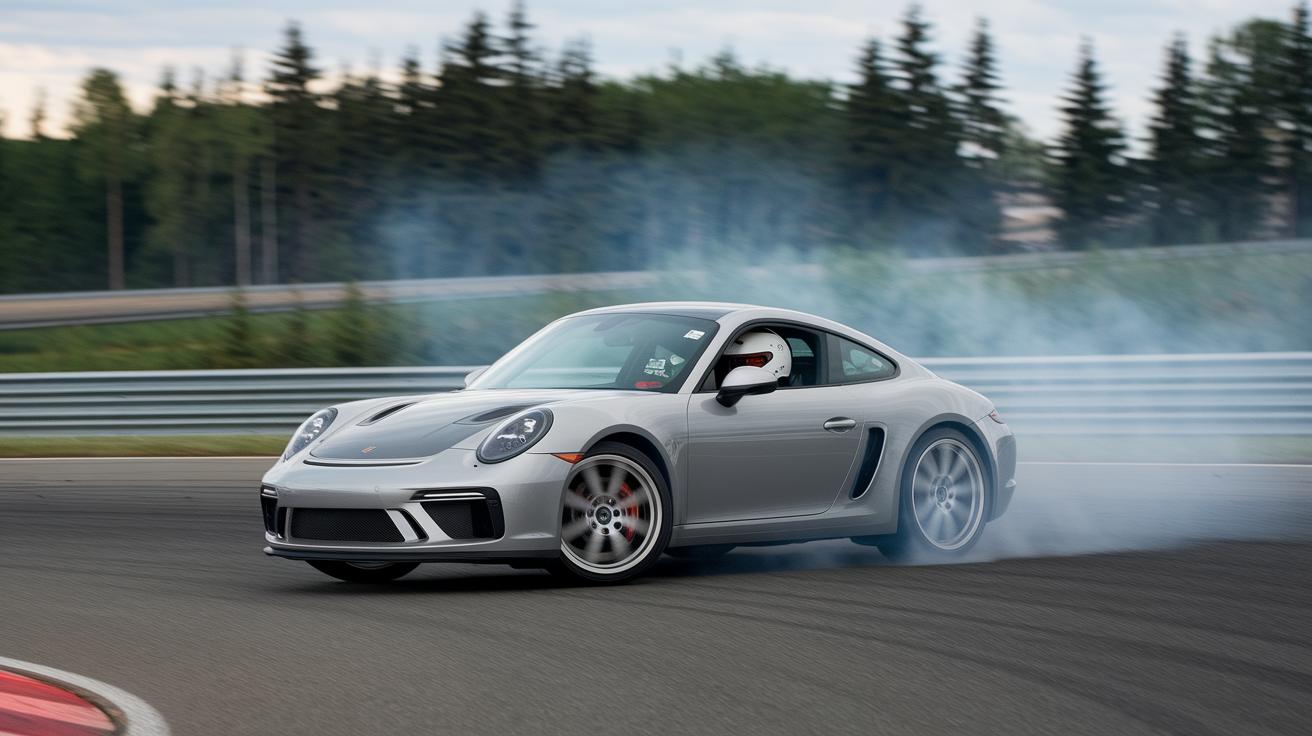


Ever notice how some sports cars seem like they're stuck to the road?
When you see them take a sharp turn, it feels like the tires are battling strong side forces that try to pull them off track.
In simple terms, the grip of the tires and these lateral forces work together to keep the car steady, even when you're speeding or hitting the brakes hard.
We’ll chat about things like tire pressure (that’s the air inside, which can make your ride firmer or softer) and tread design (the pattern on the tire that meets the road).
Next, you’ll discover how these details make a sports car feel safe and sure on every drive.
Stick around, and you might just feel a bit more confident behind the wheel.
Lateral Forces and Tire Grip Fundamentals in Sport Cars

When sport cars take a turn, the tires face extra side forces because of friction between the tire and the road. This friction, which we call tire grip, keeps the car on course as it turns, speeds up, or slows down.
A big factor in tire grip is the contact patch – that small spot where the tire touches the road. Tire pressure (PSI, which tells you how much air is in the tire) helps spread the car’s weight evenly over the tread and boosts traction.
Drivers and engineers look at several things when checking tire grip. They consider:
| Factor | Description |
|---|---|
| Contact Patch Size | The area where tire and road meet |
| Tire Compound | The type of rubber used in the tire |
| Tread Pattern | Design of the tire’s grooves, which helps with water dispersion |
| Temperature Range | How the tire performs under different temperatures |
| Inflation Pressure | How much air is in the tire |
For instance, if the PSI is too high, the contact patch shrinks and might lower grip, especially if the tire compound isn’t built for hard surfaces. On the other hand, lower PSI can make the patch bigger but could wear out the tread unevenly. The tread pattern also matters because it helps push water away, so your tire keeps a steady hold even in the rain.
This mix of lateral forces, tire grip, and proper inflation is key to how sport cars perform. Knowing about these elements can help you enjoy a ride that’s both safe and fun, making every twist and turn count.
Physics of Tire Grip: Contact Patch, Friction, and Compound Behavior in Sport Cars

How well your tires stick to the road comes down to a few simple things. When your tire pressure is just right, your car’s weight spreads evenly. This means more of the tire touches the road (that area is called the contact patch), and you get better grip for making sharp turns. When your PSI is spot on, the entire tread of the tire meets the pavement, which helps you corner with confidence. Check out high performance tire pressure recommendations for more tips.
As the temperature shifts, the tire’s rubber behaves differently. Warmer conditions make the rubber softer, which changes how much grip it has (this grip is known as the friction coefficient, a simple way to say how much the tire holds on to the road). That’s why engineers work hard on the tire compound, finding just the right mix of firmness and responsiveness to keep you safe.
| Factor | Effect |
|---|---|
| Contact Patch | Even weight spread boosts your grip when turning |
| Friction Coefficient | More stickiness means better grip on curves |
| Tire Temperature | Heat changes the rubber’s softness and how it grips |
| Compound Properties | Carefully engineered for that perfect balance on the road |
- How the tire touches the road
- Temperature effects on grip
- Engineered rubber for a smooth ride
Each of these parts works hand in hand to build up tire grip. It’s really all about how simple physics comes into play, making sure your ride feels steady, safe, and smooth on every turn.
Cornering Force Analysis and Lateral Acceleration Effects on Tire Grip

When your favorite sports car makes a sharp turn, a mix of forces is at work to give you that confident feel on the road. One key player is the tire slip angle (that’s the small difference between where your tire points and the actual road path). This tiny mismatch builds a sideways push that helps steer the car. Fun fact: Racing drivers even tweak their steering just a bit to create the perfect slip angle for top-notch cornering.
Slip Angle Mechanics
Think of the slip angle as your tire's secret helper. As your car curves, the tire slides a little on the road, and that slight slide creates a sideways force. This force, combined with the grip of the tire on the pavement, guides your car through the turn. Basically, even a little slip goes a long way in building the grip you need, especially when you're zipping around high-speed corners.
Lateral Load Transfer
At the same time, the weight of the car shifts from the inside wheels to the outside ones. This weight movement increases the pressure (or normal force, which is just the force pushing the tire onto the road) on the outer tires, helping them grip harder. For example, if a car experiences a lateral push between 0.9g and 1.3g while cornering, the outer tires get more force and extra traction while the inner tires lose a bit of grip. Racing drivers use this balance to fine-tune their car’s handling, knowing exactly how much grip they have when pushing the limits in a fast turn.
Aerodynamic Downforce Impact on Tire Grip and Lateral Stability in Sport Cars

When you're behind the wheel of a sports car, aerodynamic downforce gently presses your car onto the road. This extra pressure pushes your tires harder against the pavement, giving them a better hold when you take a turn. It's a bit like leaning into a curve on your bike to stay balanced.
The basic idea comes down to the formula F_lat = μ × N, where N stands for the usual load on the tires. With extra aerodynamic pressure, that load increases and so does the maximum sideways force your tires can handle. This boost means your tires can grip the road better even if you're speeding down the highway. For instance, many sports cars generate between 100 and 300 pounds-force (lbf) of downforce when traveling around 100 to 150 mph. And here's something cool: as your speed increases, the added force grows with the square of your speed, so the quicker you go, the stronger the grip.
• More downforce adds extra pressure on your tires
• The available lateral force increases following F_lat = μ × N
• Downforce can be as high as 100–300 lbf at high speeds
• Downforce grows faster as your speed increases, enhancing grip in fast turns
All these elements work together to keep your car stable during sharp turns, delaying the point where your tires might start to lose contact with the road.
Suspension Tuning, Dynamic Load Transfer, and Tire Grip in Sport Cars
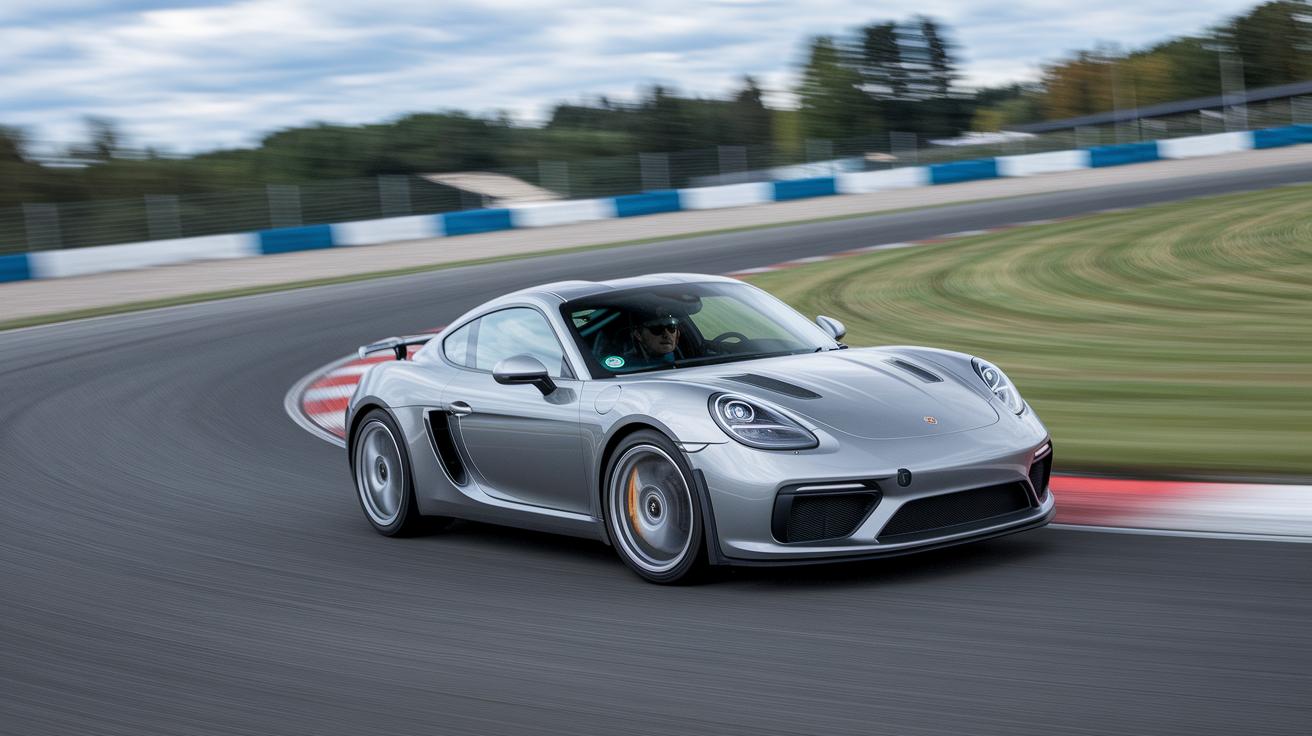
Suspension settings are really key in how a sports car handles curves. When you hit a sharp turn, the car’s weight shifts from the inside wheels to the outside ones. This weight shift (dynamic load transfer) changes how hard each tire presses down on the road. With the right setup, the weight moves evenly so every tire gets a good grip. Ever notice how secure a car feels when it stays planted during a turn? That’s thanks to a well-tuned suspension handling the load just right.
Camber Optimization for Lateral Grip
Adjusting the camber means tilting the wheels inward a bit, usually about 2°. (Negative camber is when the top of the tire leans inward relative to the bottom.) This tilt helps keep the tire’s flat area (contact patch) pressed against the road, even if the car leans during a turn. Imagine driving on a twisty road, this small 2° change is like giving your tires a firm handshake with the pavement, so they hold on without slipping. It may seem like a tiny tweak, but it makes your turns feel much more controlled.
Anti-Roll Bars and Body-Roll Control
Anti-roll bars help keep your car level by reducing how much the body tilts when you take a corner. Adjusting the stiffness of these bars can cut the body roll (the sideways lean) by about 30%. This means the outer tires pick up more load when the car leans, keeping everything balanced. For example, a stiffer anti-roll bar keeps your car flatter so every tire stays in touch with the road. That even load across the tires boosts grip and makes the car respond quicker and steadier as you drive through curves.
Performance Tire Design and Compound Science for Enhanced Sport Car Grip

High performance tire design is all about the little details that help your car stick to the road. Racing tires use special rubber compounds that offer friction strengths between 1.4 and 1.7 (a measure of how well surfaces stick together), while normal street tires usually hit around 0.9 to 1.1. This extra stickiness lets race cars hug the road when drivers push their limits.
Temperature is a key player here too. Soft rubber compounds work best when they warm up to between 60 and 80 °C. Imagine your tire reaching about 70 °C, just soft enough to flatten out under pressure and create a bigger area touching the pavement. That extra grip makes sharp turns and quick starts feel really exciting, almost like a little burst of confidence.
Inside the tire, there’s smart engineering at work. Layers of strong steel or tough fibers (like aramid) combined with flexible sidewalls work together to spread out all the pressure evenly. Think of it as a mini suspension system built right into the tire. This design keeps the entire tire in contact with the road, even when you’re taking an extreme turn or braking hard.
And here’s a neat trick: softer compounds not only merge with the road better but also deform a bit under load, which grows the contact patch even more. Pair these smart compound choices with precise temperature control, and you have a tire built for high-speed fun and total control on your ride.
Measuring and Modeling Lateral Forces and Tire Grip in Sport Car Testing

When we test tire grip and lateral forces, we put sport cars through both real-life experiments and computer simulations. Track tests show how a car holds up during hard turns and sudden stops, while virtual models help engineers improve designs before a car even hits the road. It’s all about making sure your ride stays stable, even when the action heats up.
One popular way to do this is with skidpad testing. Picture driving in a closed loop with sensors checking the peak sideways force your car can create. It’s like finding the limit of your car’s grip on the road.
Another test is the circle-track sweep. Here, engineers watch how friction changes with the tire’s slip angle (that’s just a simple way of describing how much the tire slides when turning). This test gives a clear picture of how the tire behaves when you take a bend.
There are also on-vehicle load cells that do a great job recording real-time cornering forces. As you turn, these little devices capture live data to show exactly how each twist and turn affects your car's stability. It’s pretty cool, really.
Then we have computer models such as FEA (a tool that checks how materials perform) and multi-body vehicle dynamics simulations. Think of it as taking a virtual test drive, where every little detail of how the tire works gets looked at and improved.
Telemetry sensors also come into play by keeping an eye on tire temperature and slip. They help spot if a tire is getting too hot, which could change how well it holds on. Common measurement techniques include:
- Skidpad testing to find peak lateral acceleration
- Circle-track sweep tests that map friction versus tire slip
- On-vehicle load cells to measure real-time cornering forces
- FEA and multi-body vehicle dynamics simulations
- Telemetry sensors tracking tire temperature and slip
Final Words
In the action, we broke down how tire grip and lateral forces work in sport cars. We explored contact patch, tire pressure, suspension settings, and tire compounds with easy-to-understand terms. Each section showed how everyday drivers can keep their rides safe on curves and turns. We also touched on the impact of downforce, load transfer, and testing methods. All this builds a solid understanding lateral forces and tire grip in sport cars. Staying on top of these basics helps keep your ride smooth and safe.
FAQ
Q: What is lateral grip in cars?
A: The term lateral grip in cars refers to how well a tire sticks to the road when turning. It’s the friction at the contact patch that keeps the car steady during side-to-side movements.
Q: What is the lateral force of a tire?
A: The lateral force of a tire is the sideways push that develops when the tire grips the road during a turn. This force helps steer the car and counteracts the pressures from cornering.
Q: What happens when a tyre loses its lateral grip?
A: When a tire loses lateral grip, it means the tire can’t stick to the road properly during turns. As a result, the car may skid or slide, reducing control and safety.
Q: Why do tires exhibit lateral forces?
A: Tires exhibit lateral forces because they generate friction with the road as the car turns. This friction creates a side load that helps the car change direction and maintain proper handling.

